
Introduction
Have you ever wondered why jogging tracks in parks, schools, and sports complexes feel so comfortable and safe to run on? The answer lies in professional jogging track construction. These tracks are not simple pathways; they are carefully engineered systems designed to enhance performance, reduce injury risk, and withstand years of use and weather exposure.
A well-constructed jogging track encourages daily physical activity, supports athletic training, and enhances the overall value of public and private spaces. From residential parks and educational institutions to stadiums and fitness hubs, jogging tracks have become an essential part of modern sports infrastructure.
This blog offers a detailed overview of jogging track construction, covering design standards, dimensions, materials, construction processes, costs, maintenance, and future trends.
What Is Jogging Track Construction?
Jogging track construction refers to the process of designing and building a dedicated running surface that prioritizes comfort, safety, and durability. Unlike professional athletic tracks built strictly for competition, jogging tracks are designed for recreational runners, walkers, seniors, and fitness enthusiasts.
These tracks typically range from 200 to 400 meters per lap, with wider lanes and softer surfaces that reduce stress on joints and muscles. Proper jogging track construction ensures a smooth, slip-resistant, and shock-absorbing surface suitable for all age groups.
Importance of Jogging Track Construction
A properly constructed jogging track offers several long-term benefits:
-
Reduces impact on knees, ankles, and hips
-
Minimizes the risk of slips and falls
-
Encourages regular physical activity
-
Provides a structured space for fitness routines
-
Enhances the visual appeal of parks and sports facilities
Without professional construction, tracks may develop cracks, uneven surfaces, or waterlogging issues, making them unsafe and costly to maintain.
Standard Dimensions of a Jogging Track
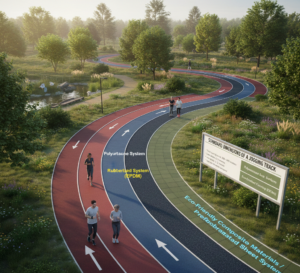
While jogging tracks are more flexible than competition tracks, standard dimensions are followed to ensure safety and ease of use.
Typical Jogging Track Dimensions
-
Total Length per Lap: 200–400 meters
-
Lane Width: 1.5–3 meters (single or multiple lanes)
-
Total Area: Depends on layout, curvature, and available land
Wider lanes allow comfortable overtaking and reduce congestion, especially in public parks and residential complexes.
Materials Used in Jogging Track Construction
Material selection plays a critical role in jogging track construction. The right surface improves comfort, durability, and user experience.
Common Jogging Track Surface Materials
Polyurethane (PU) Surfaces
PU tracks are seamless, water-resistant, and durable. They provide excellent grip and are suitable for all-weather use.
Rubberized Flooring (EPDM)
Made from recycled rubber granules, EPDM surfaces offer superior shock absorption, making them ideal for joint protection and recreational running.
Eco-Friendly Composite Materials
Modern composite systems use sustainable materials that are non-toxic, weather-resistant, and long-lasting.
Each material is chosen based on budget, usage intensity, climate, and maintenance expectations.
Jogging Track Flooring Options
Depending on the project requirements, different flooring systems are used:
Polyurethane System
-
Seamless and professional finish
-
Excellent durability and weather resistance
-
Suitable for high-traffic jogging tracks
Rubberized System
-
Softer surface with high shock absorption
-
Ideal for parks, schools, and senior-friendly tracks
-
Reduces injury risk significantly
Prefabricated Sheet Systems
-
Faster installation
-
Uniform surface quality
-
Easy replacement of damaged sections
Choosing the right flooring system ensures comfort, safety, and cost efficiency over the track’s lifespan.
Jogging Track Construction Process
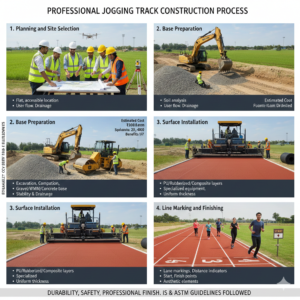
Professional jogging track construction follows a structured, step-by-step process to ensure long-term performance.
1. Planning and Site Selection
A flat, accessible location with proper drainage is selected. Soil condition, user flow, and surrounding infrastructure are analyzed.
2. Base Preparation
A strong base is essential. Excavation is followed by compaction and layering of gravel, WMM, or concrete to ensure stability and drainage.
3. Surface Installation
The selected surface system (PU, rubberized, or composite) is applied in layers using specialized equipment to achieve uniform thickness.
4. Line Marking and Finishing
Optional lane markings, distance indicators, start/finish points, and aesthetic elements are added.
This systematic approach ensures durability, safety, and a professional finish.
Standards for Jogging Track Construction
Although jogging tracks are not governed by strict international competition rules, professional standards are still followed to ensure quality.
Key construction standards include:
-
Adequate shock absorption
-
Slip-resistant surface texture
-
Uniform thickness and leveling
-
Proper drainage slope (1–2%)
-
Weather-resistant materials
Certified sports flooring contractors follow IS and ASTM guidelines to ensure safety and longevity.
Cost of Jogging Track Construction
The cost of jogging track construction depends on several factors:
-
Track length and width
-
Surface material selection
-
Base preparation requirements
-
Site accessibility and location
-
Labor and material costs
Estimated Cost in India
A standard jogging track may cost between ₹50 lakh and ₹1.5 crore, depending on size, surface type, and specifications. While the initial investment may seem high, professional construction significantly reduces long-term maintenance and repair costs.
Benefits of Jogging Track Construction
A well-constructed jogging track offers multiple benefits:
-
Encourages healthy lifestyle and daily exercise
-
Reduces injury risk compared to concrete or tiled paths
-
Supports recreational and semi-professional training
-
Enhances property and community value
-
Creates inclusive fitness spaces for all age groups
Jogging tracks are a long-term investment in public health and wellness.
Maintenance of Jogging Tracks
Regular maintenance is essential to preserve performance and safety.
Basic Maintenance Practices
-
Sweep and clean regularly to remove dust and debris
-
Inspect for cracks, peeling, or surface wear
-
Repair minor damages immediately
-
Resurface every 8–10 years depending on usage
Proper maintenance ensures the jogging track remains safe, visually appealing, and functional for years.
Future Trends in Jogging Track Construction
The future of jogging track construction is evolving with technology and sustainability.
Emerging Trends
Eco-Friendly Materials
Increased use of recycled and non-toxic materials to reduce environmental impact.
Enhanced Cushioning Systems
Advanced shock-absorption layers for better joint protection.
Smart Jogging Tracks
Integration of sensors to track distance, speed, and performance analytics.
These innovations are making jogging tracks smarter, safer, and more sustainable.
Conclusion
Jogging track construction is far more than laying a running path—it is about creating a safe, comfortable, and durable fitness environment. Professionally designed jogging tracks promote regular exercise, reduce injury risks, and enhance the quality of public and private spaces.
From careful planning and material selection to precise installation and maintenance, every step in jogging track construction contributes to long-term performance and user satisfaction. Investing in a well-built jogging track is an investment in health, community engagement, and sustainable sports infrastructure.
FAQs
What are the standard dimensions of a jogging track?
Typically 200–400 meters long, with 1.5–3 meters lane width.
Which materials are best for jogging track construction?
Polyurethane, rubberized (EPDM), and eco-friendly composite surfaces.
How long does track construction take?
Usually 2–4 months, depending on site conditions and surface type.
What is the average cost of track construction in India?
Between ₹50 lakh and ₹1.5 crore, depending on size and materials.
Why is surface type important in track construction?
It ensures safety, reduces joint impact, and increases track lifespan.