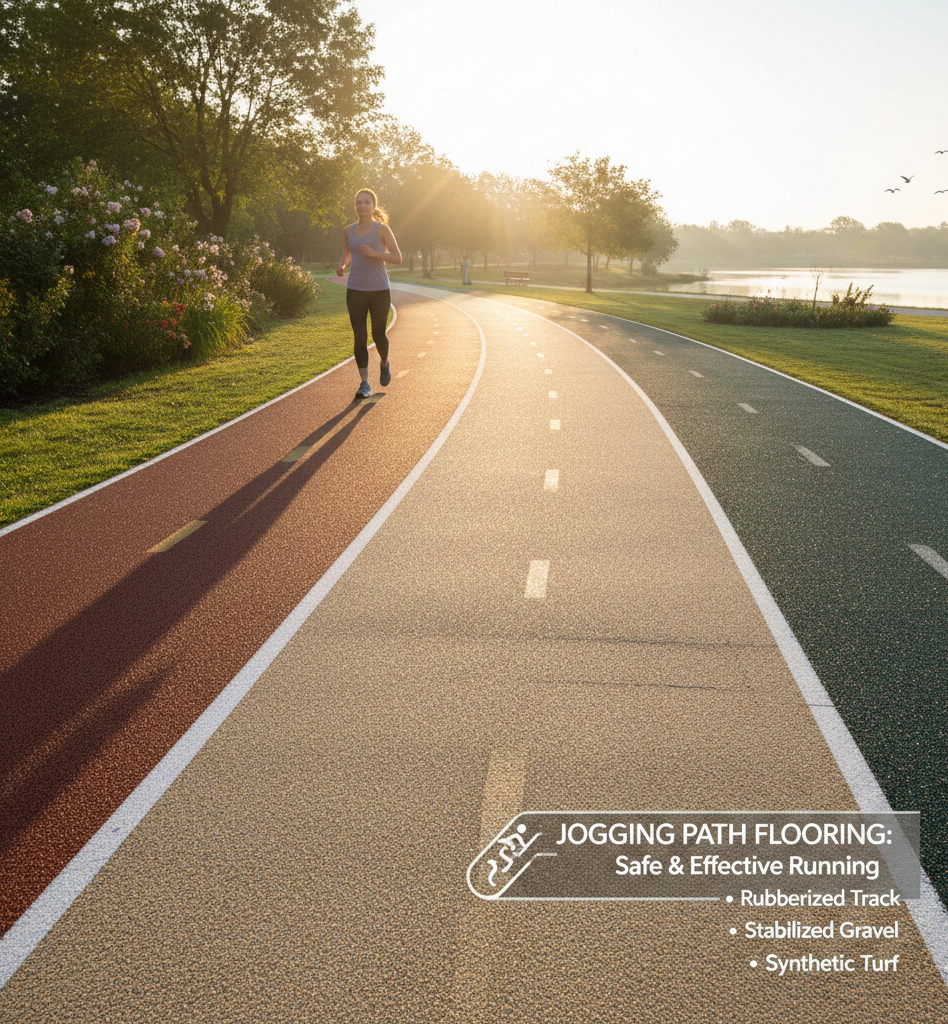
Jogging is one of the simplest, most effective forms of exercise, suitable for people of all ages. Whether you run for fitness, weight management, or mental well-being, the surface you jog on plays a crucial role in your performance, comfort, and safety. This is where jogging path flooring comes into play.
In this blog, we’ll explore the importance of jogging path flooring, popular types of surfaces, factors to consider when choosing the right flooring, installation tips, and maintenance best practices.
Why Jogging Path Flooring Matters

The surface of a jogging path is more than just a platform to run on—it impacts your running efficiency, joint health, and overall safety. Here’s why it matters:
-
Shock Absorption: Proper jogging path flooring absorbs impact, reducing strain on knees, ankles, and hips.
-
Traction: A good surface prevents slips and falls, particularly during wet or rainy conditions.
-
Durability: High-quality flooring withstands constant use and various weather conditions.
-
Performance: Smooth, even surfaces help maintain consistent speed and stride.
-
Aesthetics: A visually appealing jogging path enhances the overall experience and encourages regular use.
Jogging on hard surfaces like concrete or uneven gravel can lead to joint pain, muscle fatigue, and even injuries over time. Choosing the right flooring is crucial for both recreational and professional runners.
Common Types of Jogging Path Flooring
There are several types of jogging path flooring, each with unique benefits, costs, and suitability.
1. Asphalt Jogging Paths
Asphalt is one of the most commonly used materials for jogging paths in parks, schools, and urban areas. It offers a smooth surface and moderate shock absorption.
Pros:
-
Smooth and even surface for consistent running
-
Durable and long-lasting
-
Affordable installation
-
Low maintenance
Cons:
-
Hard surface may cause joint strain for frequent runners
-
Can get very hot under direct sunlight
-
Prone to cracks over time, requiring repairs
2. Rubberized or Synthetic Tracks
Rubberized jogging paths, often made from polyurethane or EPDM materials, are popular in schools, gyms, and professional running tracks. They provide excellent cushioning and energy return.
Pros:
-
High shock absorption, reducing joint impact
-
Slip-resistant and safe in wet conditions
-
Eco-friendly options available
-
Durable and resistant to wear
Cons:
-
Higher upfront cost compared to asphalt or gravel
-
Professional installation required
3. Gravel or Crushed Stone Paths
Gravel jogging paths are common in parks and nature trails. They are softer than asphalt and provide a more natural running experience.
Pros:
-
Natural and aesthetic appearance
-
Softer impact compared to concrete
-
Affordable and easy to install
-
Good drainage
Cons:
-
Uneven surface can cause tripping or ankle twists
-
Loose gravel may scatter and require frequent maintenance
-
Less energy-efficient for speed training
4. Concrete Jogging Paths
Concrete is durable and ideal for urban settings. It provides a very stable surface but lacks cushioning, which may lead to joint strain.
Pros:
-
Extremely durable
-
Low maintenance
-
Can be shaped and colored for aesthetic appeal
Cons:
-
Very hard on joints
-
Can crack over time due to weather conditions
-
Less comfortable for long-distance running
5. Grass or Natural Soil Paths
Grass or compacted soil surfaces are ideal for recreational jogging in parks and natural areas. These surfaces are soft and reduce impact on joints.
Pros:
-
Extremely soft and joint-friendly
-
Natural appearance
-
Minimal cost
Cons:
-
Uneven surface may lead to injuries
-
Slippery when wet
-
Requires regular maintenance to keep even surface
Key Factors to Consider When Choosing Jogging Path Flooring
Selecting the right jogging path flooring depends on several factors:
1. Runner Type and Usage
-
For frequent runners and athletes: Rubberized or synthetic surfaces provide the best shock absorption.
-
For casual joggers: Asphalt or gravel paths are sufficient.
-
For nature enthusiasts: Grass or soil paths offer a natural experience.
2. Safety and Traction
A surface with proper traction reduces slips and injuries, especially during rainy or wet conditions. Rubberized and synthetic tracks provide excellent grip, while gravel paths may require additional maintenance to maintain stability.
3. Weather and Climate
Consider local weather conditions. Asphalt can become extremely hot in sunny climates, while gravel paths may erode during heavy rains. Rubber tracks are weather-resistant and maintain performance in all conditions.
4. Maintenance Requirements
High-maintenance surfaces like gravel or natural soil need regular leveling and cleaning. Asphalt and synthetic tracks are more durable and require less frequent upkeep.
5. Budget
Budget plays a significant role in selecting jogging path flooring. While asphalt and gravel paths are affordable, high-quality rubberized or synthetic tracks are costlier but provide long-term durability and comfort.
Installation Tips for Jogging Path Flooring
Proper installation ensures longevity, performance, and safety:
-
Site Preparation: Clear the area of debris, rocks, and vegetation. Level the ground to ensure even surfaces.
-
Base Layer: A strong foundation layer of compacted gravel or sand improves drainage and stability.
-
Surface Layer: Apply the selected surface material—whether asphalt, rubber, or synthetic—uniformly.
-
Slope and Drainage: Ensure the path has a slight slope to allow water runoff and prevent puddles.
-
Edging and Borders: Install borders to keep gravel or rubber in place and maintain the path’s shape.
Maintenance Tips for Jogging Path Flooring
Regular maintenance extends the life of your jogging path:
-
Inspect Regularly: Look for cracks, uneven surfaces, or loose gravel.
-
Clean Debris: Remove leaves, branches, and litter to maintain a smooth surface.
-
Repair Damage Promptly: Fix cracks in asphalt or concrete immediately to prevent worsening.
-
Replenish Gravel: For gravel paths, add fresh gravel periodically to maintain an even surface.
-
Protect Rubber Tracks: Avoid dragging heavy objects and keep sharp objects away to prevent damage.
Benefits of Proper Jogging Path Flooring
-
Reduces Injury Risk: Proper cushioning and traction protect joints, muscles, and ligaments.
-
Enhances Running Performance: Smooth and even surfaces allow consistent pace and stride.
-
Encourages Regular Exercise: Comfortable and visually appealing paths motivate people to jog more frequently.
-
Durability and Longevity: High-quality surfaces withstand heavy usage and weather elements.
-
Multi-Purpose Use: Jogging paths can also be used for walking, aerobics, and fitness training.
Conclusion
Jogging path flooring is a critical component of any running or fitness facility. Whether you are planning a park trail, school track, or professional jogging path, selecting the right surface ensures safety, comfort, and performance.
From asphalt and gravel to rubberized and synthetic surfaces, each type of flooring has unique advantages and considerations. Factors like runner type, weather, safety, maintenance, and budget play a key role in making the best choice.
A well-designed jogging path flooring encourages regular exercise, improves athletic performance, and reduces the risk of injuries. Whether for recreational joggers or professional athletes, investing in high-quality flooring is an investment in health, fitness, and long-term satisfaction.
Frequently Asked Questions (FAQ) – Jogging Path Flooring
1. What is jogging path flooring?
Jogging path flooring refers to specialized surfaces designed for walking, running, and jogging. These floors provide shock absorption, grip, and durability, reducing stress on joints and enhancing safety.
2. What types of flooring are used for jogging paths?
Common jogging path surfaces include:
-
Interlocking rubber or PVC tiles – modular and easy to install
-
PU (Polyurethane) synthetic flooring – durable and shock-absorbing
-
Rubberized asphalt or EPDM tracks – professional-grade, outdoor use
-
Gravel, crushed stone, or natural turf – eco-friendly and low-cost
3. What are the benefits of specialized jogging path flooring?
-
Shock absorption reduces joint and ankle injuries
-
Slip resistance ensures safe running in wet conditions
-
Durability withstands heavy foot traffic and weather
-
Low maintenance compared to natural soil or sand tracks
4. Can jogging path flooring be installed outdoors?
Yes, high-quality synthetic and rubberized flooring is UV-resistant, weatherproof, and suitable for parks, schools, and residential complexes.
5. How thick should jogging path flooring be?
-
Interlocking rubber or PVC tiles: 15–40 mm
-
PU or synthetic tracks: 10–25 mm
-
Rubberized asphalt: 25–40 mm
The thickness depends on cushioning requirements, usage, and surface material.
6. Can jogging path flooring be installed on concrete or asphalt?
Yes, synthetic and modular tiles can be installed over existing concrete, asphalt, or compacted base, provided the surface is level, clean, and free of cracks.
7. How long does it take to install a jogging path?
-
Small park or residential track: 2–5 days
-
Large professional tracks: 7–15 days
Installation time depends on area, material, and base preparation.
8. How much does jogging path flooring cost in India?
Cost depends on material and thickness:
-
PVC or interlocking tiles: ₹400–₹900 per sq. meter
-
PU or synthetic tracks: ₹900–₹2,500 per sq. meter
-
Rubberized asphalt or EPDM tracks: ₹1,500–₹3,000 per sq. meter
9. How should jogging path flooring be maintained?
-
Regular cleaning to remove dust, leaves, and debris
-
Check for damage or uneven tiles and replace as needed
-
Occasional washing for synthetic surfaces
-
Protect surfaces from sharp objects and excessive water pooling
10. Are jogging path floors safe for all age groups?
Yes, shock-absorbing and slip-resistant surfaces make jogging paths safe for children, adults, and senior citizens.
11. Can jogging paths be customized in color or design?
Yes, synthetic and interlocking surfaces are available in various colors and patterns, allowing lane markings, aesthetic designs, or branding for parks and residential complexes.
12. How long does a jogging path floor last?
-
PVC or interlocking tiles: 8–10 years
-
PU synthetic tracks: 10–12 years
-
Rubberized asphalt tracks: 12–15 years
Proper installation and maintenance ensure long-lasting performance.
13. Are jogging path floors suitable for professional sports or fitness parks?
Yes, EPDM or PU synthetic tracks meet professional standards and are ideal for athletic training, fitness parks, and recreational jogging areas.