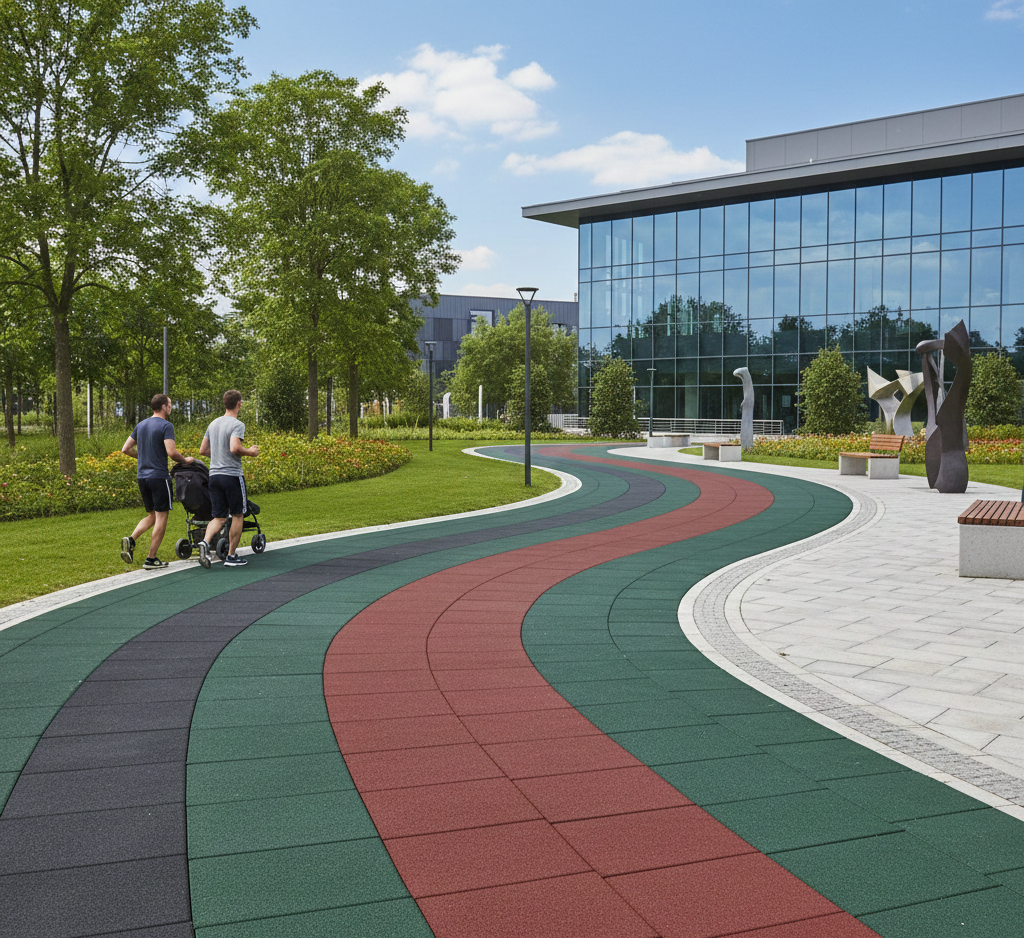
Creating a dedicated space for jogging and walking has become an essential component of modern fitness and sports facilities. Among the various flooring options available, interlocking tiles have emerged as a preferred solution for jogging tracks due to their durability, safety, and ease of installation. Interlocking tile jogging tracks are suitable for schools, stadiums, parks, residential complexes, and fitness centers, offering a versatile, cost-effective, and low-maintenance alternative to traditional track surfaces.
What is an Interlocking Tile Jogging Track?
An interlocking tile jogging track is a surface made of modular tiles designed to fit together like puzzle pieces, creating a uniform, seamless running path. These tiles are typically made of high-quality materials such as rubber, PVC, or polypropylene, which provide excellent grip, shock absorption, and weather resistance. The interlocking design ensures stability, easy installation, and the ability to replace individual tiles without disturbing the entire track.
Advantages of Interlocking Tiles for Jogging Tracks
Interlocking tiles offer a range of benefits over traditional track materials like asphalt or concrete. Their key advantages include:
1. Durability and Longevity
Interlocking tiles are highly durable and can withstand heavy foot traffic and continuous usage. Made from resilient materials, they resist wear and tear, UV damage, and weather conditions, making them suitable for both indoor and outdoor jogging tracks. With proper maintenance, interlocking tiles can last for many years without losing their structural integrity or performance quality.
2. Safety and Comfort
Safety is a top priority for jogging tracks. Interlocking tiles provide excellent shock absorption, reducing the impact on joints and muscles. This feature makes them ideal for runners of all ages and fitness levels, especially children and seniors. Non-slip surfaces further enhance safety by minimizing the risk of slips and falls, even during rainy conditions.
3. Easy Installation and Maintenance
One of the most significant advantages of interlocking tiles is their ease of installation. The modular design allows quick assembly without the need for adhesives or complex machinery. Tiles can be laid over existing surfaces, saving time and labor costs. Maintenance is also straightforward: individual tiles can be removed and replaced if damaged, eliminating the need for costly resurfacing.
4. Cost-Effectiveness
Compared to traditional track materials, interlocking tiles are cost-effective in both installation and long-term maintenance. Their durability reduces repair costs, while easy installation minimizes labor expenses. Schools, residential complexes, and municipal authorities can achieve high-quality jogging tracks within a reasonable budget.
5. Aesthetic Appeal
Interlocking tiles are available in a variety of colors, textures, and patterns, allowing customization to match the surrounding environment. Color-coded lanes, decorative borders, and thematic designs enhance the visual appeal of the jogging track, making it inviting for users and aligning with modern architectural aesthetics.
Design Considerations for Interlocking Tile Jogging Tracks
A well-designed interlocking tile jogging track balances functionality, safety, and aesthetics. Key considerations include:
1. Track Layout
The layout of the jogging track should optimize available space while providing smooth, continuous paths for runners. Common layouts include oval, circular, or rectangular tracks, with lane widths ranging from 1.2 to 1.5 meters per lane. Gentle curves and straight stretches ensure comfort, reduce injury risk, and allow for varied running speeds.
2. Surface Material Selection
Interlocking tiles come in different materials, each with specific benefits:
-
Rubber Tiles: Offer excellent cushioning, slip resistance, and shock absorption. Ideal for outdoor and high-impact use.
-
PVC Tiles: Lightweight, easy to install, and resistant to water and UV rays. Suitable for indoor jogging tracks.
-
Polypropylene Tiles: Durable and resistant to wear and tear. Often used for multi-purpose tracks and recreational areas.
The choice of material depends on usage intensity, location, budget, and desired aesthetic appearance.
3. Sub-Base Preparation
Proper sub-base preparation ensures the stability and longevity of the jogging track. A leveled and compacted surface is essential for preventing tile displacement, water accumulation, and uneven surfaces. Depending on the site, sub-base materials may include concrete, asphalt, or compacted gravel. Ensuring proper drainage is crucial to prevent waterlogging and surface damage.
4. Safety Features
Safety measures should be integrated into the track design:
-
Non-slip surface textures prevent accidental slips.
-
Shock-absorbing tiles minimize joint and muscle strain.
-
Clearly marked lanes and directional indicators guide runners and maintain order during crowded usage.
-
Protective edging around curves and high-traffic areas prevents tiles from shifting or lifting.
5. Integration with Surrounding Facilities
Interlocking tile jogging tracks should be designed to complement existing infrastructure. Placement near parks, playgrounds, sports fields, gyms, or stadiums enhances accessibility and usability. Landscaping, lighting, seating areas, and hydration stations improve user experience and encourage frequent use.
Applications of Interlocking Tile Jogging Tracks
Interlocking tile jogging tracks are versatile and can be implemented in various settings:
1. Schools and Educational Institutions
Schools benefit from interlocking tile tracks as they provide students with a safe and durable environment for physical education, morning exercise routines, and athletic training. Custom lane markings can be incorporated for school competitions and events.
2. Stadiums and Sports Complexes
In professional sports venues, interlocking tiles provide a high-performance running surface for athletes during training sessions and warm-ups. Their shock-absorbing properties reduce injuries, while durable materials ensure long-lasting performance.
3. Residential and Commercial Complexes
Modern residential communities increasingly incorporate jogging tracks as part of lifestyle amenities. Interlocking tiles offer a low-maintenance and attractive solution for homeowners and residents seeking safe and enjoyable outdoor exercise spaces.
4. Public Parks and Recreational Areas
Municipal authorities can use interlocking tile jogging tracks to promote public health and fitness. Easy installation, durability, and low maintenance make these tracks ideal for parks, recreational areas, and walking circuits.
Maintenance and Longevity
Maintaining an interlocking tile jogging track is simple but essential to preserve safety, appearance, and durability:
-
Regular Cleaning: Sweep or wash the track to remove dirt, leaves, and debris.
-
Tile Inspection: Check for cracked, damaged, or loose tiles and replace them promptly.
-
Drainage Maintenance: Ensure drainage channels are unobstructed to prevent water accumulation.
-
Surface Care: Periodically inspect for wear and tear, especially in high-traffic areas, and address any issues immediately.
With proper care, interlocking tile tracks can provide a safe, attractive, and functional running surface for decades.
Cost Considerations
While initial installation costs may vary depending on material, size, and location, interlocking tile jogging tracks are highly cost-effective over the long term. Reduced maintenance, ease of repair, and durability contribute to overall savings, making them a practical solution for schools, municipalities, and private developers.
Conclusion
Interlocking tile jogging tracks are a modern, versatile, and practical solution for creating safe and attractive running spaces. Their durability, ease of installation, and low maintenance make them suitable for schools, stadiums, residential complexes, and public parks. By choosing high-quality interlocking tiles and incorporating thoughtful design elements, planners and developers can create jogging tracks that promote physical fitness, community engagement, and a healthy lifestyle.
A well-designed interlocking tile jogging track provides more than just a path for running—it is an investment in safety, aesthetics, and long-term usability. From professional athletes to casual walkers, interlocking tile tracks ensure a comfortable, durable, and enjoyable experience for all users, making them an ideal choice for modern fitness and recreational facilities.
Frequently Asked Questions (FAQ) – Interlocking Tiles Jogging Track
1. What are interlocking tiles for a jogging track?
Interlocking tiles are modular flooring panels made of rubber, PVC, or synthetic materials that lock together without adhesives, providing a durable, slip-resistant, and easy-to-install surface for jogging tracks.
2. Why choose interlocking tiles for a jogging track?
-
Quick installation without glue or specialized equipment
-
Shock absorption to reduce joint strain
-
Slip-resistant surface for safety
-
Low maintenance and easy replacement of damaged tiles
-
Weather-resistant, suitable for outdoor and semi-covered areas
3. What materials are interlocking tiles made of?
-
EPDM or rubber tiles – high cushioning and durability
-
PVC or polypropylene tiles – cost-effective and UV-resistant
-
Recycled rubber tiles – eco-friendly and shock-absorbing
4. What is the standard size of interlocking tiles?
Tiles typically measure 500 mm × 500 mm or 1000 mm × 1000 mm, with thickness ranging from 15 mm to 50 mm, depending on cushioning and usage requirements.
5. Can interlocking tiles be installed over concrete or asphalt?
Yes, they can be installed over existing concrete, asphalt, or compacted base, provided the surface is level, clean, and free of cracks. A base layer or sand leveling may be added for smoother installation.
6. How long does it take to install an interlocking tile jogging track?
Installation is fast compared to conventional tracks:
-
Small park or residential track: 1–3 days
-
Medium or large track: 3–7 days
7. How much does an interlocking tile jogging track cost in India?
The cost depends on tile material, thickness, and area:
-
PVC or polypropylene tiles: ₹400–₹900 per sq. meter
-
Rubber or EPDM tiles: ₹900–₹2,000 per sq. meter
8. How is maintenance done for interlocking tile jogging tracks?
-
Regular sweeping or cleaning to remove dirt and debris
-
Occasional washing with water and mild detergent
-
Replacing damaged tiles individually without affecting the rest of the track
9. Are interlocking tiles safe for all ages?
Yes, interlocking tiles provide cushioning, slip resistance, and shock absorption, making them safe for children, adults, and seniors.
10. Can interlocking tiles be used outdoors in all weather conditions?
High-quality interlocking tiles are UV-resistant, water-resistant, and durable under sun, rain, or humidity, making them suitable for outdoor jogging tracks in India’s climate.
11. Can interlocking tile tracks be customized in color or design?
Yes, interlocking tiles come in various colors, patterns, and thicknesses, allowing customization for aesthetic appeal or lane marking.
12. How long do interlocking tile jogging tracks last?
With proper installation and maintenance:
-
PVC tiles: 8–10 years
-
Rubber or EPDM tiles: 10–15 years
13. Are interlocking tile tracks suitable for professional sports facilities?
Yes, high-quality rubber or EPDM interlocking tiles can be installed in parks, schools, gyms, and sports complexes, offering a professional-grade jogging surface for recreational and competitive use.