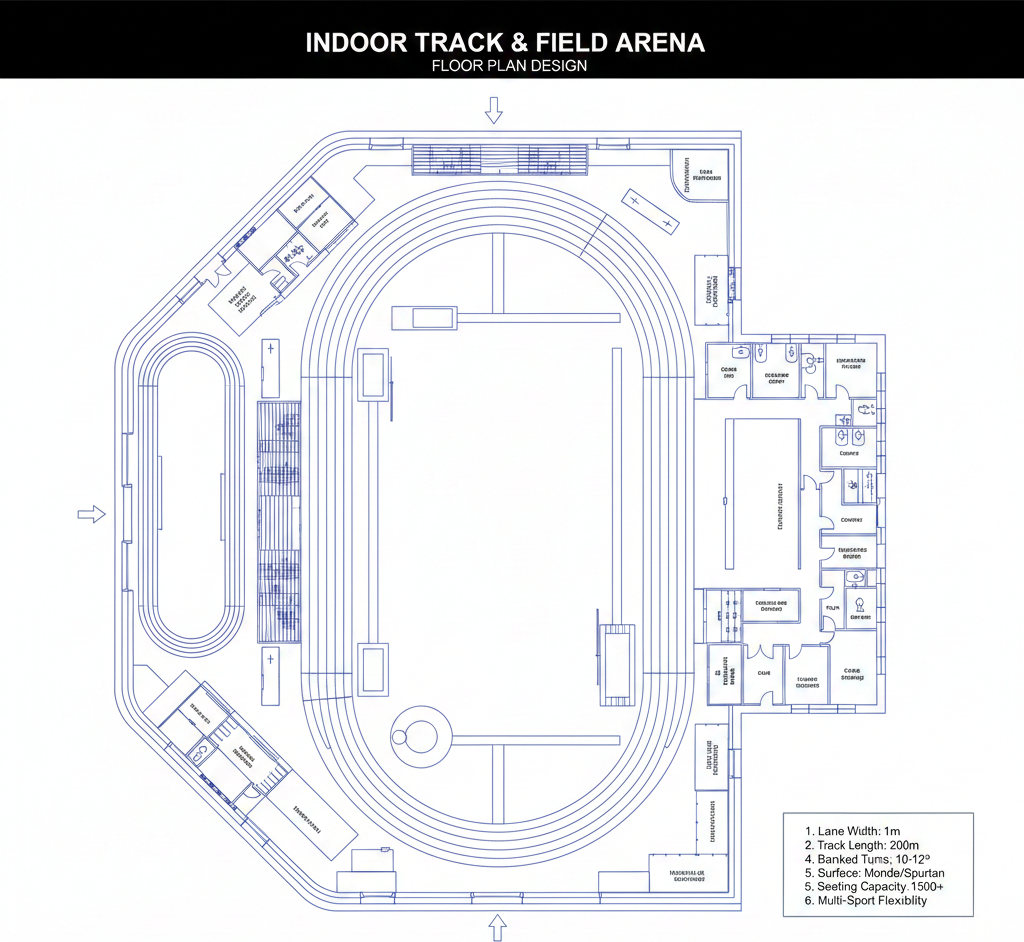
Indoor tracks are becoming an essential feature in modern gyms, schools, athletic centers, and sports complexes. They provide a safe, controlled environment for running, walking, and endurance training, regardless of weather conditions. But creating an efficient and functional indoor track requires careful planning—starting with a well-thought-out floor plan.
In this blog, we’ll explore the importance of an indoor track floor plan, design principles, layout options, materials, and tips to create a world-class indoor running facility.
Why an Indoor Track Floor Plan Matters
An indoor track floor plan is more than just lines on the floor—it is a blueprint for athlete performance, safety, and facility efficiency. A well-designed floor plan ensures:
-
Optimal Space Utilization: Maximizing available space without compromising safety or comfort.
-
Athlete Safety: Proper lane widths, curves, and surface materials reduce injury risks.
-
Performance Enhancement: Straightaways and curves are designed to support running mechanics and speed.
-
Multi-Purpose Use: Many indoor tracks also serve as walkways, warm-up areas, or fitness zones.
-
Compliance with Standards: Ensures adherence to international or national athletic facility guidelines.
Without a proper floor plan, indoor tracks may suffer from cramped lanes, unsafe turns, or inefficient use of space.
Key Components of an Indoor Track Floor Plan
1. Track Length and Lanes
Most indoor tracks are 200 meters per lap, smaller than the standard 400-meter outdoor track, due to space constraints. Standard design typically includes 4–6 lanes, each with a width of 1.0–1.2 meters, allowing multiple runners to train simultaneously without interference.
Design Tips:
-
Include staggered starts for competitions.
-
Ensure lane markings are clear and durable.
-
Plan for wider lanes in corners to accommodate centrifugal force while running.
2. Curves and Straightaways
Indoor tracks consist of two straightaways and two curves. The radius of the curve is critical to prevent slipping and allow natural running motion. Tight curves may cause strain or slow down athletes.
Design Recommendations:
-
Smooth, gradual curves are preferable for high-speed running.
-
Banking curves slightly can reduce impact on knees and joints.
-
Straightaways should be long enough to accommodate sprints and acceleration.
3. Safety Zones and Buffer Areas
A good floor plan includes buffer zones outside the running lanes to prevent collisions with walls, equipment, or spectators. These zones are essential for:
-
Warm-up and cool-down exercises
-
Stretching areas
-
Emergency access
Recommendation: At least 0.5–1 meter of buffer space around the track improves safety.
4. Track Surface and Flooring
The choice of flooring is crucial for performance, safety, and durability. Common indoor track surfaces include:
-
Polyurethane Tracks: Professional-grade, seamless, and shock-absorbing.
-
Rubber Flooring: Affordable, cushioned, and slip-resistant.
-
Synthetic Tartan Tracks: High durability and traction, suitable for competitive training.
Flooring material affects traction, energy return, and injury prevention. Your floor plan should integrate the surface type with track design, lane width, and drainage considerations.
5. Support Facilities
Indoor track floor plans often include additional spaces to enhance usability:
-
Warm-Up Areas: Small sections for dynamic stretches and mobility drills.
-
Fitness Stations: Strength training equipment, mats, or resistance bands near the track.
-
Spectator Zones: Seating for coaches, trainers, or audiences.
-
Storage: Space for cones, hurdles, or portable equipment.
Incorporating these facilities within the floor plan ensures a functional and user-friendly track.
Types of Indoor Track Layouts
The layout depends on the available space, facility type, and user needs. Here are some common indoor track layouts:
1. Oval Track Layout
The most common design, featuring two straightaways connected by two curved ends. Oval tracks are ideal for running, jogging, and sprinting.
Advantages:
-
Maximizes continuous running space
-
Standardized for competitions
-
Smooth transitions between curves and straightaways
2. Figure-8 Track Layout
Less common but used in multi-purpose facilities where overlapping tracks save space. Figure-8 tracks require careful planning to avoid collisions at intersections.
Advantages:
-
Space-efficient
-
Adds variety to running routes
Disadvantages:
-
Complex lane markings
-
Requires strict traffic control for multiple runners
3. Rectangular or Square Track Layout
Used in compact gyms or schools with limited space. Straight lines and sharp corners may reduce speed but provide an effective running loop.
Advantages:
-
Easy to construct
-
Efficient use of rectangular spaces
Disadvantages:
-
Harder on joints at sharp corners
-
Less natural running experience
Planning Your Indoor Track Floor Plan
Creating an indoor track floor plan requires careful consideration of dimensions, user needs, and safety. Here’s a step-by-step guide:
Step 1: Assess Available Space
Measure the total area of the indoor facility. Determine if the track will occupy the entire space or coexist with other fitness zones.
Step 2: Decide Track Type and Layout
Choose between oval, figure-8, or rectangular layouts based on space, user volume, and intended use.
Step 3: Determine Lane Numbers and Widths
Decide how many lanes are needed. Consider user volume, competition requirements, and safety.
Step 4: Select Flooring Material
Choose flooring that balances cushioning, durability, and maintenance. Polyurethane and rubber are preferred for professional and recreational tracks.
Step 5: Add Buffer Zones and Safety Areas
Include emergency access, warm-up zones, and spectator seating. Plan for at least 0.5 meters of buffer around lanes.
Step 6: Integrate Support Facilities
Include fitness stations, storage, and seating. Ensure the layout allows smooth traffic flow and easy access to all areas.
Step 7: Plan for Lighting and Ventilation
Indoor tracks require bright, evenly distributed lighting and proper ventilation to maintain comfort and safety during workouts.
Benefits of a Well-Designed Indoor Track Floor Plan
-
Safety First: Reduces the risk of collisions, slips, and injuries.
-
Improved Performance: Proper lane width, curves, and surfaces enhance running efficiency.
-
Space Optimization: Efficient layouts maximize the use of available space.
-
Flexibility: Supports multiple activities like walking, running, sprinting, and training.
-
Professional Appeal: A thoughtfully designed track attracts athletes, students, and fitness enthusiasts.
Conclusion
An indoor track floor plan is the foundation of a safe, functional, and high-performance indoor running facility. It’s not just about drawing lanes—it’s about maximizing space, ensuring safety, enhancing athlete performance, and integrating support facilities.
Whether you are building a school gym, fitness center, or professional sports complex, investing time in creating a detailed indoor track floor plan pays off in long-term usability, safety, and satisfaction.
With careful planning of lane widths, curves, surfaces, buffer zones, and support facilities, you can create an indoor track that meets professional standards and provides an excellent experience for all users.
Frequently Asked Questions (FAQ) – Indoor Track Floor Plan
1. What is an indoor track floor plan?
An indoor track floor plan is a detailed layout design showing the dimensions, lanes, surface type, and other features of an indoor running or athletics track. It helps in planning construction, safety, and sports performance.
2. What are the standard dimensions of an indoor running track?
-
Length: Typically 100–200 meters per lap, depending on available space
-
Lane width: 1–1.22 meters per lane
-
Number of lanes: Usually 4–8 lanes, based on usage and competition level
3. What surfaces are used for indoor track flooring?
Indoor track flooring can include:
-
PU (Polyurethane) track surfaces – professional-grade, durable
-
Rubberized synthetic surfaces – shock-absorbing, ideal for schools or gyms
-
Modular or interlocking tiles – for training areas and multi-purpose use
4. How is an indoor track floor plan designed?
Design includes:
-
Track layout and lane markings
-
Curves, straights, and bends to meet athletic standards
-
Safety zones and run-off areas
-
Lighting, ventilation, and seating arrangements for indoor arenas
5. Why is proper floor planning important for indoor tracks?
Proper planning ensures:
-
Athlete safety with shock absorption and adequate space
-
Optimal performance through uniform surface
-
Compliance with international standards like IAAF or World Athletics
-
Efficient use of indoor space for multi-sport purposes
6. Can indoor tracks be multi-purpose?
Yes, many indoor track floor plans allow multipurpose use, such as:
-
Sprint training and running
-
Fitness and aerobics classes
-
Small sports events (volleyball, futsal, badminton)
7. How long does it take to implement an indoor track floor plan?
Construction depends on size and surface:
-
Small gym tracks: 7–10 days
-
Professional PU or synthetic tracks: 15–25 days
-
Large multi-lane stadium tracks: 3–6 weeks
8. What is the cost of an indoor track floor in India?
Cost varies by material, size, and complexity:
-
Rubber or PVC tracks: ₹1,200–₹2,500 per sq. meter
-
PU tracks: ₹2,500–₹5,000 per sq. meter
9. How is drainage and maintenance handled for indoor tracks?
Indoor tracks require:
-
Subfloor leveling and moisture-proofing
-
Regular cleaning and inspections
-
Repainting lane markings and checking surface integrity periodically
10. Who designs indoor track floor plans?
Professional sports flooring experts or architects specializing in athletic facilities design indoor track floor plans to meet safety, performance, and regulatory standards.
11. How long does an indoor track last?
With proper installation and maintenance:
-
Synthetic or PU tracks: 8–12 years
-
Rubberized or modular surfaces: 6–10 years
12. Can indoor tracks be used for professional competitions?
Yes, indoor tracks designed with IAAF-compliant layouts and PU surfaces can host national and international athletic events.