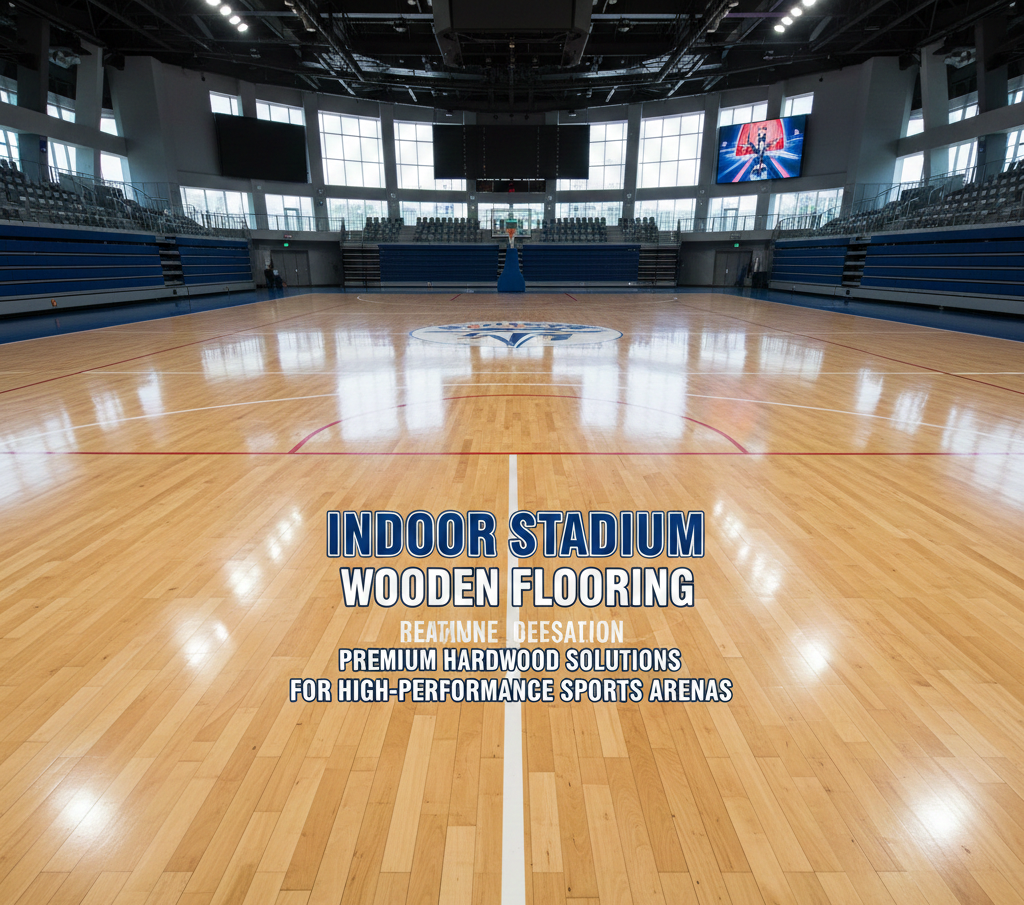
Indoor stadiums form the foundation of modern sports infrastructure, supporting everything from professional tournaments and national-level competitions to institutional training programs and community sports development. While lighting, seating, and equipment play important roles, the flooring system is the most critical component of any indoor stadium. It directly influences athlete performance, safety, comfort, and the long-term usability of the facility.
Among all available sports flooring options, indoor stadium wooden flooring is globally recognized as the gold standard. Its unmatched shock absorption, consistent playability, structural resilience, and visual appeal make it the preferred choice for professional sports arenas worldwide. Designed to meet the rigorous demands of competitive sports, wooden flooring systems deliver a perfect balance of strength, flexibility, and durability.
This blog explores the importance of indoor stadium wooden flooring, its technical advantages, types of systems, installation methodology, applications, and long-term maintenance considerations.
Why Indoor Stadium Wooden Flooring Is the Preferred Choice
Wooden flooring has remained the top choice for indoor stadiums across the world for decades. Unlike rigid concrete or synthetic surfaces, hardwood sports floors are engineered systems, not just surface finishes. They are designed to absorb impact energy, reduce injury risk, and maintain consistent performance under intense athletic activity.
Key Advantages of Indoor Stadium Wooden Flooring
1. Superior Shock Absorption
One of the most important benefits of indoor stadium wooden flooring is its ability to absorb shock. Advanced understructure systems allow the floor to flex slightly under load, dispersing impact forces generated during jumping, sprinting, and sudden directional changes.
This shock absorption significantly reduces stress on athletes’ knees, ankles, hips, and lower back, minimizing fatigue and lowering the risk of long-term injuries. For high-intensity sports and extended training sessions, this feature is essential.
2. Consistent Ball Bounce and Playing Performance
Consistency is critical in competitive sports. Indoor stadium wooden flooring provides uniform elasticity and surface response, ensuring predictable ball bounce across the entire court.
This is especially important for sports such as basketball, volleyball, handball, and badminton, where inconsistent rebound can affect gameplay fairness and athlete confidence. A professionally installed wooden sports floor ensures reliable performance during both training and official matches.
3. High Load-Bearing Capacity
Indoor stadiums often host large crowds, heavy sports equipment, and continuous foot traffic. Wooden sports flooring systems are designed to handle these loads without deformation or performance loss.
High-quality hardwood combined with engineered understructures provides excellent structural strength, making wooden flooring suitable for tournaments, multi-day events, and high-frequency usage environments.
4. Enhanced Grip and Slip Resistance
Player safety depends heavily on surface traction. Indoor stadium wooden flooring is finished with specialized PU (polyurethane) coatings that offer optimal grip without being abrasive.
This controlled friction allows athletes to move quickly, change direction confidently, and stop safely without the risk of slipping or excessive joint strain.
5. Professional Aesthetics and Stadium Appeal
Beyond performance, wooden flooring enhances the visual identity of an indoor stadium. The natural texture, polished finish, and clean court markings create a professional atmosphere that elevates the overall spectator and athlete experience.
Well-designed wooden flooring contributes to the prestige of a sports venue and reflects international standards of quality.
Types of Wood Used in Indoor Stadium Wooden Flooring
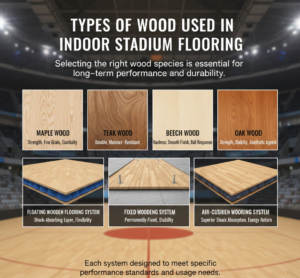
Selecting the right wood species is essential for durability, stability, and long-term performance. Only premium, well-seasoned hardwoods are suitable for professional indoor stadium flooring.
Commonly Used Hardwood Options
-
Maple Wood
The most widely used wood for professional sports floors worldwide. Maple offers excellent strength, fine grain texture, uniform elasticity, and superior ball response. -
Teak Wood
Known for its exceptional durability and moisture resistance, teak is suitable for regions with varying climatic conditions. -
Beech Wood
Valued for its hardness and smooth finish, beech wood provides excellent surface consistency and energy return. -
Oak Wood
Strong, stable, and visually appealing, oak is often used in multipurpose stadiums and premium sports halls.
Each wood type is selected based on sport type, usage intensity, environmental conditions, and design requirements.
Indoor Stadium Wooden Flooring Systems
Modern indoor stadium wooden flooring is not a single-layer installation. It is a multi-layered, engineered system designed for performance and longevity.
1. Floating Wooden Flooring System
In this system, the wooden surface rests on shock-absorbing layers without being directly fixed to the subfloor. It allows controlled movement and flexibility, making it ideal for multipurpose stadiums that host different sports and events.
2. Fixed Wooden Flooring System
Fixed systems involve permanently anchoring wooden planks to an understructure. This provides maximum stability and is suitable for dedicated sports courts with consistent usage patterns.
3. Air-Cushion Wooden Flooring System
The air-cushion system is the most advanced option for indoor stadiums. It incorporates resilient pads or air gaps that offer superior shock absorption and energy return.
This system is commonly used in professional arenas and international competition venues where athlete safety and performance are top priorities.
Technical Features of Indoor Stadium Wooden Flooring
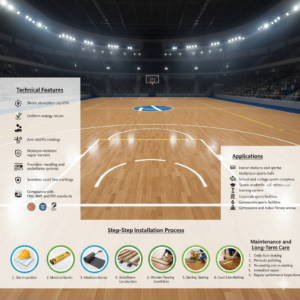
Professionally installed wooden flooring systems include advanced technical elements such as:
-
Shock absorption up to 65%
-
Uniform energy return across the surface
-
Anti-skid PU coatings for safety
-
Moisture-resistant vapor barriers
-
Precision-engineered underframe systems
-
Seamless court line markings
-
Compliance with FIBA, BWF, and ISO standards
These features ensure structural stability, consistent performance, and long service life.
Step-by-Step Installation Process
A precise installation process is crucial for the success of indoor stadium wooden flooring. Professional execution ensures both performance and durability.
1. Site Inspection and Surface Evaluation
Assessment of subfloor condition, moisture levels, load capacity, and structural alignment.
Applications of Indoor Stadium Wooden Flooring
Indoor stadium wooden flooring is suitable for a wide range of facilities and sports:
-
Indoor stadiums and sports arenas
-
Multipurpose sports halls
-
School and college sports complexes
-
Sports academies and training centers
-
Corporate sports facilities
-
Gymnasiums and indoor fitness arenas
Its versatility makes it ideal for both professional and institutional environments.
Maintenance and Long-Term Care
Proper maintenance is essential to preserve performance and appearance. With regular care, wooden sports floors can last over 20 years.
Recommended Maintenance Practices
-
Daily dust cleaning and surface wiping
-
Periodic polishing to maintain traction
-
Re-sanding and re-coating every few years
-
Immediate repair of damaged areas
-
Routine performance inspections
Professional maintenance ensures consistent playability and extends the flooring’s lifespan.
Why Professional Expertise Matters
Indoor wooden flooring is a specialized discipline requiring technical knowledge and experience. Professional experts ensure:
-
Correct wood and system selection
-
Compliance with international standards
-
Accurate installation and leveling
-
Long-term safety and durability
-
Comprehensive after-sales support
Choosing experienced professionals guarantees that your indoor stadium meets global performance benchmarks.
Conclusion
Indoor wooden flooring remains the ultimate choice for high-performance sports environments. With superior shock absorption, consistent playability, structural strength, and timeless aesthetics, hardwood sports flooring sets the standard for professional indoor arenas.
By investing in expertly designed and installed wooden flooring systems, stadium owners ensure athlete safety, enhanced performance, and long-term value—creating sports facilities that meet international standards and stand the test of time.
Frequently Asked Questions (FAQ) – Indoor Stadium Wooden Flooring
1. What is indoor stadium wooden flooring?
Indoor stadium wooden flooring is a high-performance sports floor system, usually made from maple or engineered hardwood, designed for professional indoor sports like basketball, volleyball, handball, and multi-sport events.
3. Which type of wood is best for indoor stadium sports flooring?
Hard maple wood is the most commonly used material due to its strength, uniform grain, durability, and ability to meet international sports performance standards.
4. What are the standard dimensions for indoor stadium wooden floors?
Floor dimensions depend on the sport, but for basketball, the standard playing area is 28 m × 15 m, with additional safety run-off areas around the court as per international guidelines.
5. How is indoor stadium wooden flooring installed?
The system is installed in layers, including:
-
Level concrete or RCC subfloor
-
Moisture barrier
-
Shock-absorbing cushion or batten system
-
Engineered or solid wood planks
-
Line marking and surface finishing
6. What thickness is required for wooden sports flooring?
The total system thickness usually ranges from 50 mm to 90 mm, depending on the shock-absorption system and performance requirements.
7. Can wooden flooring be installed over existing concrete floors?
Yes, wooden sports flooring can be installed over existing concrete or RCC surfaces, provided the base is level, dry, and structurally sound.
8. What ceiling height is recommended for an indoor stadium?
A minimum ceiling height of 9–12 meters is recommended for indoor stadiums to allow proper ball movement and professional gameplay.
9. How long does it take to install wooden flooring in an indoor stadium?
Installation generally takes 15–25 days, depending on court size, flooring system, and site conditions.
10. What is the cost of indoor stadium wooden flooring?
In India, stadium wooden flooring typically costs between ₹3,500 and ₹8,000 per sq. meter, depending on wood type, system design, and performance specifications.
11. What maintenance does wooden stadium flooring require?
Maintenance includes regular dry cleaning, controlled humidity, and periodic polishing or recoating to maintain performance and appearance.
12. How long does stadium wooden flooring last?
With proper installation and maintenance, wooden stadium flooring can last 15–20 years or more, even under heavy professional use.
14. Does stadium wooden flooring meet international standards?
Yes, professional wooden flooring systems comply with FIBA, FIVB, and other international sports federation standards when installed by certified experts.