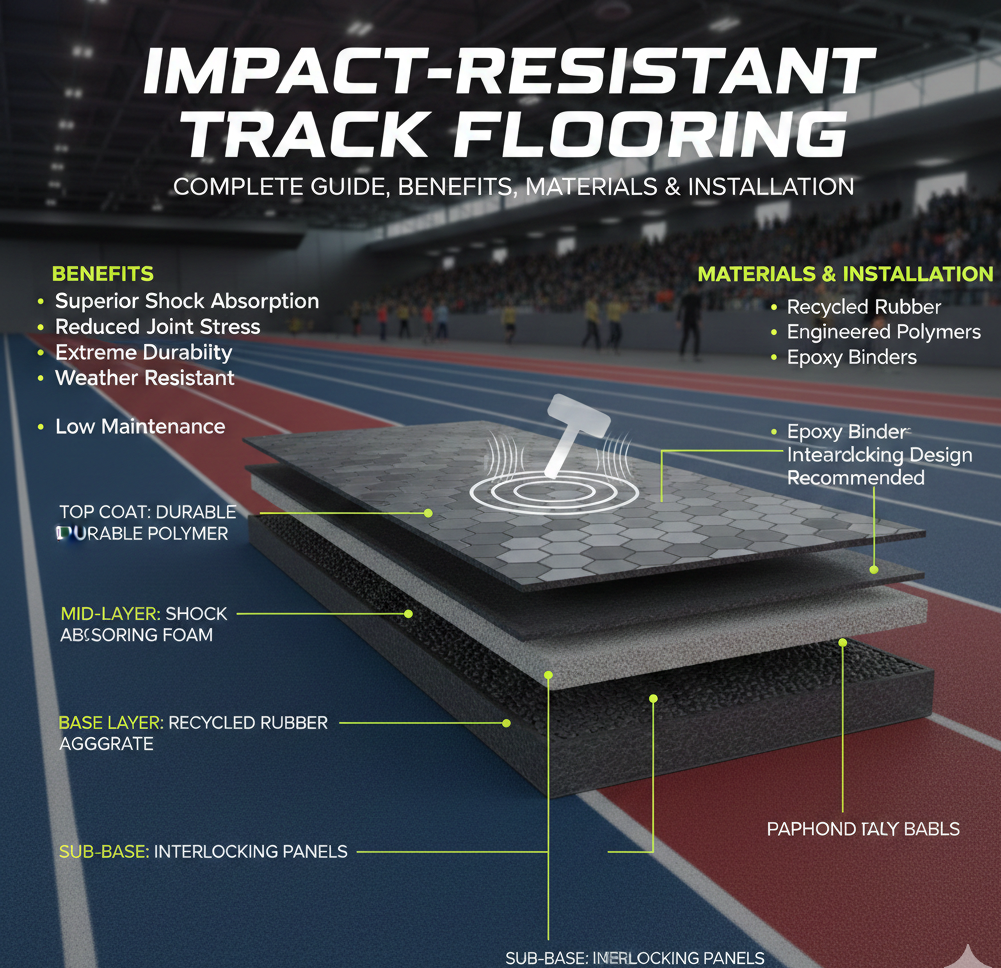
Modern sports and fitness environments demand flooring solutions that go beyond basic durability. Running tracks, fitness pathways, sports complexes, and multi-activity zones are subjected to constant stress from repetitive foot strikes, high-impact movements, weather exposure, and heavy daily use. To meet these demands, impact-resistant track flooring has become an essential component of safe and high-performance athletic infrastructure.
Designed to absorb shocks, reduce injury risks, and withstand intense wear, impact-resistant track flooring plays a vital role in enhancing user comfort and extending the lifespan of sports surfaces. From professional stadiums and educational institutions to residential communities and public parks, these flooring systems provide a reliable foundation for safe movement and long-term use.
This in-depth guide explains what impact-resistant track flooring is, why it matters, the materials used, key performance features, design considerations, installation methods, maintenance practices, and its wide range of applications.
What Is Impact-Resistant Track Flooring?
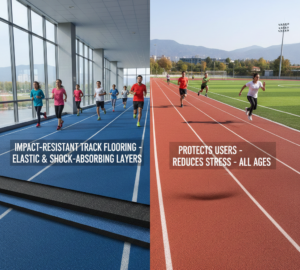
Impact-resistant track flooring refers to specialized surface systems engineered to absorb and distribute force generated by running, jumping, and walking activities. Unlike conventional hard surfaces, these flooring systems are built with elastic and shock-absorbing layers that minimize surface damage and protect users from impact-related stress.
Such flooring systems are typically made using materials like EPDM rubber, polyurethane (PU), acrylic coatings, synthetic rubber tiles, or prefabricated rubber sheets combined with cushioning layers. Their primary function is to maintain structural integrity and comfort even under repetitive pressure and sudden impacts.
Impact-resistant track flooring is suitable for both indoor and outdoor environments, offering a balanced combination of safety, resilience, and performance for people of all age groups.
Why Impact Resistance Is Crucial for Track Flooring
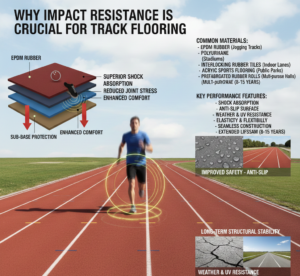
Every running step generates force that travels through the body into the ground. Over time, repeated impact can strain joints, cause surface wear, and lead to safety hazards if the flooring is not designed to absorb stress effectively.
Impact-resistant track flooring addresses these challenges in several important ways:
1. Superior Shock Absorption
These surfaces absorb impact energy and disperse it evenly, reducing stress on knees, ankles, hips, and the spine.
2. Improved Safety Levels
Cushioned and slip-resistant surfaces reduce the risk of falls, slips, and hard-impact injuries during high-intensity activity.
3. Long-Term Structural Stability
High-quality impact-resistant materials resist cracking, deformation, and surface breakdown even under continuous use.
4. Enhanced Comfort and Performance
Runners experience better traction, controlled stride movement, and reduced muscle fatigue.
5. Sub-Base Protection
By absorbing force at the surface level, the flooring protects the underlying base layers, extending the overall lifespan of the track.
Common Materials Used in Impact-Resistant Track Flooring
Different usage environments require different flooring materials. Below are the most widely used and effective materials for creating impact-resistant tracks.
1. EPDM Rubber Flooring
EPDM (Ethylene Propylene Diene Monomer) rubber is one of the most popular materials for impact-resistant running surfaces.
Key Characteristics:
-
Excellent elasticity and cushioning
-
High resistance to weather, UV rays, and moisture
-
Slip-resistant texture
-
Long service life of 10–15 years
-
Available in a wide range of colors
Best Used For:
-
Jogging tracks
-
School and college campuses
-
Fitness pathways
-
Outdoor recreational parks
2. Polyurethane (PU) Track Systems
PU track flooring is widely used in professional and semi-professional athletic facilities due to its advanced performance properties.
Advantages:
-
Exceptional shock absorption
-
Seamless and smooth surface
-
High durability under intense training
-
Retains elasticity over time
-
Suitable for competitive running
Best Used For:
-
Stadium tracks
-
Athletic training centers
-
High-performance running circuits
3. Interlocking Rubber Tiles
Rubber tiles provide a modular flooring solution that is both impact-resistant and easy to maintain.
Benefits:
-
Easy installation and replacement
-
Strong grip and slip resistance
-
Effective shock absorption
-
Low maintenance requirements
Best Used For:
-
Indoor running lanes
-
School corridors
-
Community fitness areas
4. Acrylic Sports Flooring
Acrylic flooring systems are a cost-effective option for areas with moderate impact requirements.
Features:
-
Weather-resistant and durable
-
Textured anti-slip finish
-
Quick installation
-
Economical solution for large areas
Best Used For:
-
Public parks
-
Outdoor walking tracks
-
School play and jogging zones
5. Prefabricated Rubber Rolls
Rubber rolls are factory-manufactured sheets designed to deliver uniform cushioning across large surfaces.
Key Benefits:
-
Consistent impact absorption
-
Quick installation using adhesives
-
Excellent resistance to wear and tear
-
Suitable for heavy foot traffic
Best Used For:
-
Indoor fitness tracks
-
Long-distance walking pathways
-
Multi-purpose sports halls
Key Performance Features of Impact-Resistant Track Flooring
A high-quality impact-resistant track system offers several essential features that ensure safety, durability, and comfort.
1. Shock Absorption
Minimizes stress on joints by absorbing repetitive impact forces.
2. Anti-Slip Surface
Provides reliable traction even in wet, humid, or dusty conditions.
3. Weather and UV Resistance
Prevents fading, cracking, and hardening due to sun exposure and temperature changes.
4. Elasticity and Flexibility
Maintains surface bounce and responsiveness over time.
5. Seamless Construction
Reduces dirt accumulation and simplifies cleaning.
6. Noise Reduction
Dampens sound from foot impact, especially beneficial in indoor spaces.
7. Extended Lifespan
Depending on material and maintenance, these systems can last 8–15 years.
Design Considerations for Impact-Resistant Tracks
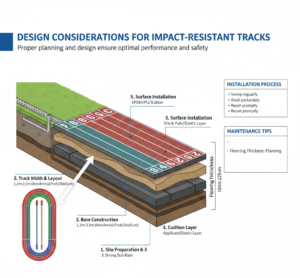
Proper planning and design ensure optimal performance and safety.
1. Flooring Thickness
Typical thickness ranges from 10mm to 25mm, depending on expected usage intensity.
2. Track Width and Layout
Common width standards include:
-
1.2–1.5 meters for residential tracks
-
1.5–2 meters for parks and public areas
-
2–2.5 meters for stadium and professional use
Track layouts may be oval, circular, linear, or freeform.
3. Strong Sub-Base
A stable base prevents surface movement and deformation. Common base materials include concrete, asphalt, or compacted stone.
4. Drainage Planning
Effective drainage prevents water accumulation and preserves surface quality.
5. Color and Visibility
Popular colors such as red, green, blue, and black enhance aesthetics and visibility.
Installation Process for Impact-Resistant Track Flooring
While installation methods vary by material, the general process includes:
-
Site Preparation – Leveling, compacting, and cleaning the ground
-
Base Construction – Installing concrete or asphalt for stability
-
Cushion Layer Application – Adding shock pads or elastic layers
-
Surface Installation – Pouring EPDM, applying PU, interlocking tiles, or rolling rubber sheets
-
Marking and Finishing – Adding track lines, distance markers, and curing the surface
Professional installation ensures uniform thickness and long-term performance.
Maintenance Tips for Long-Lasting Performance
Impact-resistant track flooring requires minimal maintenance, but routine care helps maximize lifespan.
-
Sweep regularly to remove dust and debris
-
Wash the surface periodically with water
-
Avoid dragging sharp or heavy objects
-
Repair damaged sections promptly
-
Keep drainage systems clear
-
Recoat acrylic surfaces periodically to restore grip and color
Applications of Impact-Resistant Track Flooring
These flooring systems are widely used in:
-
Running and jogging tracks
-
Walking circuits
-
School playgrounds
-
Public and private parks
-
Corporate wellness zones
-
Indoor fitness corridors
-
Stadium warm-up tracks
-
Multi-sport facilities
-
Senior citizen walking paths
Conclusion
Impact-resistant track flooring is an essential investment for any sports or fitness environment focused on safety, comfort, and long-term durability. By absorbing shock, reducing injury risk, and maintaining surface integrity under constant use, these systems provide a superior experience for runners and walkers alike.
Whether constructed using EPDM rubber, polyurethane, acrylic coatings, or modular rubber tiles, impact-resistant track flooring offers reliable performance across a wide range of applications. With proper design, installation, and maintenance, it delivers lasting value while supporting healthier and safer movement for users of all ages.