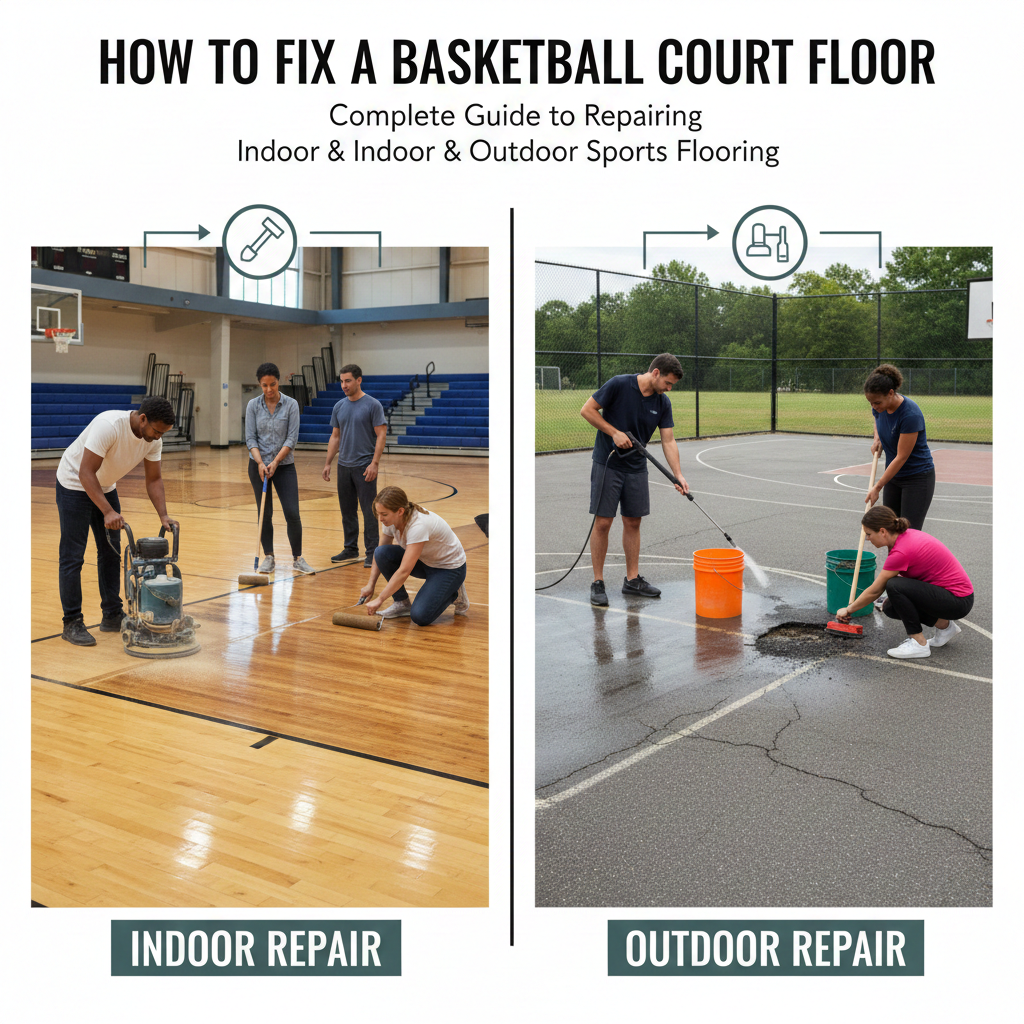
A basketball court floor is one of the most heavily used sports surfaces. From continuous running and jumping to aggressive gameplay, the flooring absorbs constant stress—which means issues like cracks, dents, loose planks, peeling paint, water damage, or uneven areas are common over time. Whether the court is made of hardwood, synthetic PU, rubber tiles, or concrete acrylic, proper repair and maintenance is essential to keep the floor safe, smooth, and high-performing.
If you’re wondering how to fix a basketball court floor, this complete guide covers everything: types of damages, repair methods, professional restoration processes, tools, materials, and prevention tips. This detailed, high-value blog is useful for facility owners, schools, clubs, indoor arenas, builders, and anyone responsible for maintaining sports courts.
Why Basketball Court Floor Repair Is Important
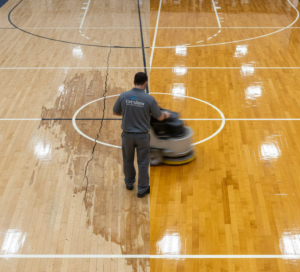
A damaged court floor does more than affect performance—it can create serious safety issues. Repairing the floor ensures:
-
Better player safety – A smooth, stable surface reduces risk of falls, slides, and ankle injuries.
-
Consistent ball bounce – Even minor dips or soft spots impact playability.
-
Long flooring lifespan – Timely repairs prevent minor flaws from turning into major structural failures.
-
Professional appearance – A well-maintained court improves the overall sports facility image.
-
Cost savings – Fixing early damage is far cheaper than full replacement.
Whether the damage is small or extensive, proper fixing extends the court’s durability and performance for years.
Types of Damage Found in Basketball Court Floors
Before planning repairs, it’s crucial to identify the problem. Different flooring materials show different types of issues.
1. Hardwood Basketball Courts (Maple / Teak)
Most indoor courts use hardwood, and common problems include:
-
Surface scratches, scuff marks
-
Loose or squeaky planks
-
Warping due to moisture
-
Gaps between boards
-
Finish peeling or fading
-
Dead spots (no ball bounce)
-
Minor cracks due to drying
2. Synthetic PU / PVC Vinyl Flooring
These floors are popular for indoor multi-sport courts.
Common issues:
-
Surface cuts or tears
-
Bubble formation
-
Delamination of layers
-
Paint fading
-
Wear & tear in high-traffic zones
3. Outdoor Acrylic Basketball Courts
Outdoor courts built on concrete or asphalt face:
-
Cracks in the base
-
Faded color coating
-
Uneven surfaces
-
Water pooling
-
Loose line markings
4. Rubber Tile Floors
Often used in training zones or school courts.
Typical issues include:
-
Tile displacement
-
Edge curling
-
Surface denting
-
Tile shrinkage
Step-by-Step Guide: How to Fix a Basketball Court Floor
The repair method depends on the type of flooring, severity of damage, and whether the court is indoors or outdoors.
Below is a complete professional process for each floor type.
A. How to Fix Hardwood Basketball Court Floors
Hardwood floors require a systematic restoration approach.
Inspect the Surface Thoroughly
A detailed inspection helps identify:
-
Soft areas
-
Loose planks
-
Water-damaged sections
-
Low spots
-
Finish quality
-
Ball bounce issues
Use moisture meters to test humidity levels, as wood damage is often moisture-related.
Repair Surface Scratches
Minor scratches can be buffed out using:
-
Fine-grit sandpaper
-
Buffing machines
-
Wood touch-up pens
-
Spot refinishing
Deep scratches may require sanding and filling.
Fix Loose or Damaged Planks
Loose planks create noise and unevenness.
Solutions:
-
Reinforce planks using nails or screws
-
Replace severely damaged boards
-
Reconnect loose tongues/grooves
-
Use wood adhesive for minor gaps
Correct Warping or Moisture Damage
If boards are lifted or swollen:
-
Identify and fix the moisture source
-
Dehumidify the court
-
Replace affected boards
-
Re-sand and level the area
Moisture issues must be solved before refinishing.
Sand & Refinish the Entire Floor
For major restoration:
-
Sand the entire court using a drum sander
-
Apply wood filler where needed
-
Vacuum and clean thoroughly
-
Add base coat of sealer
-
Apply polyurethane sports finish (2–3 coats)
-
Repaint court lines
-
Add final topcoat
This process renews the appearance and performance of the court entirely.
B. How to Fix PU / PVC Sports Flooring
These floors require different repair strategies.
Clean and Evaluate the Damaged Area
Identify cuts, swelling, bubbles, or wear zones.
Fix Cuts or Tears
-
Apply PU adhesives
-
Press and fuse the surface
-
Trim excess material
-
Recoat with PU finish
Remove Bubbles or Raised Areas
-
Cut a small hole
-
Remove trapped air
-
Inject adhesive
-
Press and flatten
-
Heat-seal if required
Fix Delamination
If the flooring detaches from the base:
-
Lift the loose part
-
Clean the sub-floor
-
Reapply adhesive
-
Fix with heavy rolling pressure
Repaint Lines
Use sports-grade PU acrylic paint for:
-
Lines
-
Logos
-
Zones
Step 6: Recoat Entire Floor
Apply a protective PU sealant for uniform finish and durability.
C. How to Fix Outdoor Concrete or Acrylic Basketball Courts
Outdoor courts face more environmental challenges.
Repair Cracks
-
Clean cracks thoroughly
-
Fill using concrete crack filler
-
Level the base
-
Allow proper curing
Fix Uneven or Damaged Surface
Use:
-
Cement mortar
-
Polymer resurfacer
-
Asphalt patch material
Fix Color Fading
Apply a fresh coat of:
-
Acrylic resurfacer
-
Color coating
Repaint Game Lines
Ensure lines match official basketball standards.
Seal the Surface
A protective coat enhances life and weather resistance.
D. How to Fix Rubber Tile Courts
: Replace Damaged Tiles
Simply lift and replace affected tiles.
: Fix Curling Edges
Apply rubber adhesive and re-roll.
: Correct Gaps
Adjust tiles manually or replace shrunken ones.
Tools & Materials Commonly Used in Basketball Court Floor Repair
-
Floor sanders & buffers
-
PU adhesives
-
Wood fillers
-
Moisture meters
-
Concrete resurfacer
-
Line marking paint
-
Sealers & topcoats
-
Heat gun
-
Scrapers
-
Rubber mallets
Preventive Maintenance Tips
Once repaired, follow these steps to extend life:
-
Clean regularly with non-acidic cleaners
-
Maintain proper humidity in indoor courts
-
Avoid water spills
-
Use protective mats at entrances
-
Recoat hardwood floors every 12–18 months
-
Inspect for early signs of wear
-
Restrict non-sports footwear
Good maintenance reduces the need for frequent repairs.
Conclusion
Fixing a basketball court floor is about restoring safety, performance, and aesthetics. Whether the court is made of hardwood, PU, PVC, acrylic, or rubber, following the correct repair process ensures the surface returns to its original professional quality. Small defects should be fixed immediately to prevent expensive repairs later, and regular maintenance is essential for long-term durability.
A properly repaired and maintained basketball court delivers seamless ball bounce, improved traction, and a professional playing experience—making it a worthwhile investment for any sports facility.