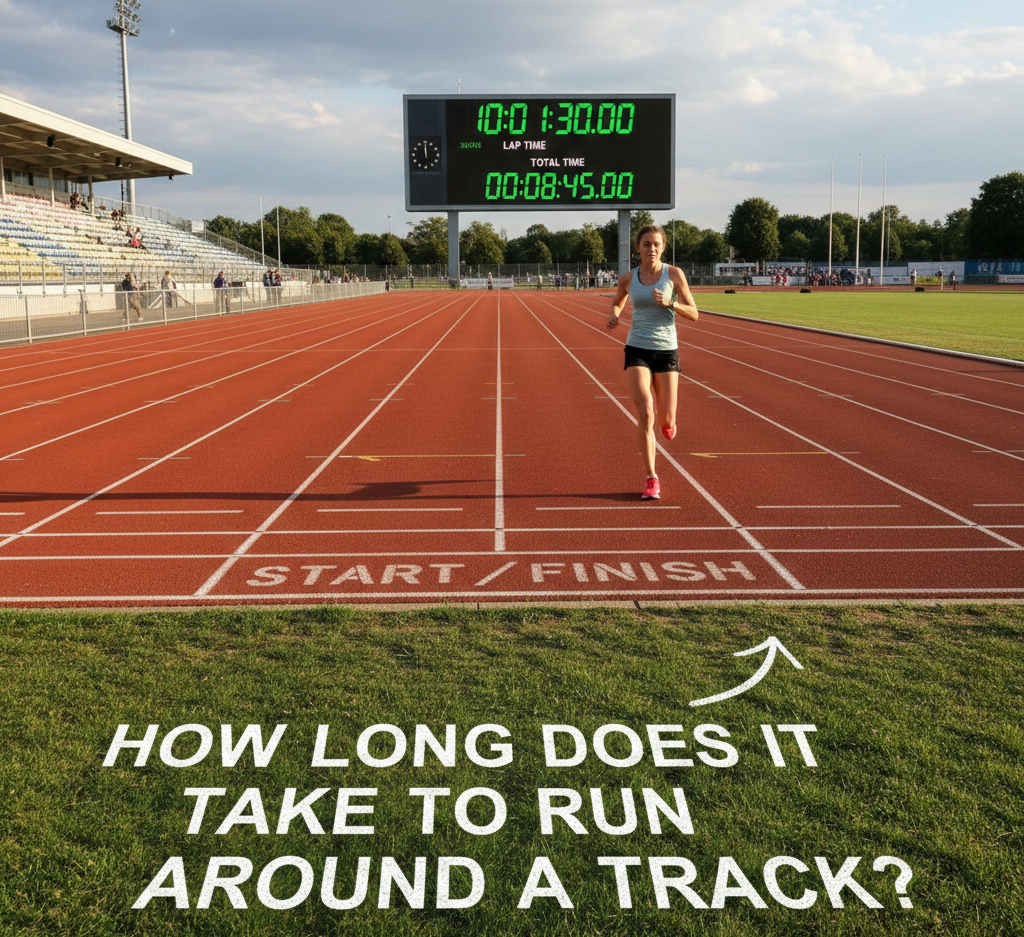
Running is one of the most accessible and effective forms of physical activity. You don’t need expensive equipment, gym memberships, or complicated routines—just a pair of shoes and the willingness to move. Among all running environments, the track remains one of the most popular and reliable places to train. This naturally leads many people to wonder: How long does it actually take to run around a track?
At first glance, the question seems straightforward. But once you dig deeper, you realize the answer depends on multiple factors, such as the length of the track, your pace, fitness level, and even external conditions like weather. In this guide, we’ll break everything down—from understanding track distances to calculating your pace and improving your lap time—so you get a complete and realistic picture.
Understanding Track Distances
Before talking about time, it’s essential to know the distance you’re covering. Most people assume all tracks are the same, but that’s not always the case.
Standard Running Track
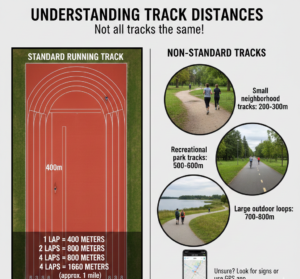
A standard outdoor athletics track measures 400 meters per lap when running in the innermost lane. This is the official measurement used in schools, universities, and professional stadiums worldwide.
-
1 lap = 400 meters
-
2 laps = 800 meters
-
4 laps = 1,600 meters (approximately 1 mile)
Because of this consistency, track running is ideal for accurately measuring speed, distance, and endurance.
Non-Standard Tracks
Not all tracks follow the 400-meter standard. Many public parks, residential jogging paths, and fitness zones have different lap lengths, such as:
-
Small neighborhood tracks: 200–300 meters
-
Recreational park tracks: 500–600 meters
-
Large outdoor loops: 700–800 meters
If you’re unsure about your track’s length, look for posted signs or use a GPS-based fitness app to measure it.
Average Time to Run One Lap
The time it takes to complete a lap depends heavily on your pace and fitness level. Below are general estimates for a 400-meter track, assuming continuous movement without stopping.
Estimated Lap Times by Ability Level
-
Elite athletes: 40–55 seconds
-
Competitive runners: 60–90 seconds
-
Regular runners: 1:30–2:00 minutes
-
Recreational joggers: 2:15–3:00 minutes
-
Fast walkers: 4:00–5:30 minutes
-
Casual walkers: 6:00 minutes or more
These times are averages, not rules. Your own lap time may fall outside these ranges—and that’s completely normal.
What Influences How Fast You Run a Lap?

Even on a flat, measured surface like a track, several factors affect how long it takes to complete a lap.
1. Fitness and Endurance
Cardiovascular fitness plays the biggest role. A beginner may struggle to maintain a steady pace for even one lap, while a trained runner can sustain speed over multiple laps without fatigue.
2. Running Speed and Pace Control
Some runners start too fast and slow down quickly. Others maintain an even pace throughout. Learning how to pace yourself properly often results in faster overall lap times.
3. Technique and Form
Efficient running form helps conserve energy. Good posture, relaxed shoulders, proper arm swing, and an optimal stride length all contribute to smoother, faster laps.
4. Track Surface
Synthetic rubber tracks provide better traction and shock absorption, allowing for faster movement. Hard concrete or uneven dirt paths can slow you down and increase physical strain.
5. Weather Conditions
Heat, humidity, wind, and air quality all impact performance. Cooler temperatures generally support faster running, while hot or humid conditions slow most people down.
6. Mental Focus
Motivation matters more than many realize. Running with purpose—such as timing laps or chasing a personal goal—can significantly improve performance.
Calculating Your Lap Time and Speed
Knowing how to calculate your speed and pace helps you track progress accurately.
Simple Speed Formula
Speed (km/h) =
Distance (meters) ÷ Time (seconds) × 3.6
Examples
-
If you run 400 meters in 2 minutes (120 seconds):
400 ÷ 120 × 3.6 = 12 km/h -
If you complete a lap in 90 seconds:
Speed ≈ 16 km/h
Using a stopwatch, smartwatch, or fitness app makes tracking much easier and more accurate.
How Many Laps Equal Common Distances?
Because a standard track is 400 meters, converting laps into distances is simple:
-
1 kilometer: 2.5 laps
-
1 mile: 4 laps
-
3 kilometers: 7.5 laps
-
5 kilometers: 12.5 laps
-
10 kilometers: 25 laps
These conversions are especially useful if you’re training for road races or fitness goals but prefer running on a track.
Improving Your Time Around the Track

If your goal is to run faster or more comfortably, consistency and smart training make a big difference.
1. Warm Up Properly
A 5–10 minute warm-up prepares muscles and joints, improving performance and reducing injury risk.
2. Try Interval Training
Alternate between fast laps and slow recovery laps. This boosts speed, endurance, and cardiovascular strength.
3. Focus on Breathing
Controlled breathing improves oxygen flow and reduces fatigue. Many runners use rhythmic breathing patterns to stay steady.
4. Build Strength
Leg and core strength support efficient movement. Exercises like squats, lunges, and planks help improve running power.
5. Track Progress Over Time
Recording lap times allows you to see improvements that might not feel obvious day-to-day. Even small gains matter.
Setting Realistic Expectations
It’s important to match your goals with your experience level.
-
Beginners: Aim to complete one full lap comfortably, then gradually increase laps.
-
Intermediate runners: Focus on consistency—maintaining the same pace across multiple laps.
-
Advanced runners: Work on speed refinement, endurance, and recovery between laps.
Comparing yourself to elite athletes is unnecessary. Progress is personal, and improvement looks different for everyone.
Why Running on a Track Is So Effective
Running tracks offer several advantages that make them ideal for both beginners and experienced runners:
-
Accurate distance measurement
-
Flat, predictable surface
-
Reduced injury risk
-
Easy pace tracking
-
Ideal environment for intervals and timed runs
These benefits make tracks perfect for structured workouts and performance monitoring.
Final Thoughts
So, how long does it take to run around a track? For most people, a single lap of a standard 400-meter track takes between 2 and 3 minutes at a comfortable jogging pace. Faster runners may finish in under a minute, while walkers may take five minutes or more.
What truly matters isn’t the time on the clock—it’s the commitment to showing up and improving step by step. Whether you’re running one lap or twenty, every round around the track strengthens your body, sharpens your focus, and moves you closer to better health.