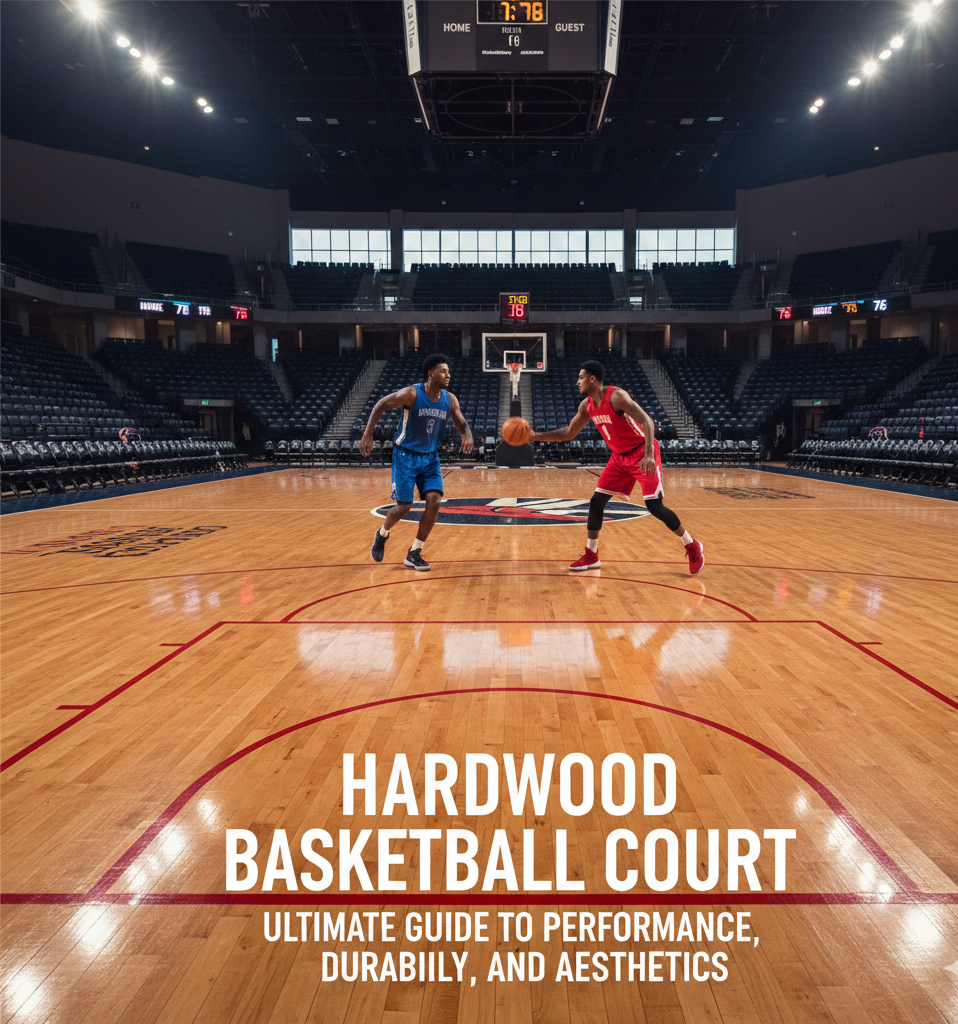
Basketball is more than just a competitive sport—it is a discipline that demands speed, precision, agility, and physical endurance. Whether played at the professional level, within educational institutions, or in community sports facilities, the quality of the playing surface plays a decisive role in athlete performance and safety. Among all available indoor basketball flooring options, hardwood basketball courts are widely regarded as the benchmark of excellence.
Renowned for their durability, natural shock absorption, consistent ball response, and timeless appearance, hardwood courts are the preferred choice for professional leagues, sports academies, indoor arenas, and premium recreational facilities. A well-constructed hardwood basketball court not only enhances the quality of play but also adds long-term value and prestige to a sports venue.
What Defines a Hardwood Basketball Court?
A hardwood basketball court is an indoor sports flooring system primarily constructed using premium-grade solid hardwood, most commonly maple wood. Maple is favored worldwide because of its dense grain structure, strength, and ability to withstand constant athletic impact without losing performance characteristics.
Unlike standard floors, hardwood basketball courts are engineered systems composed of multiple layers. These layers include the visible hardwood surface, an underlying shock-absorbing subfloor, and a stable base that supports structural integrity. This multi-layer construction ensures excellent energy return, reduces injury risk, and delivers a smooth, uniform playing surface ideal for basketball.
Hardwood courts are designed specifically for indoor use, where environmental conditions such as humidity and temperature can be controlled to maintain surface stability.
Key Characteristics of Hardwood Basketball Courts
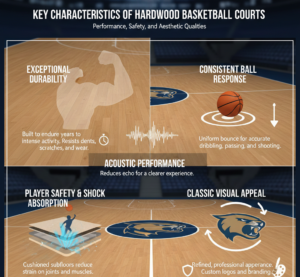
Hardwood basketball courts are distinguished by a combination of performance, safety, and aesthetic qualities that make them unmatched by other flooring options.
Exceptional Durability
High-quality hardwood floors are built to endure years of intense activity. With proper maintenance, a hardwood basketball court can last several decades without major structural issues. The natural hardness of maple wood resists dents, scratches, and wear caused by frequent foot traffic.
Consistent Ball Response
Uniform ball bounce is critical in basketball. Hardwood surfaces provide predictable and consistent rebound characteristics, enabling accurate dribbling, passing, and shooting. This consistency supports skill development and competitive fairness.
Player Safety and Shock Absorption
Modern hardwood court systems incorporate cushioned subfloors that absorb impact from jumping, running, and sudden stops. This reduces strain on players’ joints, muscles, and ligaments, helping to prevent injuries and fatigue during extended play.
Classic Visual Appeal
The natural grain and polished finish of hardwood floors give basketball courts a refined, professional appearance.
Acoustic Performance
Hardwood floors help manage sound by reducing excessive echo and reverberation in indoor arenas. This contributes to a clearer, more engaging playing and viewing experience.
Types of Hardwood Used in Basketball Courts
While several hardwood species are available, hard maple (Acer saccharum) remains the industry standard for basketball courts worldwide.
Maple Hardwood
Its surface provides the ideal balance between grip and smoothness, ensuring controlled movement without excessive friction.
Alternative Hardwood Options
In some cases, woods such as oak or beech may be used. However, these alternatives are less common and generally selected for specialized or budget-conscious projects. Maple continues to dominate professional and competitive installations due to its superior performance consistency.
Hardwood Basketball Court Construction Process
Constructing a hardwood basketball court requires precision engineering and expert installation. Each stage plays a crucial role in ensuring performance, longevity, and safety.
1. Subfloor System Installation
The subfloor acts as the foundation of the court. It is designed to absorb shock and provide stability. This layer prevents moisture transfer, minimizes vibration, and ensures the hardwood surface remains level and resilient over time.
Advantages of Hardwood Basketball Courts
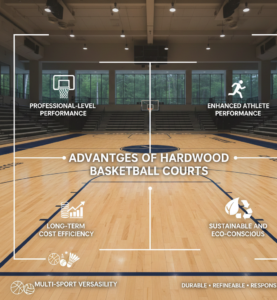
Hardwood basketball courts offer several advantages that set them apart from synthetic, concrete, or modular flooring systems.
Professional-Level Performance
Hardwood courts meet international competition standards, making them suitable for professional matches, tournaments, and elite training environments.
Enhanced Athlete Performance
The smooth surface and reliable traction allow athletes to move confidently, improving speed, agility, and precision during gameplay.
Sustainable and Eco-Conscious
Hardwood flooring sourced from responsibly managed forests supports sustainability. Refinishing extends the floor’s life, reducing material waste.
Multi-Sport Versatility
Hardwood courts can accommodate multiple indoor sports such as volleyball, badminton, futsal training, and fitness activities when properly marked.
Common Applications of Hardwood Basketball Courts
-
Professional basketball arenas and stadiums
-
Schools, colleges, and universities
-
Sports academies and elite training centers
-
Indoor gyms and recreational complexes
-
Community sports halls
-
Luxury residential sports spaces
Their adaptability makes them suitable for both competitive and recreational environments.
Maintenance and Care of Hardwood Basketball Courts
Routine maintenance is essential to preserve the performance and appearance of hardwood courts.
Essential Maintenance Practices
-
Daily dust mopping to remove debris
-
Use of hardwood-safe cleaning solutions
-
Avoidance of excess moisture or water spills
-
Regular inspection for surface damage
Periodic Refinishing
Over time, the surface may require recoating or sanding to restore traction and shine. This process extends the lifespan of the court and maintains professional playing conditions.
Environmental Control
Maintaining stable indoor temperature and humidity levels prevents wood expansion, contraction, or warping.
Cost Considerations for Hardwood Basketball Courts
The cost of installing a hardwood basketball court depends on several factors, including:
-
Type and grade of hardwood
-
Subfloor and cushioning system
-
Court size and customization
-
Installation expertise
-
Long-term maintenance requirements
While hardwood courts require a higher initial investment compared to synthetic alternatives, their longevity, refinishing capability, and superior performance justify the cost over time.
Conclusion
A hardwood basketball court represents the pinnacle of indoor sports flooring, offering unmatched performance, safety, and visual elegance. From professional arenas and training academies to educational institutions and recreational facilities, hardwood courts create an environment that supports athletic excellence and long-term durability.
With expert construction, proper care, and regular maintenance, a hardwood basketball court becomes a lasting asset—delivering consistent playability, reduced injury risk, and a professional experience that players and spectators alike appreciate. For anyone seeking the highest standard in indoor basketball flooring, hardwood remains the ultimate choice.