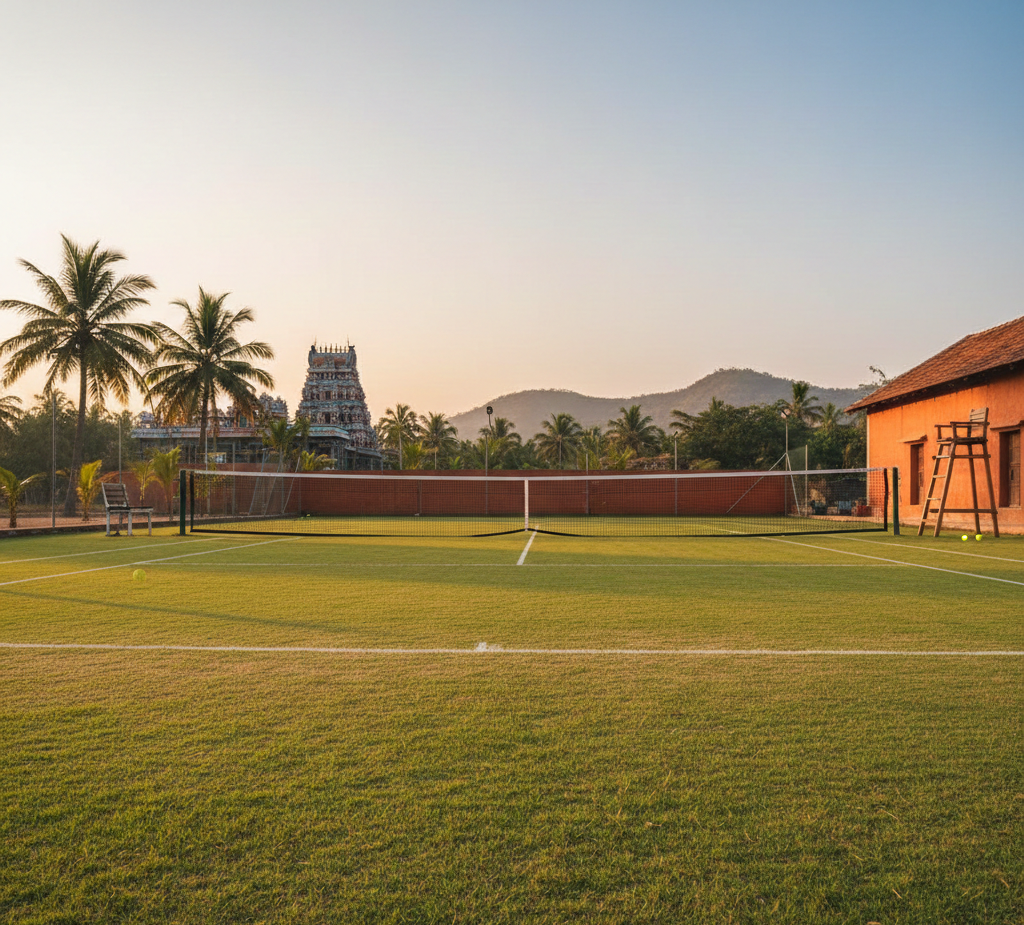
Tamil Nadu has one of India’s strongest tennis cultures, producing top players and hosting numerous tournaments at club, school, academy, and district levels. From Chennai and Coimbatore to Madurai, Salem, Trichy, Tirunelveli, and Erode, the demand for high-quality grass tennis court flooring has increased rapidly in recent years. Grass courts are admired for their fast play characteristics, soft surface, reduced joint impact, and luxurious visual appeal. Whether you are constructing a court for a sports academy, resort, school campus, government facility, or private farmhouse, grass tennis courts fit perfectly into Tamil Nadu’s sports environment and climate.
This page provides a detailed, zero-plagiarism overview of construction methods, flooring options, materials, maintenance, climate suitability, and court design specifically for Tamil Nadu.
Why Grass Tennis Court Flooring Is Ideal for Tamil Nadu
Tamil Nadu experiences tropical climate conditions with hot summers, moderate monsoons, and mild winters. These factors make grass surfaces—both natural turf and artificial grass—suitable choices when the courts are built with proper drainage and the right type of turf.
1. Comfortable to Play in Hot Climates
Unlike acrylic or hard courts, grass courts:
-
Stay much cooler
-
Reduce heat radiating from the ground
-
Offer a soft, natural feel
Players find grass courts particularly comfortable during peak summer temperatures in Chennai, Madurai, Vellore, and Thanjavur.
2. Fast and Exciting Gameplay
Grass courts are known for:
-
Low bounce
-
Rapid ball movement
-
Quick points
-
Smooth footwork
This suits professional training centers and high-level coaching programs.
3. Luxurious Aesthetic Appeal
Grass courts—especially natural turf—enhance the appearance of:
-
Resorts along ECR and OMR
-
Private villas and farmhouses
-
Educational campuses
-
Premium real-estate townships
-
Sports clubs
Their visual beauty makes them a preferred choice for hospitality and recreational facilities.
4. Eco-Friendly & Player-Friendly Surface
Natural grass courts offer environmental advantages while artificial grass provides injury-reducing shock absorption, making both excellent for long-term use.
Types of Grass Tennis Court Flooring in Tamil Nadu
Tamil Nadu buyers typically choose between Natural Grass Courts and Artificial Grass Courts depending on usage, budget, and maintenance preferences.
1. Natural Grass Tennis Court Flooring
Natural grass courts provide the classic Wimbledon-style feel. They require more care but deliver unmatched elegance and traditional gameplay.
Advantages of Natural Turf Courts
-
Soft, cool surface
-
Authentic playing experience
-
Premium appearance
-
Low joint impact
Best Grass Types for Tamil Nadu’s Climate
Due to Tamil Nadu’s warm weather, the most suitable varieties include:
-
Bermuda Grass (excellent heat tolerance)
-
Mexican Lawn Grass
-
Hybrid Sports Turf Grass
-
Seasonal Rye Grass (used in cooler hill regions like Ooty and Kodaikanal)
Construction Process
A. Site Preparation
-
Clearing vegetation
-
Perfect levelling of the ground
-
Creating a slight natural slope for water drainage
B. Drainage System
Tamil Nadu’s monsoon requires smart drainage engineering.
A layer of:
-
crushed stone
-
river sand
-
perforated drain pipes
is created to keep the court dry and firm.
C. Soil Conditioning
A sandy-loam mixture is added to promote healthy turf growth and maintain surface consistency.
D. Turf Laying and Growth
After installation:
-
The turf is irrigated daily
-
The surface is rolled regularly
-
The grass is trimmed to sport-grade height
The court becomes fully playable once the turf matures.
Maintenance Requirements
Natural grass courts involve:
-
Daily irrigation
-
Weekly mowing
-
Rolling to maintain bounce
-
Fertilization
-
Weed and pest control
They are perfect for premium facilities or clients who want traditional tennis experience.
2. Artificial Grass Tennis Court Flooring
Artificial grass courts have become extremely popular across Tamil Nadu—especially in Chennai, Coimbatore, Tirupur, Salem, and Trichy—because they require very little maintenance, handle heavy usage, and remain playable throughout the year.
Advantages of Artificial Grass Courts
-
All-weather, all-season surface
-
Zero mowing, zero watering
-
Long lifespan (8–12 years)
-
Consistent ball bounce
-
Excellent drainage during monsoons
-
Faster installation and low upkeep cost
Construction Process
A. Ground Cutting & Leveling
The area is excavated and levelled to meet ITF standards.
B. Sub-base Formation
A multi-layer base includes:
-
100–150 mm Wet Mix Macadam (WMM)
-
50 mm crusher dust
-
Geo-textile (if needed)
This ensures stability and drainage.
C. Turf Installation
High-quality synthetic grass rolls are:
-
Unrolled
-
Positioned
-
Glued and seam-joined
D. Silica Sand Infill
To give the grass court realistic performance:
-
Silica sand is added
-
Brushed to distribute evenly
-
Stabilizes the turf
E. Permanent Line Marking
White turf lines are installed for durability.
Maintenance Requirements
-
Occasional brushing
-
Sand refill every 12–18 months
-
Cleaning debris
Artificial grass is recommended for academies, schools, and outdoor courts in sunny regions.
Standard Tennis Court Dimensions
All grass courts in Tamil Nadu follow ITF standards:
Court Size
-
Singles: 23.77m × 8.23m
-
Doubles: 23.77m × 10.97m
Recommended Total Area
Approximately 36m × 18m including run-off space.
Where Grass Tennis Courts Are Most Popular in Tamil Nadu
Chennai
-
Academies in OMR, ECR, Adyar, Tambaram
-
Premium apartments and gated communities
Coimbatore
-
School grounds
-
Corporate sports complexes
Madurai, Salem & Trichy
-
Universities and sports training centers
Ooty, Coonoor & Kodaikanal
-
Resorts and hill destination hotels
-
Private villa courts
Tirunelveli & Erode
-
District sports facilities and coaching centres
Grass courts enhance property value and provide a world-class playing environment across these regions.
Conclusion
Grass tennis court flooring in Tamil Nadu—whether natural or artificial—offers a premium, cool, and player-friendly surface ideal for sports academies, educational institutions, clubs, resorts, real-estate projects, and private home courts. With proper engineering, turf selection, and professional installation, grass courts can deliver outstanding performance in Tamil Nadu’s climate while ensuring long-term durability and player safety.