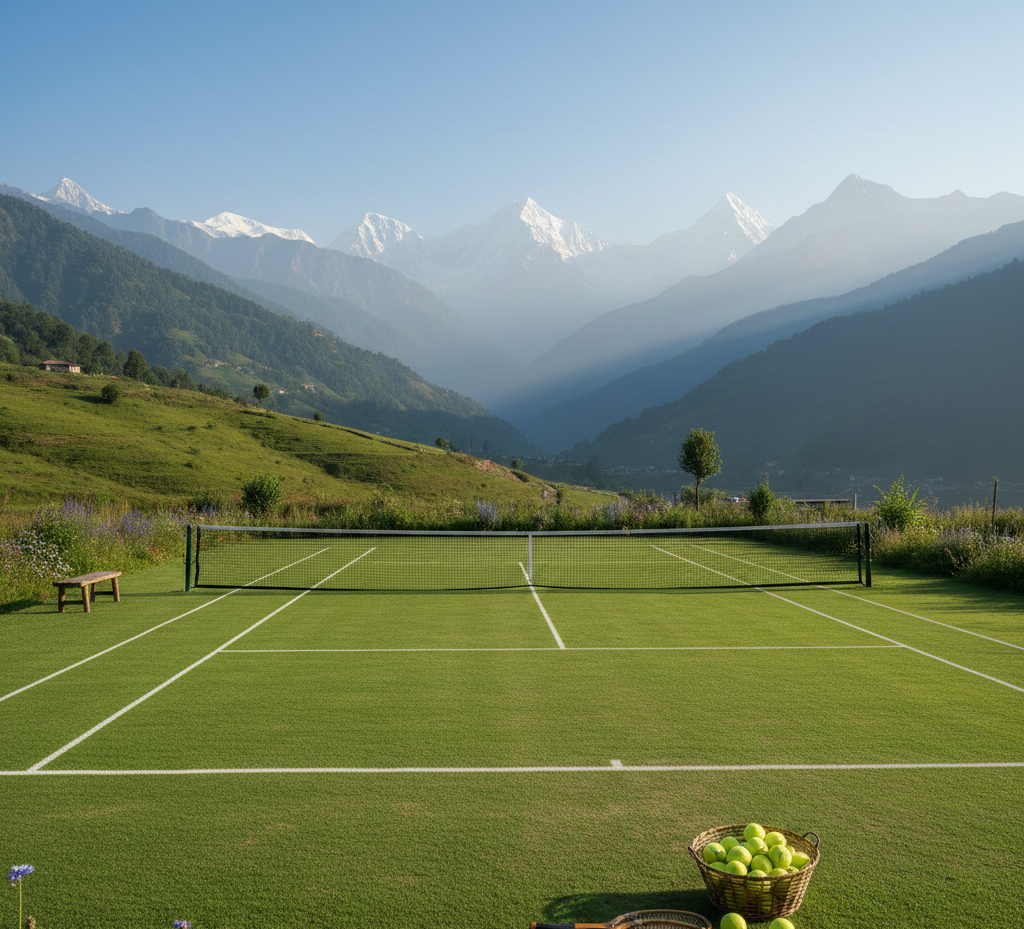
Himachal Pradesh is known for its cool climate, scenic landscapes and ideal conditions for outdoor sports. Among the many sports gaining popularity in the region, tennis stands out, especially in schools, resorts, sports academies and high-altitude training centres. While synthetic and clay courts are common across India, grass tennis courts have a unique charm — offering traditional playability, reduced impact on joints and an unmatched premium aesthetic. Designing and installing a grass tennis court flooring in Himachal Pradesh requires careful planning, knowledge of terrain and expertise in sports infrastructure.
This guide covers everything — from the construction process and materials used to maintenance requirements, advantages and ideal locations for grass courts in the hill regions of Himachal Pradesh.
1. Introduction to Grass Tennis Courts
Grass courts represent the oldest form of tennis flooring, famously used in the Wimbledon Championships. They offer fast ball bounce, natural cushioning and a luxurious playing experience. In a state like Himachal Pradesh, where natural greenery blends with sports facilities, grass tennis courts add aesthetic value to hotels, resorts, private properties and outdoor clubs.
However, they demand controlled ground preparation and proper drainage design due to the state’s sloped terrain and heavy monsoon.
2. Why Grass Tennis Courts Suit Himachal Pradesh
Building a grass court in hilly regions presents both benefits and challenges. When designed correctly, these courts thrive in Himachal’s climate.
2.1 Ideal Climate
The cool temperatures in cities like Shimla, Dharamshala, Solan and Manali help the turf stay healthy and fresh. Grass courts tend to dry quickly in sunny areas and remain playable for most of the year.
2.2 Natural Landscape Advantage
The green surroundings enhance the visual appeal of the court, making it a perfect fit for resorts, sports complexes, university campuses and private estates.
2.3 Health & Comfort
Grass provides one of the softest playing surfaces. This makes it ideal for:
-
Senior players
-
Amateur tennis enthusiasts
-
Young training athletes
-
Hotels offering low-impact recreational sports
The natural cushioning reduces stress on knees, hips and ankle joints.
3. Construction Process of Grass Tennis Court Flooring
Designing a professional grass tennis court requires multiple stages of preparation. Here is an overview of the complete construction system.
3.1 Site Selection & Levelling
Himachal Pradesh has uneven land in most areas, so site selection is critical. The chosen plot must allow:
-
Proper flattening
-
Zero water stagnation
-
Adequate sunlight
Levelling is done using heavy rollers and earthmoving machinery to ensure perfect slope (generally 1% for drainage).
3.2 Drainage System
Grass courts can only survive with efficient drainage — especially necessary due to Himachal’s seasonal rains. A typical drainage solution includes:
-
Subsurface perforated pipes
-
Crushed stone base
-
Sand layer
-
Slight surface gradient
This system ensures rainwater flows out quickly and prevents turf damage.
3.3 Layered Base Construction
A good grass court is built in multiple layers:
-
Compacted soil layer
-
Gravel or stone aggregate layer
-
Coarse sand layer
-
Fine topsoil mixed with organic matter
This layered base helps the grass develop deep roots, ensuring durability and consistent playability.
3.4 Turf Selection
Cool-season grasses thrive best in Himachal Pradesh. Popular turf options include:
-
Perennial Ryegrass
-
Kentucky Bluegrass
-
Fescue Grass Varieties
These grasses provide a soft yet firm playing surface and are resilient to cool temperatures.
3.5 Seeding / Turf Installation
Depending on the budget and deadline, the court can be created using:
-
Seed plantations (takes 8–12 weeks)
-
Ready turf rolls (instant surface)
Turf rolls are preferred in resorts and commercial properties for quick usage.
3.6 Rolling & Compaction
Once the grass grows, the surface is compacted with a specialized roller to ensure:
-
Smoothness
-
Fast ball bounce
-
Uniform turf height
This step is essential to create a professional-quality court.
3.7 Marking & Accessories
After the surface stabilizes, landscaping experts add:
-
Permanent line markings
-
Net posts
-
High-quality net
-
Side fencing
-
Optional lighting systems
4. Benefits of Grass Tennis Court Flooring in Himachal Pradesh
4.1 Fast & Exciting Gameplay
Grass courts are known for quick play and unpredictable bounce, encouraging a serve-and-volley style. Players who enjoy fast rallies love this surface.
4.2 Premium Look & Feel
Resorts, hotels and private villas prefer grass courts for their luxury appeal. They enhance the overall property image.
4.3 Eco-Friendly Sports Flooring
Grass courts use natural soil and organic materials, making them the most eco-friendly tennis flooring option.
4.4 Cool Playing Surface
Unlike synthetic surfaces that heat up in sunlight, grass courts remain naturally cool — ideal for Himachal’s outdoor environment.
4.5 Safer on Joints
The soft natural turf reduces the impact on ankles and knees, preventing long-term injuries.
5. Maintenance Requirements
Grass tennis courts require regular upkeep. In Himachal Pradesh, maintenance is essential due to seasonal weather variation.
Daily / Weekly Maintenance
-
Trimming and mowing turf
-
Watering the surface
-
Filling patches with soil and seed
-
Rolling the court for firmness
Seasonal Maintenance
-
Aeration of soil for root growth
-
Top dressing with sand
-
Weed removal
-
Drainage cleaning before monsoon
Although grass courts need more attention than synthetic floors, their natural beauty and comfort justify the maintenance.
6. Ideal Locations in Himachal Pradesh for Grass Tennis Courts
Grass courts work best in:
-
High-end resorts (Mashobra, Manali, Dharamshala, Kasauli)
-
Luxury homestays and villas
-
Sports training academies
-
Universities and boarding schools
-
Corporate retreats & holiday homes
Flat land areas or gently sloped terrains can be easily modified for construction.
7. Cost of Grass Tennis Court Flooring in Himachal Pradesh
The cost depends on several factors:
-
Land levelling requirement
-
Turf type (seeding or rolls)
-
Drainage complexity
-
Accessories (lighting, fencing, seating)
On average, a standard grass tennis court ranges between ₹10 lakh to ₹25 lakh, depending on location and specifications.
8. Why Choose Professional Court Builders
Because Himachal Pradesh has unique terrain and soil variations, professional installation ensures:
-
Long-lasting turf
-
Strong drainage
-
Level and even playing area
-
Zero waterlogging
-
High-quality materials
A well-built grass court can last 10–15 years with proper maintenance.
Conclusion
Grass tennis court flooring in Himachal Pradesh offers a perfect blend of natural beauty, luxury and excellent playing comfort. Whether for a resort aiming to enhance guest experience, a school looking to offer professional sports facilities or a private property wanting a touch of sophistication, grass courts provide unmatched aesthetic and performance value. With the right construction techniques and regular maintenance, these courts remain lush, durable and enjoyable throughout the year.