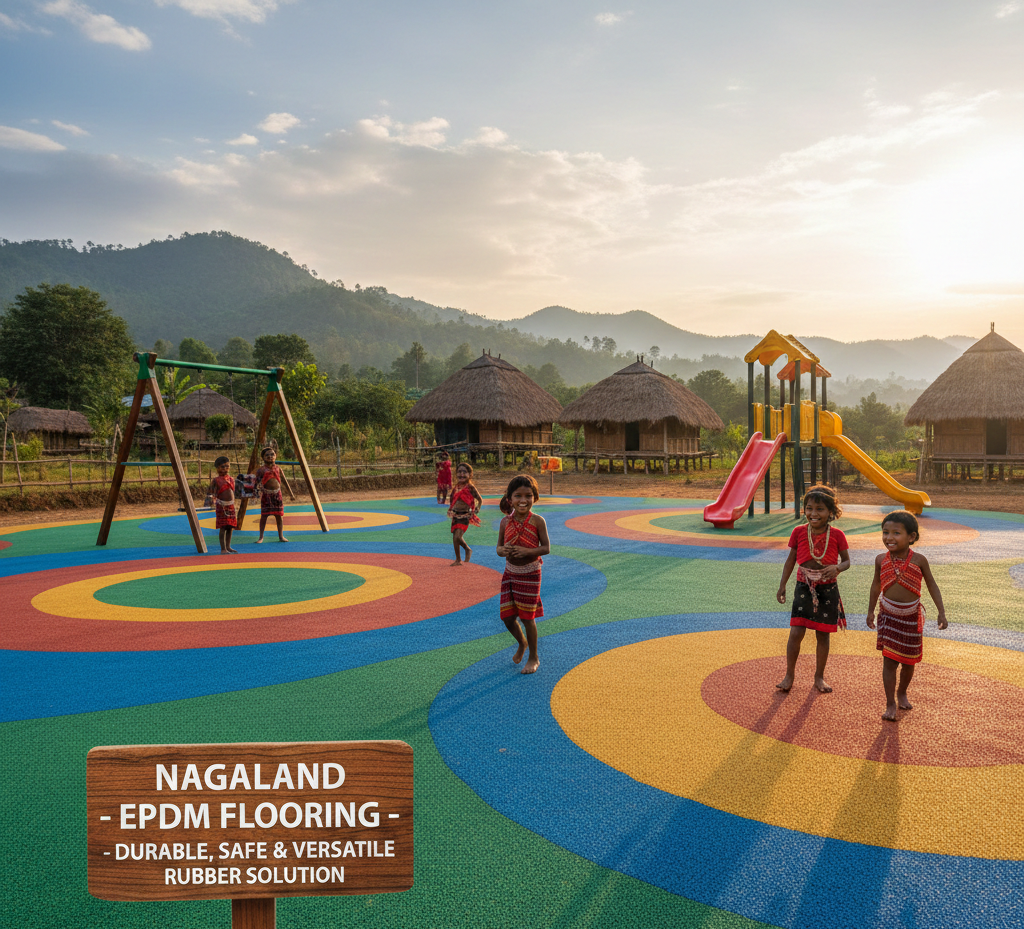
EPDM Flooring (Ethylene Propylene Diene Monomer) is a high‑performance synthetic rubber flooring system that has rapidly become one of the most reliable flooring solutions for safety, sports, industrial, commercial, institutional, and recreational applications. Engineered for durability and designed for comfort, EPDM flooring combines functionality with aesthetics, making it the first choice in modern architectural and infrastructure projects across Nagaland and beyond.
What Is EPDM Flooring?
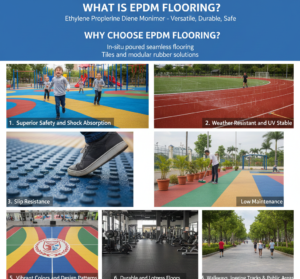
EPDM stands for Ethylene Propylene Diene Monomer, a type of synthetic rubber known for its exceptional weather resistance, elasticity, and robustness. The material is typically manufactured as colored granules that are mixed with a polyurethane (PU) binder to create a seamless, resilient surface. Depending on project goals, EPDM flooring may be installed as:
-
In‑situ poured seamless flooring, or
-
Tiles and modular rubber solutions for easier replacement and design flexibility.
This flooring system can be customized in a wide range of thicknesses and colors to meet specific performance and safety requirements, from playground impact protection to sports surfaces.
Why Choose EPDM Flooring?
EPDM flooring stands out among many alternatives due to an unparalleled combination of performance traits:
1. Superior Safety and Shock Absorption
EPDM rubber naturally absorbs impact, cushioning falls and reducing the risk of injuries — a critical benefit for children’s playgrounds, school yards, gym areas, and fitness zones.
2. Weather Resistant and UV Stable
Nagaland experiences varied weather patterns, from sunlight to monsoon rains. EPDM flooring is inherently resistant to UV radiation, rain, and a wide range of temperatures, ensuring long‑lasting performance even in outdoor settings.
3. Slip Resistance
The non‑slip texture of EPDM surfaces enhances the safety of play areas, walkways, pool decks, and fitness zones, especially in wet conditions.
4. Low Maintenance
Unlike traditional floors that require waxing, sealing, or frequent repairs, EPDM flooring demands minimal upkeep. Periodic sweeping or washing is often enough to maintain its look and performance.
EPDM flooring is available in many vibrant colors and design patterns, allowing architects and developers to create themed play areas, sports zones, or branded surfaces that are visually appealing.
6. Durable and Long‑Lasting
Built to withstand heavy use, high foot traffic, and environmental stress without cracking or fading, EPDM floors can have a long service life — helping reduce long‑term replacement costs.
Applications of EPDM Flooring
EPDM flooring’s versatility makes it suitable for a broad range of environments:
Playgrounds and Children’s Zones
Sports Facilities
From basketball courts to multi‑sports arenas, running tracks, and athletic zones, EPDM provides a resilient surface that absorbs shock, enhances traction, and improves athlete comfort.
Gym and Fitness Floors
Gyms, exercise studios, and training areas benefit from EPDM’s impact resistance and durability, making it easier to handle heavy weights and high‑intensity workouts with reduced noise.
Commercial and Institutional Spaces
Retail centers, showrooms, office buildings, and educational campuses use EPDM flooring for both indoor and outdoor circulation areas due to its sleek look and robustness.
Walkways, Jogging Tracks & Public Areas
Roadside paths, campus walkways, and community jogging circuits become more comfortable and visually coherent with a slip‑resistant EPDM surface.
Installation Process
Installing EPDM flooring involves several critical steps to ensure performance and longevity:
-
Surface Preparation:
The existing surface must be clean, level, and free from debris. Concrete, asphalt, or compacted base layers may be used as substrates. -
Primer and Base Layers:
A bonding primer and an optional base (often SBR rubber granules) are laid to enhance shock absorption and resilience, especially for play areas. -
EPDM Layer Application:
Colored EPDM granules are mixed with PU binder and applied to the surface. Thickness can vary depending on safety and use requirements — thicker for playgrounds, standard for sports courts
Maintenance Tips for EPDM Floors
EPDM flooring is low‑maintenance, but proper care ensures longevity:
-
Routine Cleaning: Sweep or wash with water occasionally to remove dirt.
-
Pressure Cleaning: Use low‑pressure washing if dirt build‑up occurs.
-
Avoid Sharp Objects: Protect the surface from sharp impacts or corrosive chemicals that may damage the rubber.
-
Minor Repairs: Promptly fix any tears or worn spots to prevent further damage.
Why EPDM Flooring Is Ideal for Nagaland Projects
Nagaland’s geography and climate — with fluctuating temperatures, high rainfall, and outdoor community spaces — require flooring solutions that are:
-
Weather‑Resilient and UV Stable,
-
Safe for children and sportspersons,
-
Low maintenance in remote areas,
-
Durable under heavy usage, and
-
Visually appealing for public and commercial spaces.
EPDM flooring meets all these requirements, making it well‑suited for government facilities, schools, resorts, sports complexes, parks, and private estates across Nagaland.
Conclusion
EPDM flooring represents a smart investment for anyone seeking a long‑lasting, safe, and adaptable flooring solution in Nagaland. Whether it’s for children’s playgrounds, professional sports complexes, fitness centers, commercial developments, or community walkways, its combination of safety, durability, low maintenance, and aesthetic flexibility makes it a go‑to choice for modern projects.