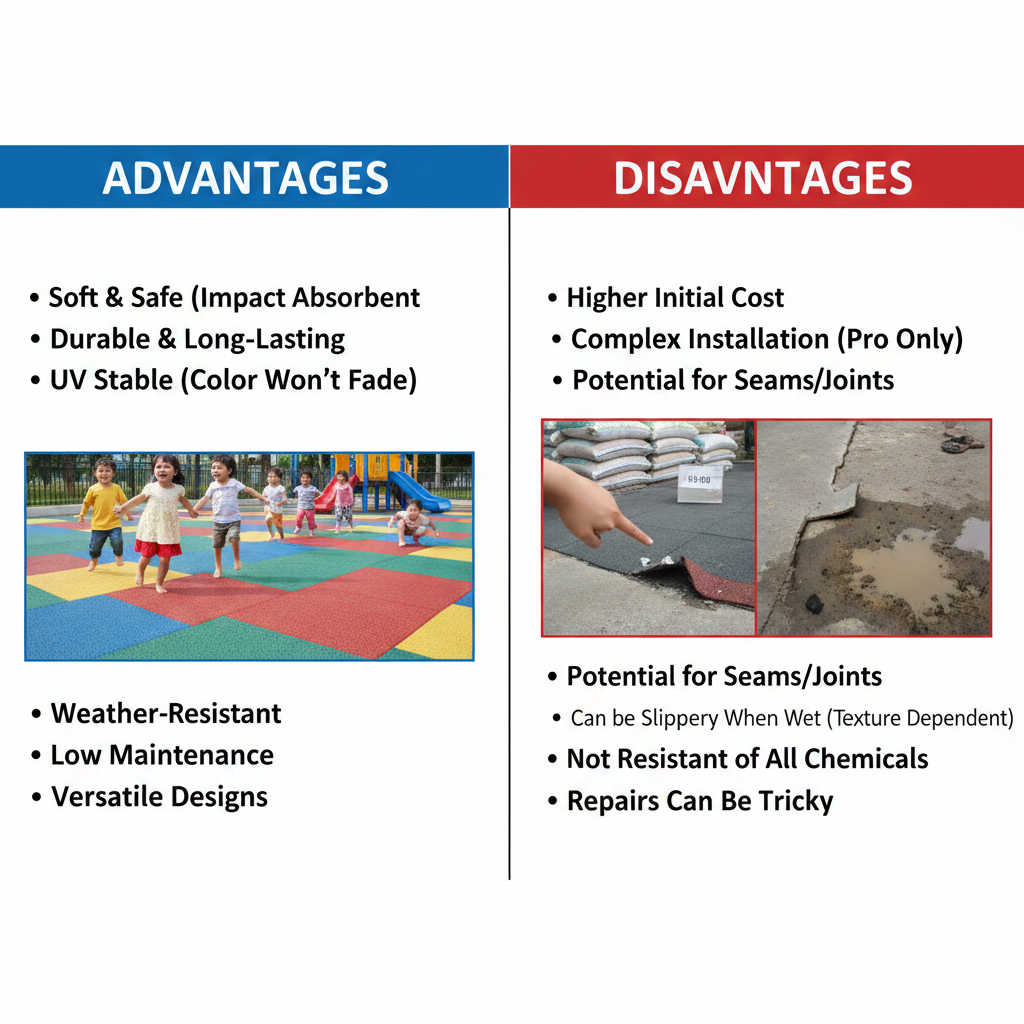
EPDM flooring is a widely used surfacing solution made from Ethylene Propylene Diene Monomer rubber, known for its durability, flexibility, and safety features. It is commonly installed in playgrounds, jogging tracks, outdoor gyms, schools, parks, and sports facilities. While EPDM flooring offers numerous benefits, it is also important to understand its limitations before selecting it for a project.
This page provides a balanced overview of the advantages and disadvantages of EPDM flooring, helping decision-makers choose the right flooring solution.
Advantages of EPDM Flooring
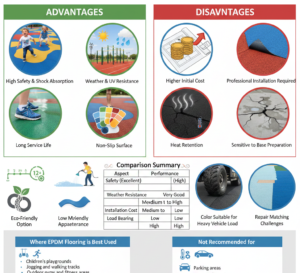
1. High Safety and Shock Absorption
One of the biggest advantages of EPDM flooring is its excellent impact absorption. It helps reduce the risk of injuries caused by slips or falls, making it ideal for children’s play areas and fitness zones.
2. Weather and UV Resistance
EPDM flooring performs well in hot, cold, rainy, and sunny conditions. It does not crack, harden, or fade easily, ensuring long-term outdoor performance.
3. Non-Slip Surface
The textured rubber surface provides good traction, even when wet, offering safe movement for walkers, runners, and children.
4. Long Service Life
When installed correctly, EPDM flooring can last 8–12 years or more, maintaining its elasticity and appearance over time.
5. Attractive Appearance
Available in a wide range of colors, patterns, and designs, EPDM flooring enhances the visual appeal of recreational spaces and allows for creative customization.
6. Low Maintenance
EPDM flooring requires minimal upkeep. Regular sweeping and occasional washing are enough to keep the surface clean and functional.
7. Eco-Friendly Option
EPDM flooring is non-toxic and often combined with recycled rubber layers, making it an environmentally responsible choice.
8. Seamless Finish
In-situ installation creates a joint-free surface, preventing tripping hazards and water accumulation.
Disadvantages of EPDM Flooring
1. Higher Initial Cost
Compared to basic concrete or tile flooring, EPDM flooring has a higher upfront cost, especially when thicker layers are required for safety compliance.
2. Professional Installation Required
Poor installation can lead to surface peeling, uneven texture, or reduced lifespan.
3. Sensitive to Base Preparation
A properly prepared base is essential. Any cracks, moisture issues, or unevenness in the sub-base can affect performance.
4. Heat Retention
In extremely hot climates, dark-colored EPDM surfaces can absorb heat, making them warm to walk on during peak sunlight hours.
5. Not Suitable for Heavy Vehicle Load
EPDM flooring is not designed to withstand heavy vehicular traffic or machinery, limiting its use to pedestrian and recreational areas.
6. Color Variation Over Time
Although UV resistant, slight color fading may occur after many years of exposure, especially in outdoor installations.
7. Repair Matching Challenges
If a section is damaged, matching the exact color and texture during repairs can sometimes be difficult.
Comparison Summary
| Aspect | Performance |
|---|---|
| Safety | Excellent |
| Durability | High |
| Weather Resistance | Very Good |
| Maintenance | Low |
| Installation Cost | Medium to High |
| Load Bearing | Low |
| Aesthetic Flexibility | High |
Where EPDM Flooring is Best Used
EPDM flooring is most suitable for:
-
Children’s playgrounds
-
Jogging and walking tracks
-
Outdoor gyms and fitness areas
-
School and kindergarten play zones
-
Parks and recreational spaces
It is not recommended for:
-
Parking areas
-
Heavy industrial zones
-
Roads or driveways
Conclusion
EPDM flooring is a safe, durable, and visually appealing surfacing solution designed for recreational and fitness environments. While it requires a higher initial investment and professional installation, the long-term benefits—such as safety, low maintenance, and weather resistance—make it a valuable choice for public and private spaces.
Understanding both the advantages and disadvantages of EPDM flooring ensures informed decision-making and long-term satisfaction.