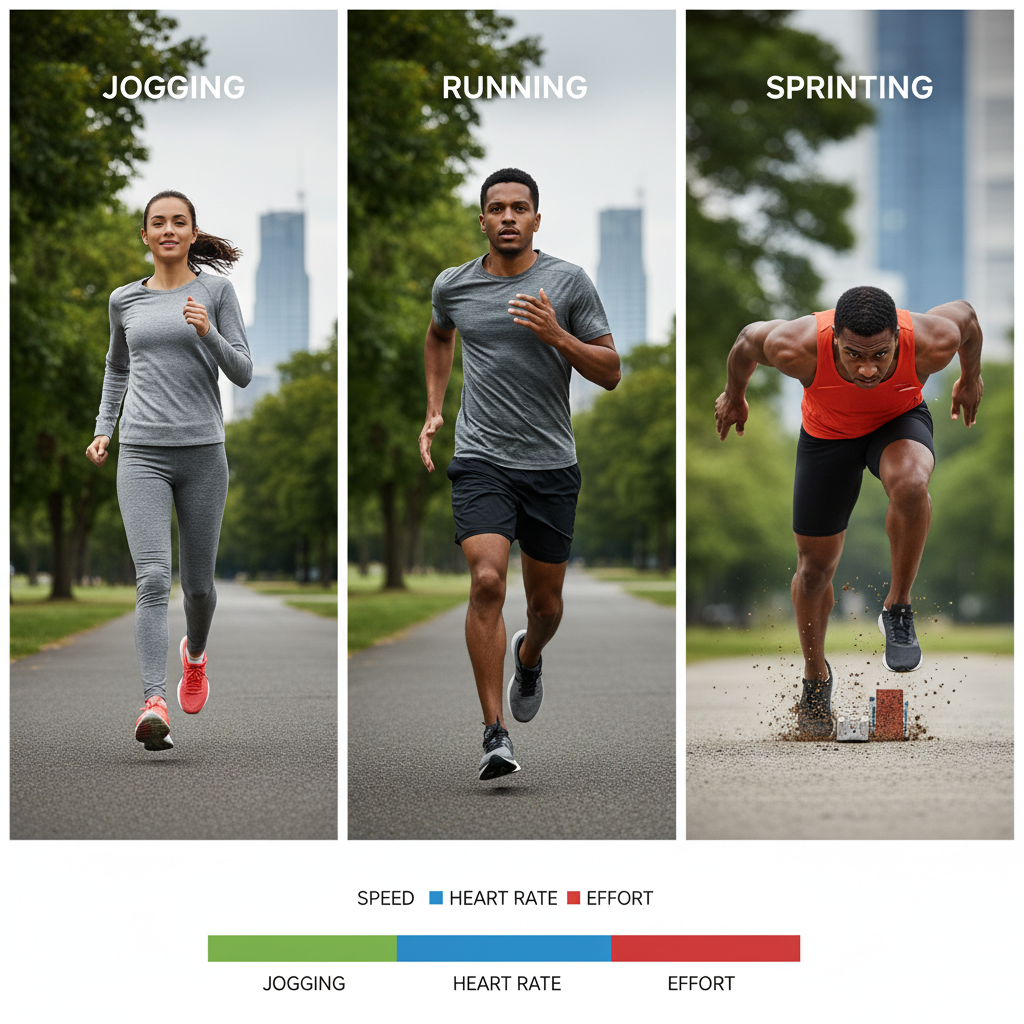
Human movement is most naturally expressed through locomotion on foot. Among the most common and effective forms of this are jogging, running, and sprinting. While they share the basic principle of moving forward with the legs, each differs significantly in speed, intensity, biomechanics, muscle recruitment, energy system engagement, and purpose. Understanding these distinctions is crucial for anyone seeking to enhance fitness, athletic performance, or overall health.
Many people use these terms interchangeably, but from a physiological standpoint, each has a distinct role. Properly selecting or combining these forms of movement allows for optimized training outcomes, improved endurance, strength, and speed, and reduced risk of injury.
This comprehensive guide explores the differences between jogging, running, and sprinting, providing a framework for designing training programs tailored to your fitness goals.
Understanding the Movement Continuum
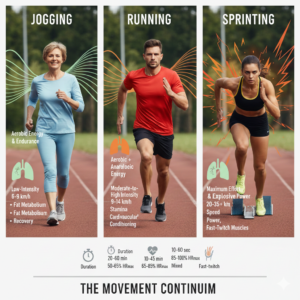
Jogging, running, and sprinting exist on a continuum of intensity, each occupying a unique space on the spectrum of physical exertion:
-
Jogging: Low-intensity, steady movement focused on endurance and recovery
-
Running: Moderate-to-high intensity, balancing speed with stamina and cardiovascular conditioning
-
Sprinting: Maximum effort, high-intensity bursts emphasizing explosive power and speed
Although the outward movement pattern—legs moving alternately to propel the body forward—appears similar, the physiological and biomechanical responses differ dramatically.
1. Jogging: Building the Aerobic Base
Jogging is characterized by slow, steady, and rhythmic movement, designed to keep the body active for longer periods without excessive fatigue. It is widely recommended for beginners, older adults, and individuals returning to fitness after a hiatus.
Speed and Intensity
Jogging typically occurs at a speed of 6–9 km/h, depending on the individual’s fitness level and terrain. Heart rate remains relatively moderate, breathing is steady, and conversation is generally possible during activity.
Energy System
Jogging predominantly relies on the aerobic energy system, meaning the body primarily uses oxygen to convert carbohydrates and fats into energy. This allows sustained movement for 20 to 60 minutes or more, with minimal lactic acid accumulation.
Muscle Engagement
Although jogging is low-intensity, it recruits key lower-body muscles:
-
Quadriceps
-
Hamstrings
-
Glutes
-
Calves
Core muscles play a stabilizing role, and the upper body remains relatively relaxed, assisting in balance and posture.
Benefits of Jogging
-
Improves cardiovascular health and endurance
-
Enhances fat metabolism and supports weight management
-
Strengthens bones, ligaments, and connective tissues gradually
-
Reduces stress and promotes mental well-being
-
Serves as an ideal warm-up or recovery activity
Limitations
Jogging has minimal impact on speed, power, or explosive strength. It is best used as a foundational exercise or recovery tool rather than a performance-focused activity.
In essence, jogging is sustainable movement: low-risk, accessible, and excellent for building an aerobic base.
2. Running: Bridging Endurance and Performance
Running is faster and more demanding than jogging, requiring higher cardiovascular output, greater muscle force, and coordination. It is a versatile exercise for general fitness, endurance training, and race preparation.
Speed and Intensity
Running speeds generally range from 9–14 km/h, with trained athletes exceeding this threshold. Breathing becomes deeper, the heart rate increases, and speaking comfortably is more difficult.
Energy System
Running engages both aerobic and anaerobic energy systems:
-
Moderate intensity relies primarily on oxygen supply
-
Higher intensity triggers glycogen utilization and anaerobic metabolism
This combination makes running effective for improving cardiovascular capacity, stamina, and metabolic efficiency.
Muscle Engagement
Running activates the same muscles as jogging but with increased intensity and coordination:
-
Quadriceps, hamstrings, and glutes work harder
-
Greater knee lift and stride length
-
Arm drive enhances momentum
-
Core muscles stabilize the torso
Benefits of Running
-
Boosts cardiovascular efficiency and lung capacity
-
Burns more calories than jogging in the same time frame
-
Builds muscular endurance and strengthens bones
-
Enhances mental focus, discipline, and resilience
-
Reduces risk of lifestyle-related illnesses such as diabetes and obesity
Considerations
Running increases stress on joints, particularly the knees and ankles. Proper footwear, correct running technique, and adequate recovery are critical to prevent overuse injuries.
Running is ideal for individuals aiming to improve fitness, increase endurance, and progress toward higher performance levels.
3. Sprinting: High-Speed, Explosive Power
Sprinting is short-distance, maximum-effort running that emphasizes speed, power, and neuromuscular efficiency. It is commonly used in athletics, football, basketball, cricket, and other sports requiring explosive performance.
Speed and Intensity
Sprinting speeds range from 20 km/h to over 35 km/h. Elite athletes can exceed these speeds during peak acceleration. Sprinting is inherently high-intensity and sustainable only for short durations.
Energy System
Sprinting relies primarily on anaerobic energy systems, including:
-
ATP-PC system for immediate energy
-
Anaerobic glycolysis for short bursts of high-intensity effort
Due to the limited role of oxygen, fatigue develops rapidly, restricting sprinting to seconds rather than minutes.
Muscle Engagement
Sprinting predominantly recruits fast-twitch muscle fibers, which generate rapid force and explosive movement. Key muscles include:
-
Hamstrings
-
Glutes
-
Quadriceps
-
Calves
-
Hip flexors
Upper body and core muscles also play a vital role in balance, propulsion, and momentum.
Benefits of Sprinting
-
Builds explosive power, speed, and strength
-
Enhances neuromuscular coordination
-
Increases metabolic rate post-exercise
-
Improves athletic performance across multiple sports
-
Develops lean, powerful musculature
Risks and Precautions
Sprinting places significant stress on muscles and tendons. Without proper warm-up, mobility work, and conditioning, the risk of injury—especially hamstring strains—rises. Sprinting is recommended for trained individuals or athletes under structured programs.
Physiological Comparison of Jogging, Running, and Sprinting
| Aspect | Jogging | Running | Sprinting |
|---|---|---|---|
| Energy System | Aerobic | Aerobic + Anaerobic | Anaerobic |
| Heart Rate Zone | 50–65% HRmax | 65–85% HRmax | 85–100% HRmax |
| Duration | 20–60 min | 10–45 min | 10–60 sec |
| Muscle Fibers | Slow-twitch | Mixed | Fast-twitch |
| Joint Impact | Low | Moderate | High |
| Primary Goal | Endurance & recovery | Stamina & fitness | Speed & power |
Mental and Lifestyle Benefits
-
Jogging: Promotes relaxation, mindfulness, and stress reduction
-
Running: Builds consistency, mental resilience, and focus
-
Sprinting: Sharpens competitiveness, confidence, and neuromuscular precision
Incorporating all three forms can create a well-rounded approach that benefits both body and mind.
How to Choose the Right Approach
Your choice depends on fitness level, goals, and experience:
-
Beginners or older adults: Jogging is safe and accessible
-
Weight loss and general fitness: Combine jogging and running
-
Athletic performance: Include sprint training for speed and power
Sample Mixed Training Routine
-
Warm-up: 5–10 minutes brisk walking
-
Jog: 2 minutes
-
Run: 1 minute
-
Sprint: 20–30 seconds
-
Repeat 6–8 cycles
-
Cool down and stretch
This method improves endurance, burns calories efficiently, and develops strength, speed, and explosive power.
Final Thoughts
Although jogging, running, and sprinting may appear similar, they serve distinct physiological and training purposes:
-
Jogging: Builds a strong aerobic foundation and promotes recovery
-
Running: Enhances stamina, cardiovascular health, and fitness performance
-
Sprinting: Develops explosive power, speed, and athletic capability
By understanding their differences and integrating them strategically into your training, you can improve overall fitness, reduce injury risk, and achieve a balanced, high-performance routine.
.