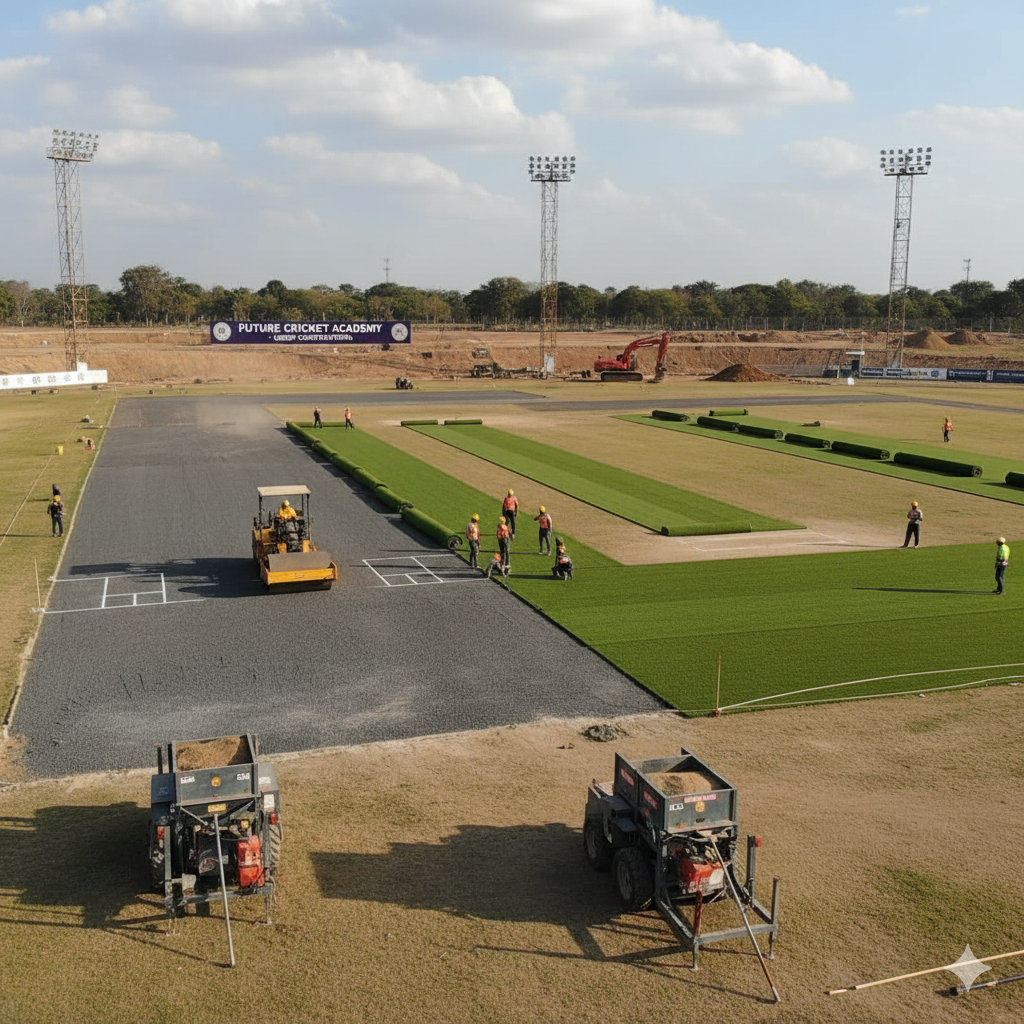
Cricket is more than just a sport in India — it’s a passion that brings people together. With the growing interest in grassroots cricket, schools, academies, residential communities, and private investors are increasingly investing in cricket turf construction. Whether it’s for practice nets, indoor facilities, or full-sized grounds, having a professionally built cricket turf ensures durability, consistency, and high performance.
If you’re planning to develop a cricket ground or indoor cricket area, understanding the cricket turf construction cost per square foot is essential. This comprehensive guide explains the types of turf, cost components, materials used, installation process, and long-term maintenance so you can plan your investment wisely.
1. What Is a Cricket Turf?
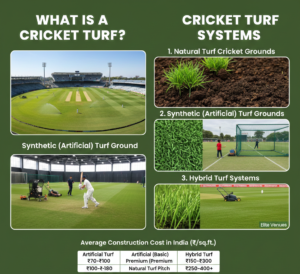
A cricket turf is a specially designed playing surface created using natural grass, artificial turf, or hybrid systems. The goal is to provide consistent ball bounce, speed, and safety for players. Artificial turf is now the most preferred option for schools, training academies, and indoor cricket setups due to its low maintenance and all-weather usability.
Cricket turfs are of two main types:
-
Natural Turf Grounds – Traditional soil-based cricket pitches with natural grass.
-
Synthetic (Artificial) Turf Grounds – Made of polyethylene or polypropylene fibers that replicate natural grass but require minimal maintenance.
2. Average Cricket Turf Construction Cost in India
The cost of cricket turf construction in India varies based on type of turf, area size, materials, and installation specifications. Below is a general cost range:
| Type of Turf | Approx. Cost per sq.ft. (₹) | Application |
|---|---|---|
| Artificial Turf (Basic) | ₹70 – ₹100 | School grounds, small academies |
| Artificial Turf (Premium) | ₹100 – ₹180 | Professional training & multi-sport facilities |
| Natural Turf Pitch | ₹150 – ₹300 | Outdoor stadiums, professional clubs |
| Hybrid Turf (Natural + Synthetic) | ₹250 – ₹400+ | Advanced cricket academies & international grounds |
Note: Prices vary depending on the brand, base preparation, drainage, and quality of materials used.
3. Key Factors Affecting Cricket Turf Construction Cost
a. Type of Surface
Artificial turfs are cheaper to maintain and faster to install compared to natural pitches. Natural grass requires high irrigation, mowing, and soil preparation.
b. Ground Size
The total area directly impacts material and installation costs. A full-size cricket ground (approx. 60,000–70,000 sq.ft.) requires a significantly higher investment compared to indoor or practice setups (1,000–3,000 sq.ft.).
c. Base Preparation
A solid base is crucial for long-term performance. The base includes leveling, compaction, stone dust, and drainage layers — typically costing ₹30–₹50 per sq.ft.
d. Quality of Turf Material
Premium artificial grass offers superior UV resistance, longer lifespan, and better playability. European or Korean brands usually cost more but provide better bounce and durability.
e. Drainage System
A well-designed drainage system ensures water does not accumulate on the surface. Advanced drainage adds to initial cost but is vital for outdoor turfs.
f. Labor and Installation
Professional installation teams ensure proper seam joining, adhesive use, and base stabilization. Labor costs usually add ₹20–₹40 per sq.ft.
4. Types of Cricket Turf Systems
1. Natural Turf Cricket Grounds
-
Built using natural soil, clay, and grass.
-
Offers traditional playing experience.
-
Requires continuous maintenance (watering, mowing, rolling).
-
Ideal for professional matches but expensive over time.
2. Synthetic (Artificial) Turf Grounds
-
Made from high-quality synthetic fibers.
-
Weather-resistant and low maintenance.
-
Offers consistent bounce and speed.
-
Best suited for schools, academies, indoor nets, and multi-sport areas.
3. Hybrid Turf Systems
-
Combination of natural and synthetic fibers.
-
Offers durability of artificial turf and natural feel of grass.
-
Used in elite cricket venues for professional play.
5. Step-by-Step Process of Cricket Turf Construction
Building a durable cricket turf requires technical expertise and professional planning. Below is the step-by-step construction process:
Step 1 – Site Assessment & Design
A site survey determines the area size, slope, soil condition, and drainage requirement. Experts then design layout plans with precise measurements.
Step 2 – Ground Preparation
The area is cleared, leveled, and compacted using rollers. A geotextile membrane is laid to prevent weed growth and improve stability.
Step 3 – Base Layer Formation
A strong base of crushed stones and sand is installed to ensure proper drainage and firmness.
Step 4 – Turf Installation
Synthetic turf rolls are unrolled and cut to fit the field. Seams are joined using specialized adhesive tapes.
Step 5 – Infill Layer
Silica sand or rubber granules are filled between turf fibers for weight, stability, and realistic bounce.
Step 6 – Marking & Finishing
Pitch markings, boundary lines, and nets are added as per standard cricket measurements.
6. Maintenance and Longevity
Artificial cricket turfs are easy to maintain compared to natural pitches. Basic upkeep ensures longevity and consistent performance.
Maintenance Tips:
-
Regular brushing to keep fibers upright.
-
Cleaning dust and debris every few weeks.
-
Refill sand infill periodically.
-
Inspect seams and joints annually.
Average Lifespan:
A high-quality artificial turf lasts 8 to 12 years with regular care, while natural turfs need re-grassing and rolling almost every season.
7. Cost Breakdown Example (For 2,000 sq.ft. Turf)
| Item | Cost (₹/sq.ft.) | Total (₹) |
|---|---|---|
| Turf Material (Premium) | 120 | 2,40,000 |
| Base Preparation & Drainage | 40 | 80,000 |
| Installation & Adhesives | 30 | 60,000 |
| Miscellaneous (Marking, Nets) | 10 | 20,000 |
| Total Estimated Cost | ₹200/sq.ft. | ₹4,00,000 |
This example shows how pricing can vary depending on surface size, location, and brand choice.
8. Advantages of Synthetic Cricket Turf
-
Low Maintenance: No watering, mowing, or rolling.
-
All-Weather Use: Usable in rain, heat, or winter.
-
Consistent Performance: True bounce and smooth surface.
-
Durability: Withstands heavy play for years.
-
Eco-Friendly: Saves water and reduces soil erosion.
-
Quick Installation: Ready to use within weeks.
9. Choosing the Right Contractor
When investing in cricket turf construction, choosing a professional company is critical. Ensure your contractor offers:
-
Expertise in sports flooring construction
-
High-quality UV-resistant turf
-
Customized design for indoor/outdoor projects
-
Warranty and post-installation support
Always request samples and a detailed quotation before starting the project to avoid hidden costs.
10. Conclusion
A well-built cricket turf is a long-term investment in sports infrastructure. With the rising popularity of cricket academies and indoor training zones, artificial cricket turf construction is the smartest way to achieve consistent performance with minimal upkeep.