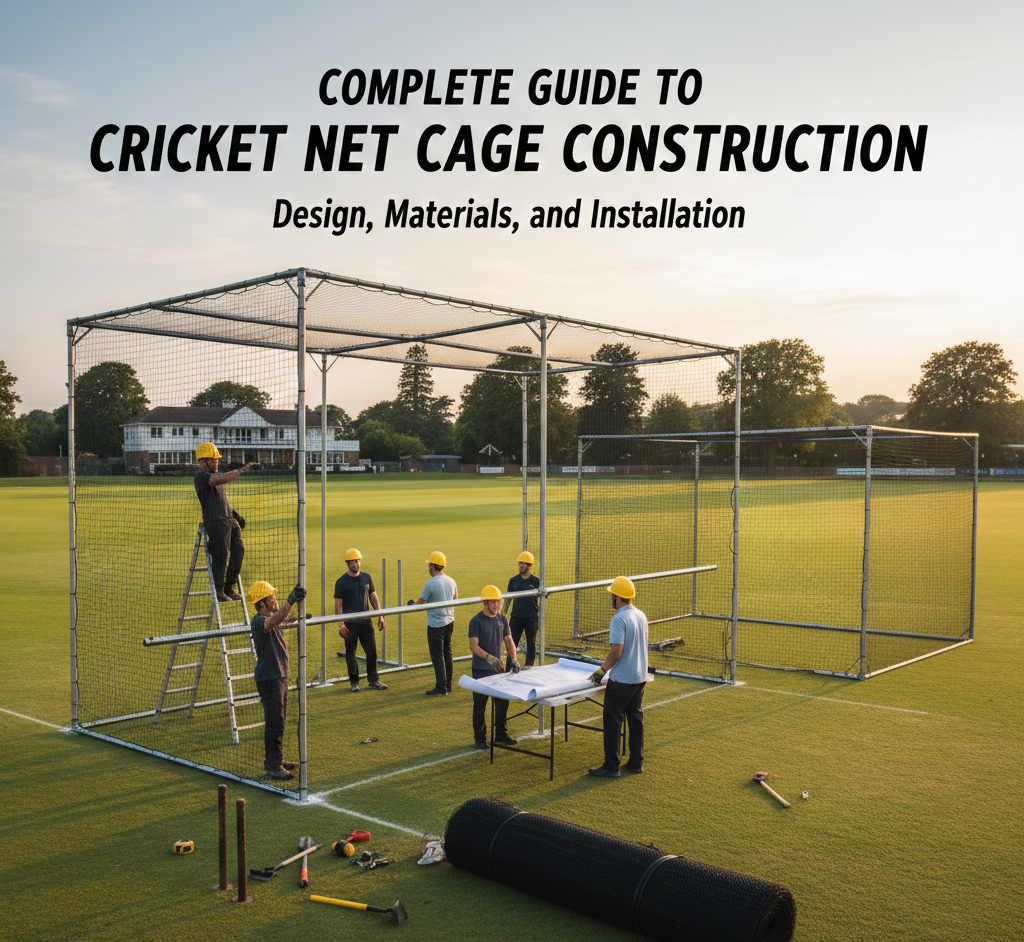
Introduction
-
Importance of cricket net cages for practice and training.
-
Benefits for players: improving batting, bowling, and fielding skills.
-
Differences between indoor and outdoor nets.
-
Overview of materials, design, and construction process.
2. Understanding Cricket Net Cages
-
Definition and purpose of cricket net cages.
-
Components: frame, netting, flooring, posts, roof, and safety features.
-
Types of net cages:
-
Indoor vs outdoor
-
Portable vs permanent
-
Single bay vs multi-bay cages
-
-
How net cages improve training efficiency and safety.
3. Planning and Site Assessment
-
Choosing the right location:
-
Space requirements
-
Ground leveling
-
Drainage considerations
-
Sunlight and wind exposure
-
-
Measuring dimensions based on available space.
-
Determining number of nets and cage bays.
-
Compliance with local building codes and regulations.
4. Design Considerations
-
Standard cricket net dimensions:
-
Length, width, and height
-
Clearance around the cage
-
-
Materials for structural frame:
-
Galvanized steel
-
Aluminum
-
Wood (less common)
-
-
Netting material:
-
Nylon
-
Polyethylene
-
UV-resistant options
-
-
Flooring options:
-
Artificial turf
-
Concrete with mats
-
Grass
-
-
Safety features: padding, fencing, signage.
5. Foundation and Groundwork
-
Ground preparation:
-
Clearing debris
-
Leveling the ground
-
Soil compaction
-
-
Foundation options:
-
Concrete footings
-
Steel anchor plates
-
Portable base frames
-
-
Importance of drainage to prevent waterlogging.
6. Structural Frame Construction
-
Types of frames: rectangular, square, or modular.
-
Pole and post selection:
-
Diameter, thickness, and material
-
Galvanized vs painted steel
-
-
Joint types: welded, bolted, or modular connections.
-
Roof framing and support structures.
-
Ensuring stability against wind loads and usage.
7. Net Installation
-
Selecting appropriate netting:
-
Mesh size for safety
-
UV protection for outdoor nets
-
-
Attachment techniques:
-
Hooks, cable ties, rope, or specialized net clips
-
-
Ensuring tautness to prevent sagging
-
Overlapping and layering nets for durability
-
Maintenance of net tension over time.
8. Flooring Installation
-
Artificial turf: preparation, rolling, and fixing.
-
Grass: leveling, mowing, and soil conditioning.
-
Concrete/mats: anti-slip and cushioning.
-
Drainage considerations under flooring.
-
Marking practice zones: bowling crease, batting areas.
9. Safety Features
-
Padding on poles and posts
-
Nets for stopping stray balls
-
Protective screens for bowlers and wicketkeepers
-
Emergency access and exits
-
Signage and safety rules
10. Lighting (for Indoor/Evening Use)
-
Choosing LED vs fluorescent
-
Positioning lights for minimal shadows
-
Wiring, safety, and energy efficiency
-
Maintenance and bulb replacement
11. Tools and Equipment Required
-
List of tools for construction: drills, welding, measuring tools, ladders.
-
Protective gear for workers: helmets, gloves, harnesses.
-
Maintenance tools for nets, posts, and flooring.
12. Installation Step-by-Step
-
Timeline from planning to finished installation.
-
Stepwise process:
-
Ground preparation
-
Foundation setting
-
Frame assembly
-
Roof installation
-
Net attachment
-
Flooring setup
-
Safety checks
-
-
Common mistakes and how to avoid them.
13. Maintenance Practices
-
Checking net tension and repairing tears
-
Cleaning flooring
-
Painting or anti-rust treatments on steel frames
-
Seasonal maintenance (especially in outdoor setups)
-
Inspection checklist for safety before each practice session
14. Costing and Budgeting
-
Material costs: nets, poles, flooring, lighting.
-
Labor costs
-
Long-term maintenance budget
-
ROI for clubs, academies, and schools
15. Troubleshooting Common Issues
-
Sagging or torn nets
-
Uneven flooring
-
Rust or corrosion on poles
-
Drainage problems
-
Preventive solutions and quick fixes
16. Innovations in Cricket Net Cages
-
Portable and modular designs
-
Hybrid indoor/outdoor solutions
-
Advanced materials: UV-resistant, waterproof, reinforced
-
Smart features: automatic ball return, sensors, and cameras for training
17. Conclusion
-
Recap of key steps for constructing a safe and effective cricket net cage.
-
Importance of proper planning and regular maintenance.
-
Benefits to players, clubs, and coaches in improving performance.