Introduction
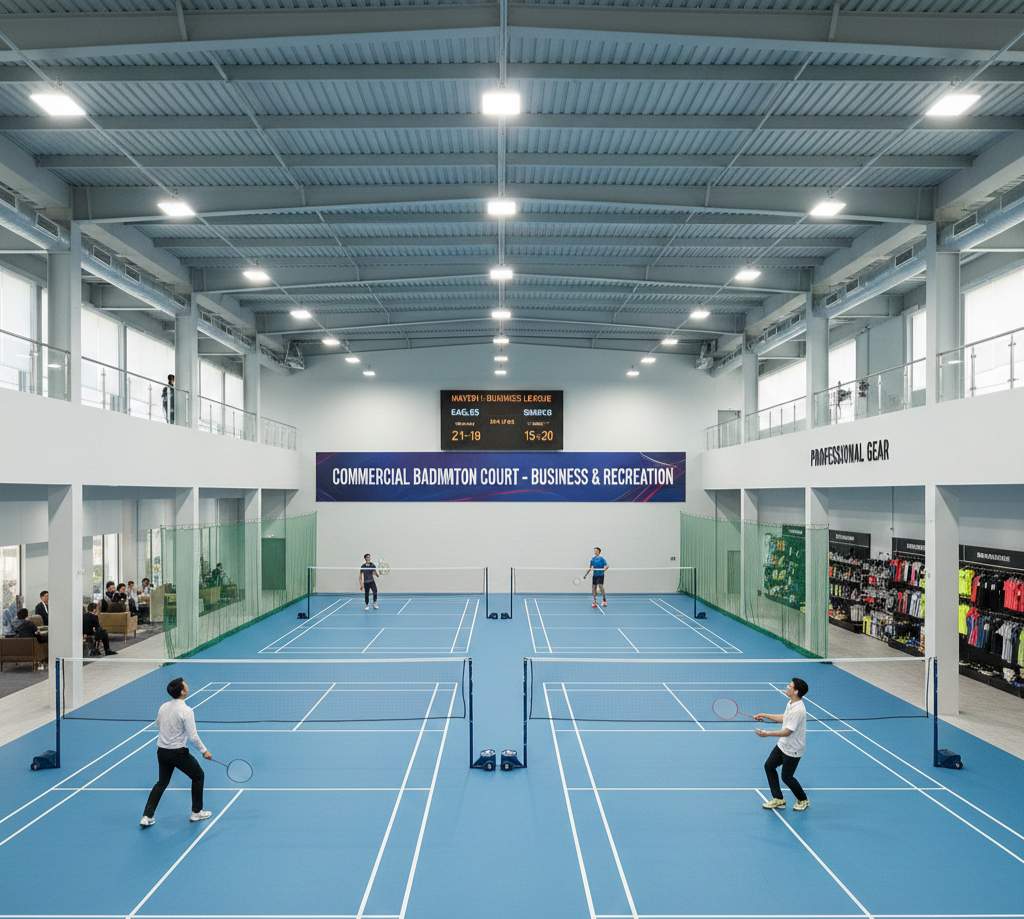
Commercial badminton courts have become an essential component of sports complexes, fitness centers, hotels, and multi-purpose commercial facilities. Unlike school or club courts, commercial courts are designed to handle heavy traffic, frequent usage, and professional-level performance requirements.
Investing in a commercial badminton court is not just about providing a playing space; it’s about creating an experience—ensuring player safety, high-quality performance, and a visually appealing environment. Proper construction, flooring selection, lighting, and maintenance play a pivotal role in delivering long-lasting, professional-grade courts.
This article explores the key aspects of commercial badminton court construction, including design standards, flooring options, lighting, multi-use considerations, maintenance, and cost factors.
1. Why Commercial Badminton Courts Are Important
Commercial facilities cater to high volumes of users, including athletes, recreational players, and event organizers. A professionally designed badminton court provides:
-
Revenue Opportunities: Host tournaments, training camps, and club memberships.
-
Professional Playing Conditions: Consistent bounce, proper grip, and regulation-size courts attract serious players.
-
Durable Infrastructure: Built to withstand frequent and heavy use without compromising performance.
-
Multi-Purpose Usage: Courts can be adapted for fitness classes, group training, or other indoor sports.
A well-executed commercial court enhances the value of the facility, attracts members, and positions the venue as a premium sports destination.
2. Standard Specifications for Commercial Courts
Commercial courts should comply with BWF (Badminton World Federation) standards while accommodating heavy usage and safety requirements:
-
Court Dimensions: 13.4m × 6.1m for doubles, 13.4m × 5.18m for singles.
-
Ceiling Height: Minimum 7–9 meters for indoor courts.
-
Clearance Space: At least 2 meters around the court for safe movement.
-
Lighting: Evenly distributed LED lighting with 300–500 lux for recreational play, 750–1000 lux for professional use.
-
Ventilation: Proper airflow to maintain indoor air quality and reduce humidity, especially for wooden and vinyl floors.
Commercial courts must combine compliance, safety, and usability, making professional planning essential.
3. Flooring Options for Commercial Badminton Courts
Flooring is the most critical component of a commercial badminton court. High-traffic areas require durable, shock-absorbing, and low-maintenance surfaces.
A. Wooden Flooring
-
Best For: Indoor commercial courts aiming for premium experience.
-
Advantages: Excellent shock absorption, natural aesthetics, and consistent bounce.
-
Maintenance: Requires regular polishing, moisture control, and occasional plank replacement.
-
Cost: High initial investment but long-term durability.
B. Vinyl Flooring
-
Best For: Multi-purpose commercial halls and budget-conscious facilities.
-
Advantages: Slip-resistant, cushioned, easy to clean, and supports multiple sports.
-
Maintenance: Sweeping, mopping, and periodic line repainting.
-
Cost: Moderate, suitable for medium-traffic commercial use.
C. PU (Polyurethane) Flooring
-
Best For: Indoor courts with high-frequency usage.
-
Advantages: Seamless, non-slip, shock-absorbing, and low-maintenance.
-
Maintenance: Periodic recoating ensures elasticity and performance.
-
Cost: Mid-range, ideal for heavy-use environments.
D. Acrylic Flooring
-
Best For: Outdoor commercial courts.
-
Advantages: Weather-resistant, cost-effective, and low-maintenance.
-
Maintenance: Cleaning and recoating every 4–6 years to maintain grip and color.
-
Cost: Affordable for large-scale commercial facilities.
4. Lighting and Ventilation Considerations
Proper lighting and ventilation are crucial in commercial badminton courts:
-
Lighting: Install even, shadow-free LED lighting at a height of 7–9 meters. Adjustable intensity can accommodate recreational and professional games.
-
Ventilation: Adequate airflow prevents humidity buildup, protects flooring, and enhances player comfort. Ceiling fans, HVAC systems, and natural ventilation can be combined for optimal performance.
Tip: Commercial courts often integrate energy-efficient LED lighting and smart ventilation to reduce operational costs.
5. Multi-Use Design for Commercial Facilities
Many commercial courts are part of multi-purpose halls, maximizing the utility of available space:
-
Flexible Line Markings: Different colors for badminton, volleyball, or basketball lines.
-
Cushioned Flooring: Suitable for aerobics, yoga, or fitness sessions.
-
Retractable Equipment: Nets, posts, and dividers can be removed to convert the space.
-
Safety Features: Wall padding, non-slip floors, and adequate clearance for heavy traffic.
A well-designed multi-use court ensures maximum ROI while providing diverse fitness and recreational activities.
6. Resurfacing and Maintenance for Commercial Courts
Regular maintenance is critical in commercial environments due to high footfall and heavy use:
-
Daily Cleaning: Sweep and mop to remove dust and debris.
-
Line Inspection: Refresh court markings annually.
-
Surface Repairs: Patch minor cracks, tears, or peeling surfaces promptly.
-
Professional Resurfacing: PU or vinyl courts may require recoating every 4–6 years; wooden floors require sanding and polishing every 5–8 years.
-
Equipment Checks: Regularly inspect nets, posts, and lighting for safety.
Proper maintenance ensures consistent performance, safety, and aesthetics, attracting more players and events.
7. Cost Considerations for Commercial Courts
The cost of constructing a commercial badminton court depends on several factors:
| Component | Approx. Cost (₹) |
|---|---|
| Flooring Material (Wood/Vinyl/PU/Acrylic) | 3,00,000 – 6,50,000 |
| Base Preparation & Leveling | 50,000 – 1,00,000 |
| Lighting & Ventilation | 50,000 – 1,20,000 |
| Net, Posts & Accessories | 30,000 – 60,000 |
| Line Marking & Painting | 20,000 – 40,000 |
| Miscellaneous (Labor & Transport) | 40,000 – 70,000 |
| Total Estimated Cost | 4,90,000 – 9,40,000 |
Prices vary depending on region, contractor, materials, and project specifications.
8. Safety and Accessibility Measures
-
Shock-Absorbing Floors: Reduce risk of joint injuries for recreational and professional players.
-
Non-Slip Surfaces: Essential for wet or high-traffic areas.
-
Clear Surroundings: Minimum 2 meters around the court ensures safe play.
-
Accessible Design: Wide entryways and ramps for disabled or senior players.
-
Emergency Preparedness: Install fire exits, first aid stations, and clear signage.
Safety features in commercial courts enhance member confidence and compliance with regulations.
9. Benefits of Commercial Badminton Courts
-
Revenue Generation: Hosting events, tournaments, and coaching sessions.
-
Premium Member Experience: Attracts players seeking professional-grade courts.
-
Durable Infrastructure: Designed for frequent use and long-term performance.
-
Versatility: Multi-use courts increase facility utilization.
-
Professional Appeal: Modern design, quality lighting, and well-maintained surfaces reflect high standards.
Commercial courts offer both financial and social benefits, strengthening the reputation of fitness and sports facilities.
10. Choosing the Right Contractor
Selecting an experienced contractor ensures:
-
Compliance with BWF standards
-
Use of high-quality flooring and materials
-
Proper installation techniques, leveling, and drainage
-
Transparent costing and post-installation support
-
Warranty on flooring and construction
A reliable contractor ensures long-lasting courts, optimal performance, and reduced maintenance issues.
Conclusion
Commercial badminton courts are more than just playing spaces—they are strategic assets that enhance fitness centers, hotels, and sports complexes. Proper construction, high-quality flooring, professional lighting, multi-use design, and maintenance are critical to creating safe, durable, and attractive courts.
By investing in wooden, vinyl, PU, or acrylic flooring, ensuring BWF-standard compliance, and incorporating maintenance plans, commercial facilities can provide premium playing experiences while maximizing revenue and facility utilization.
Well-designed commercial courts attract players, host professional events, and position the facility as a premium destination for sports and recreation.