Introduction
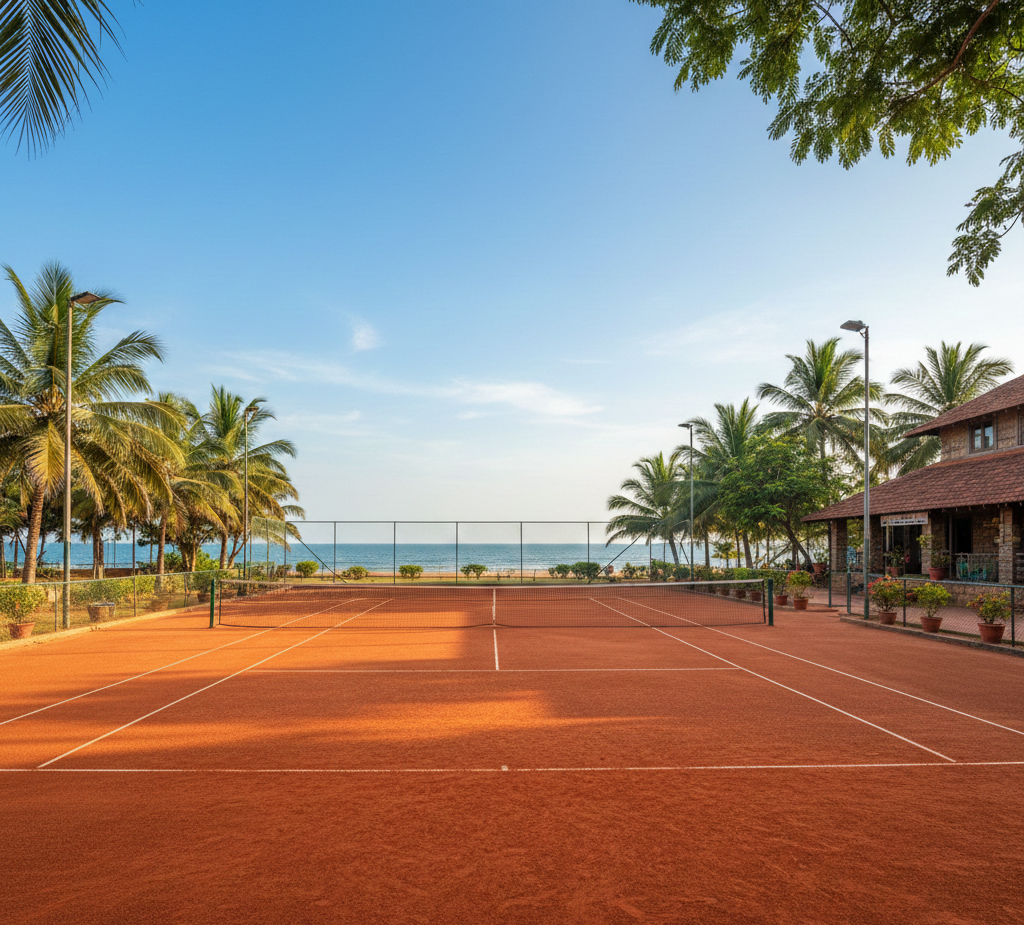
Tamil Nadu is one of India’s strongest tennis-producing states, home to numerous academies, sporting institutions, and private sports complexes. The region’s warm climate, long dry seasons, and rich sports culture make it an excellent location for clay tennis court construction. Clay courts provide a controlled, player-friendly surface ideal for developing footwork, spin, strategy, and endurance—attributes essential for modern tennis.
Whether for academies in Chennai, sports schools in Coimbatore, or private facilities in Madurai, Trichy, Salem, or Erode, clay courts remain a popular and practical choice across Tamil Nadu.
Why Clay Courts Work Well in Tamil Nadu
1. Climate Suits Clay Court Performance
Tamil Nadu experiences:
-
Hot summers
-
Mild winters
-
Manageable monsoons (split between SW & NE monsoon)
The majority of the year is dry, which helps clay courts maintain:
-
Stable bounce
-
Good moisture retention with routine watering
-
Minimal damage compared to very humid regions
2. Excellent for Player Development
Clay courts naturally slow down the ball, promoting:
-
Longer rallies
-
Improved footwork
-
Better topspin technique
-
Tactical precision
This makes clay courts ideal for coaching centers and academies across the state.
3. Easily Available Local Materials
Tamil Nadu has strong availability of:
-
Red earth
-
Murram
-
Crushed brick
-
Stone dust
This reduces transportation cost and helps maintain the court cost-effectively.
4. Reduced Player Impact
The surface absorbs shock and reduces stress on:
-
Knees
-
Ankles
-
Lower back
Perfect for juniors, competitive athletes, and high-volume training sessions.
Challenges of Clay Courts in Tamil Nadu
1. High Heat in Summer
Districts like Chennai, Vellore, and Madurai can reach 40°C+:
-
Clay dries faster
-
Requires more frequent watering
-
May harden if not regularly groomed
2. Monsoon Moisture Variation
Tamil Nadu has two monsoon cycles:
-
Heavy surface moisture can lead to soft spots
-
Requires good drainage and rolling after rains
3. Occasional Coastal Winds
In coastal areas (Chennai, Cuddalore, Nagapattinam):
-
Windbreak nets recommended
-
Surface sweeping required more often
Construction Guidelines for Clay Courts in Tamil Nadu
1. Site Selection
Choose a site that offers:
-
Strong sunlight exposure
-
Minimal water stagnation
-
Space for fencing and irrigation access
Court orientation: North–South to avoid sun glare.
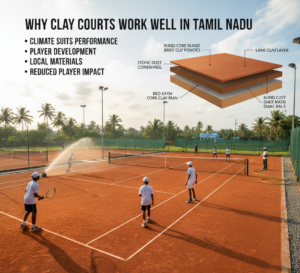
2. Multi-Layer Base Construction
Clay courts need a stable, well-prepared base:
-
Compacted stone foundation – supports structure
-
Stone dust cushion layer – evens out the base
-
Murram/clay blend layer – helps moisture retention
-
Top layer of red clay or crushed brick – playing surface
This ensures a firm surface with consistent bounce.
3. Drainage Planning
Design MUST handle both monsoons:
-
Side drains along the length
-
0.8–1% slope for runoff
-
Optional French drainage in high-rain districts
4. Surface Top Layer
A good mixture for Tamil Nadu includes:
-
Red clay
-
Crushed brick powder
-
Murram soil for binding
5. Line Markings
Use:
-
PVC or fabric line tapes
-
Anchored firmly
-
Never painted (paint cracks with clay movement)
6. Irrigation System
Clay must stay moist:
-
Manual hose
-
Movable sprinklers
-
Fully automated irrigation (best for academies)
1. Climate Suits Clay Court Performance
Tamil Nadu experiences:
-
Hot summers
-
Mild winters
-
Manageable monsoons (split between SW & NE monsoon)
The majority of the year is dry, which helps clay courts maintain:
-
Stable bounce
-
Good moisture retention with routine watering
-
Minimal damage compared to very humid regions
2. Excellent for Player Development
Clay courts naturally slow down the ball, promoting:
-
Longer rallies
-
Improved footwork
-
Better topspin technique
-
Tactical precision
This makes clay courts ideal for coaching centers and academies across the state.
3. Easily Available Local Materials
Tamil Nadu has strong availability of:
-
Red earth
-
Murram
-
Crushed brick
-
Stone dust
This reduces transportation cost and helps maintain the court cost-effectively.
4. Reduced Player Impact
The surface absorbs shock and reduces stress on:
-
Knees
-
Ankles
-
Lower back
Perfect for juniors, competitive athletes, and high-volume training sessions.
Challenges of Clay Courts in Tamil Nadu
1. High Heat in Summer
Districts like Chennai, Vellore, and Madurai can reach 40°C+:
-
Clay dries faster
-
Requires more frequent watering
-
May harden if not regularly groomed
2. Monsoon Moisture Variation
Tamil Nadu has two monsoon cycles:
-
Heavy surface moisture can lead to soft spots
-
Requires good drainage and rolling after rains
3. Occasional Coastal Winds
In coastal areas (Chennai, Cuddalore, Nagapattinam):
-
Windbreak nets recommended
-
Surface sweeping required more often
Construction Guidelines for Clay Courts in Tamil Nadu
1. Site Selection
Choose a site that offers:
-
Strong sunlight exposure
-
Minimal water stagnation
-
Space for fencing and irrigation access
Court orientation: North–South to avoid sun glare.
2. Multi-Layer Base Construction
Clay courts need a stable, well-prepared base:
-
Compacted stone foundation – supports structure
-
Stone dust cushion layer – evens out the base
-
Murram/clay blend layer – helps moisture retention
-
Top layer of red clay or crushed brick – playing surface
This ensures a firm surface with consistent bounce.
3. Drainage Planning
Design MUST handle both monsoons:
-
Side drains along the length
-
0.8–1% slope for runoff
-
Optional French drainage in high-rain districts
4. Surface Top Layer
A good mixture for Tamil Nadu includes:
-
Red clay
-
Crushed brick powder
-
Murram soil for binding
5. Line Markings
Use:
-
PVC or fabric line tapes
-
Anchored firmly
-
Never painted (paint cracks with clay movement)
6. Irrigation System
Clay must stay moist:
-
Manual hose
-
Movable sprinklers
-
Fully automated irrigation (best for academies)
Maintenance Requirements in Tamil Nadu
Daily Maintenance
-
Water the surface lightly
-
Drag the mat to level the court
-
Sweep loose clay
Weekly Maintenance
-
Rolling with a heavy roller
-
Fixing soft spots
-
Checking line tightness
Monthly Maintenance
-
Add fresh clay / red brick dust
-
Deep brushing
-
Re-leveling the top layer
Seasonal Maintenance
-
Summer: Increase watering frequency
-
Monsoon: Maintain drains & roll after rain
-
Winter: Standard upkeep is sufficient
Cost of Clay Tennis Court Construction in Tamil Nadu
Construction Cost Range
₹8 lakh – ₹28 lakh
Varies based on:
-
Court base quality
-
Type of clay used
-
Fencing height
-
Irrigation systems
-
Optional lighting
Maintenance Cost
Medium to low depending on:
-
Water source
-
Labor availability
-
Clay replenishment frequency
Premium Add-Ons
-
LED floodlights
-
High fencing with windbreak nets
-
Rainproof covers
-
Player seating & shade structures
-
Backboards for training
Best Locations in Tamil Nadu for Clay Courts
Clay courts are highly suitable in:
-
Chennai
-
Coimbatore
-
Madurai
-
Trichy
-
Erode
-
Salem
-
Tirunelveli
-
Vellore
-
Kanchipuram
-
Namakkal
These districts offer climates and soil types that support durable clay court performance.
Pros & Cons Summary
| Advantages | Limitations |
|---|---|
| Best surface for training | Requires consistent watering |
| Affordable construction | Affected during heavy monsoon |
| Soft, joint-friendly surface | Needs skilled maintenance |
| Materials easily available | High heat dries surface quickly |
Conclusion
Clay tennis court flooring in Tamil Nadu is an excellent investment for academies, schools, sports complexes, resorts, and private properties. With the state’s favorable climate, abundant natural materials, and strong tennis culture, clay courts offer a premium playing experience when constructed with proper drainage, layering, and regular maintenance.
A well-built clay court in Tamil Nadu will deliver long-lasting performance, high training value, and safe playability throughout the year.