Introduction
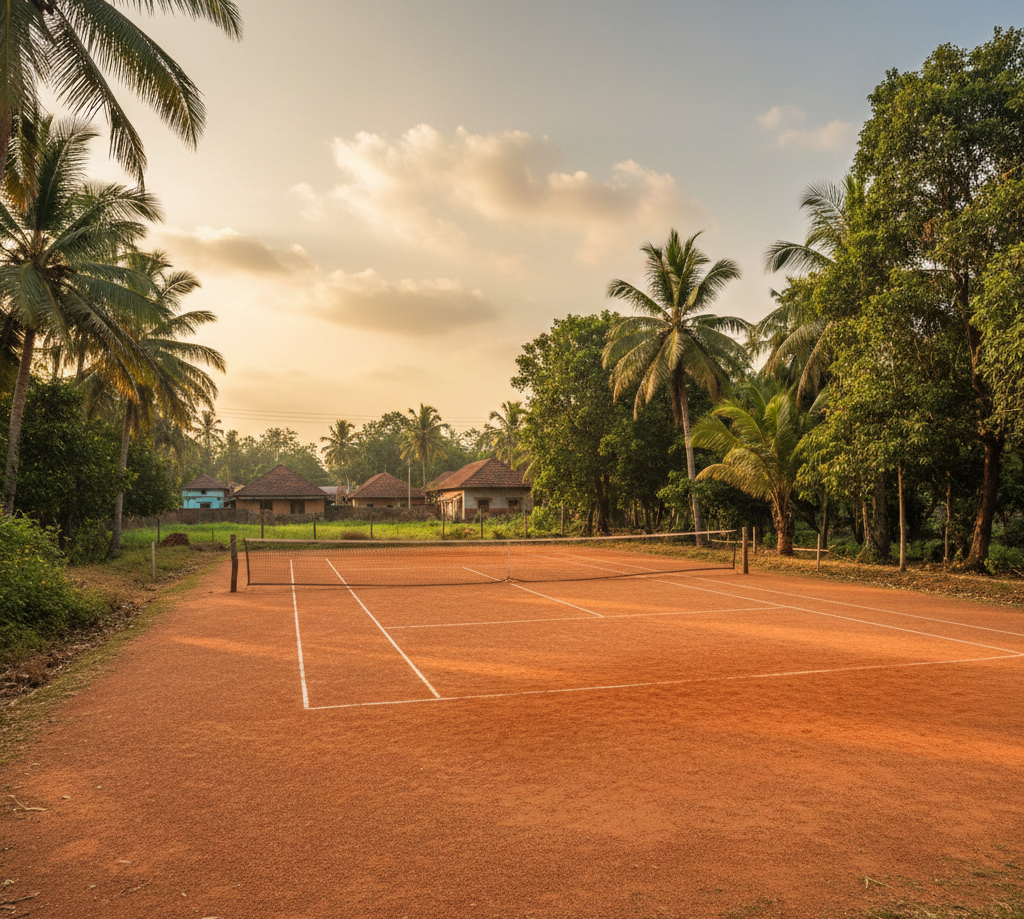
Sikkim, known for its breathtaking Himalayan landscapes and cool climate, is emerging as a promising region for modern sports infrastructure. Cities and towns such as Gangtok, Namchi, Mangan, Gyalshing, Pakyong, Rongpo, and Jorethang are gradually expanding their sports facilities across schools, academies, government sports departments, and private institutions.
While Sikkim’s terrain is unique, clay tennis courts are an excellent fit when constructed with proper engineering and slope management. Clay provides comfort, durability, and high training value—making it a preferred surface for long-term player development.
Why Clay Courts Are Suitable for Sikkim
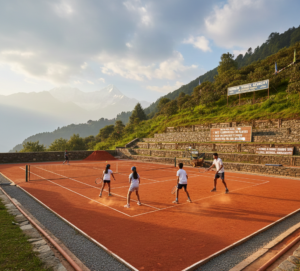
1. Soft & Comfortable for Players
Clay is a naturally cushioned surface, offering:
-
Low impact on joints
-
Smooth sliding to reduce injury risk
Perfect for training environments and junior coaching programs.
2. Great for Improving Technique
Clay courts slow down the pace of the ball, helping players develop:
-
Strong baseline skills
-
Improved footwork
-
Topspin shots
-
Longer rally endurance
-
Better strategy and control
Ideal for Sikkim’s upcoming tennis academies and training centres.
3. Works Well in Sikkim’s Cool Climate
Sikkim’s weather—cool summers and mild winters—helps clay courts:
-
Retain moisture naturally
-
Maintain stable firmness
-
Deliver consistent bounce
4. Local Material Availability in Some Regions
Certain areas have easy access to:
-
Brick dust
-
Stone dust
-
Clay soil
This helps reduce material and transportation cost.
Challenges of Clay Courts in Sikkim
Sikkim’s terrain and climate require smart engineering solutions.
1. Hilly Terrains
Most regions require:
-
Proper land cutting
-
Leveling
-
Retaining wall support in steep areas
2. Heavy Seasonal Rainfall
Sikkim receives substantial monsoon rainfall.
Clay courts require:
-
Strong drainage
-
Proper sloping
-
Surface rolling after rain
3. Limited Flat Land
Multi-purpose grounds, school fields, and stadiums must be planned efficiently to accommodate a full-size tennis court.
Clay Tennis Court Construction in Sikkim
The foundation of a high-quality clay court lies in precision work and layered engineering.
1. Site Planning & Orientation
-
Choose land with minimal slope
-
Preferably select an elevated location for better drainage
-
Ensure sunlight exposure
-
Maintain natural airflow for drying
-
Use the North–South orientation for reduced sun glare
2. Standard Layered Construction Process
Layer 1: Sub-Base (150–200 mm)
-
Compacted stones and aggregates
-
Creates a strong foundation
-
Ensures long-term stability
Layer 2: Stone Dust/Gravel Layer (50–80 mm)
-
Provides smooth leveling
-
Supports the clay binding layer
Murram/Clay Binding Layer (20–40 mm)
-
Ensures moisture retention
-
Adds cushioning
-
Helps maintain firmness
Top Clay / Brick Dust Layer (5–10 mm)
Combination of:
-
Natural clay
-
Red soil
-
Brick dust
This top layer provides:
-
High-quality bounce
-
Perfect sliding
-
Reliable grip
Line Marking
PVC tennis line tapes are used for:
-
High visibility
-
Durability
-
Weather resistance
Drainage System for Sikkim’s Geography
Given the hilly terrain and strong monsoon in Sikkim, drainage is a major component.
Key Drainage Elements
-
1% slope toward side drains
-
Covered RCC drains where required
-
French drains for heavy rainfall zones
-
Perimeter slope management
-
Retaining structures for hillside courts
Rainwater Management
-
Periodic clearing of drain channels
-
Rolling the surface after heavy showers
-
Maintaining moisture balance
Clay Court Maintenance in Sikkim
Clay courts require regular grooming to stay in top shape.
Daily Maintenance
-
Watering the surface
-
Dragging with mat
-
Debris cleaning
Weekly Maintenance
-
Court rolling
-
Patching minor surface dips
-
Checking moisture
Seasonal Maintenance
-
Clay top-up
-
Line tape adjustments
-
Pre-monsoon drainage check
-
Deep rolling after the rainy season
Cost of Clay Tennis Court Construction in Sikkim
Approximate Cost Range
₹10 lakh – ₹32 lakh, depending on:
-
Land leveling effort
-
Terrain challenges
-
Drainage requirements
-
Material transport
-
Court fencing & lighting
Maintenance Cost
Moderate:
-
Watering
-
Clay replenishment
-
Rolling equipment
-
Labour
Best Locations for Clay Courts in Sikkim
Suitable areas include:
-
Gangtok
-
Namchi
-
Gyalshing
-
Mangan
-
Rangpo
-
Jorethang
-
Pakyong
-
Ravangla
-
Dentam
Most flat urban and semi-urban zones can support clay court construction with proper leveling.
Advantages & Limitations Overview
| Advantages | Limitations |
|---|---|
| Excellent for coaching and training | Requires skilled construction in hilly terrain |
| Comfortable & safe for players | Maintenance needed in monsoon |
| Performs well in cool climate | Limited flat land in some areas |
| Affordable materials | Requires good drainage engineering |
Conclusion
Clay tennis court flooring in Sikkim is a smart, comfortable, and high-performance choice for schools, academies, sports complexes, resorts, and private institutions. With proper land preparation, intelligent drainage design, and consistent maintenance, clay courts in Sikkim can deliver professional-grade playability year-round.