Introduction
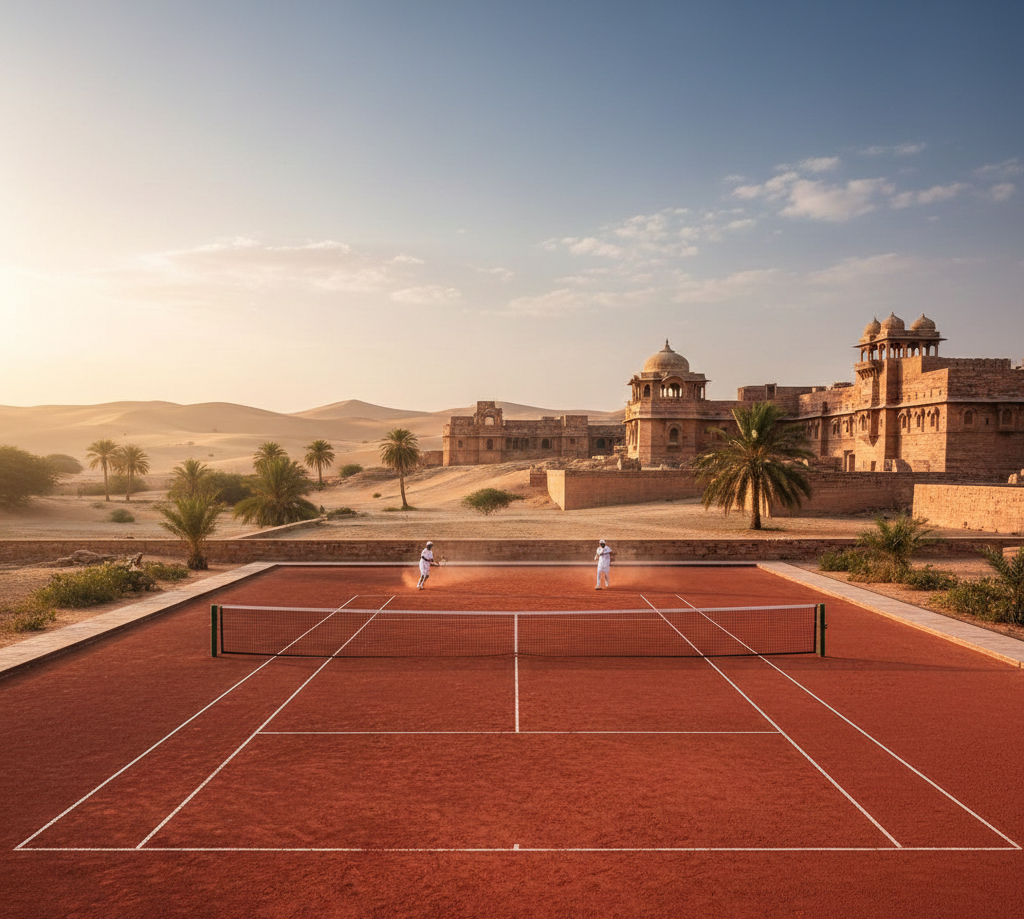
Rajasthan, India’s largest state by area, is renowned for its arid and semi-arid climate, extensive deserts, and extreme temperature variations. With scorching summers, minimal rainfall, and sandy soils, building and maintaining sports infrastructure presents unique challenges. For tennis enthusiasts, clay courts offer a premium playing experience—but in Rajasthan, careful planning and resource management are essential to ensure durability and performance.
Why Clay Courts in Rajasthan?
-
Player Comfort & Performance
-
Clay provides a softer surface than hard courts, reducing stress on joints.
-
The slower bounce encourages tactical play and endurance, ideal for training and competitive matches.
-
-
Aesthetic Appeal
-
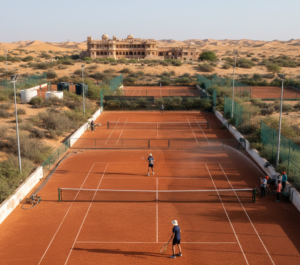
Traditional red or green clay courts add visual charm to resorts, schools, or sports clubs.
-
In desert landscapes, clay courts can create a striking contrast while maintaining a natural look.
-
-
Cost-Effective Initial Construction
-
Using locally available materials, like crushed brick or shale, can reduce material transport costs.
-
Clay courts often have a lower initial construction cost compared to synthetic surfaces.
-
-
Skill Development
-
Slower rallies and higher bounces foster better footwork, control, and stamina, making clay ideal for coaching and training programs.
-
Challenges Specific to Rajasthan
-
Water Scarcity & Maintenance
-
Clay courts require regular watering to maintain surface integrity. Rajasthan’s low rainfall makes irrigation a constant challenge.
-
Efficient water management is crucial to avoid court degradation.
-
-
Extreme Temperatures
-
High summer temperatures can cause clay to dry and crack.
-
During cooler winter months, the surface may become hard and brittle, affecting playability.
-
-
Wind & Sand
-
Desert winds can blow sand onto the court, disturbing the surface and lines.
-
Frequent sweeping and cleaning are necessary to maintain playable conditions.
-
-
Labor & Expertise
-
Proper construction and maintenance demand skilled personnel familiar with clay surfaces.
-
In remote or semi-urban areas of Rajasthan, access to trained staff or specialized equipment may be limited.
-
Design & Construction Considerations for Rajasthan
-
Site Selection & Drainage
-
Choose a well-drained area with minimal slope (~0.5–1%) to prevent water accumulation.
-
Even in arid regions, include a drainage system to handle unexpected rains or irrigation overflow.
-
-
Court Base
-
Construct a stable base of compacted gravel or stone to prevent subsidence.
-
Above the base, layer crushed brick, shale, or other clay-based material, compacted for smoothness and durability.
-
-
Irrigation System
-
Automated sprinklers or drip irrigation help maintain moisture efficiently.
-
Water conservation strategies like rainwater harvesting or storing groundwater may be essential.
-
-
Surface Layer & Lines
-
Top layer should consist of high-quality clay or crushed brick for uniform play.
-
Lines can be made from canvas, synthetic strips, or acrylic alternatives, as painted lines wear quickly on clay.
-
-
Wind & Dust Protection
-
Windbreaks (nets, walls, or vegetation) reduce clay displacement by desert winds.
-
Fencing prevents debris and sand from entering the court.
-
Maintenance Strategy in Rajasthan
-
Daily: Light watering, sweeping, and rolling to maintain a smooth surface.
-
Weekly: Adjust court profile, re-roll, and repair minor surface imperfections.
-
Monthly: Inspect drainage and ensure even moisture levels across the court.
-
Seasonal: Pre-summer, add moisture and compact clay to prevent cracking. Pre-winter, check surface integrity and repair brittle areas.
-
Annual: Replenish clay, re-compact, and replace or repair court lines.
Sustainability & Resource Adaptation
-
Water Conservation:
-
Use rainwater harvesting during rare monsoons and store groundwater for irrigation.
-
Opt for drip or sprinkler systems to minimize wastage.
-
-
Local Materials:
-
Use locally available crushed bricks or shale to reduce transport emissions.
-
-
Environmental Integration:
-
Incorporate desert plants or shade structures around the court to reduce heat impact and sand intrusion.
-
Cost Considerations
-
Construction Cost:
-
Typical clay courts in India range from ₹10 lakh to ₹35 lakh depending on site, materials, and infrastructure like fencing and irrigation.
-
In Rajasthan, water management infrastructure may slightly increase costs.
-
-
Maintenance Cost:
-
Regular watering, labor, clay replenishment, and rolling are ongoing expenses that need to be budgeted for, particularly in arid regions.
-
Pros & Cons (Summary)
| Pros | Cons |
|---|---|
| Soft, joint-friendly surface | High water demand in arid climate |
| Encourages skill and endurance | Vulnerable to cracking and sand intrusion |
| Visually appealing | Requires consistent skilled maintenance |
| Can use locally available clay | Temperature extremes affect playability |
Conclusion
A clay tennis court in Rajasthan provides a premium playing surface that is both enjoyable and aesthetically appealing. However, the state’s arid climate, water scarcity, and sandy conditions require careful planning, efficient irrigation, and diligent maintenance. With proper design, water management, and use of local materials, clay courts can thrive in Rajasthan, offering players a soft, high-quality surface while blending harmoniously with the regional environment.