Introduction
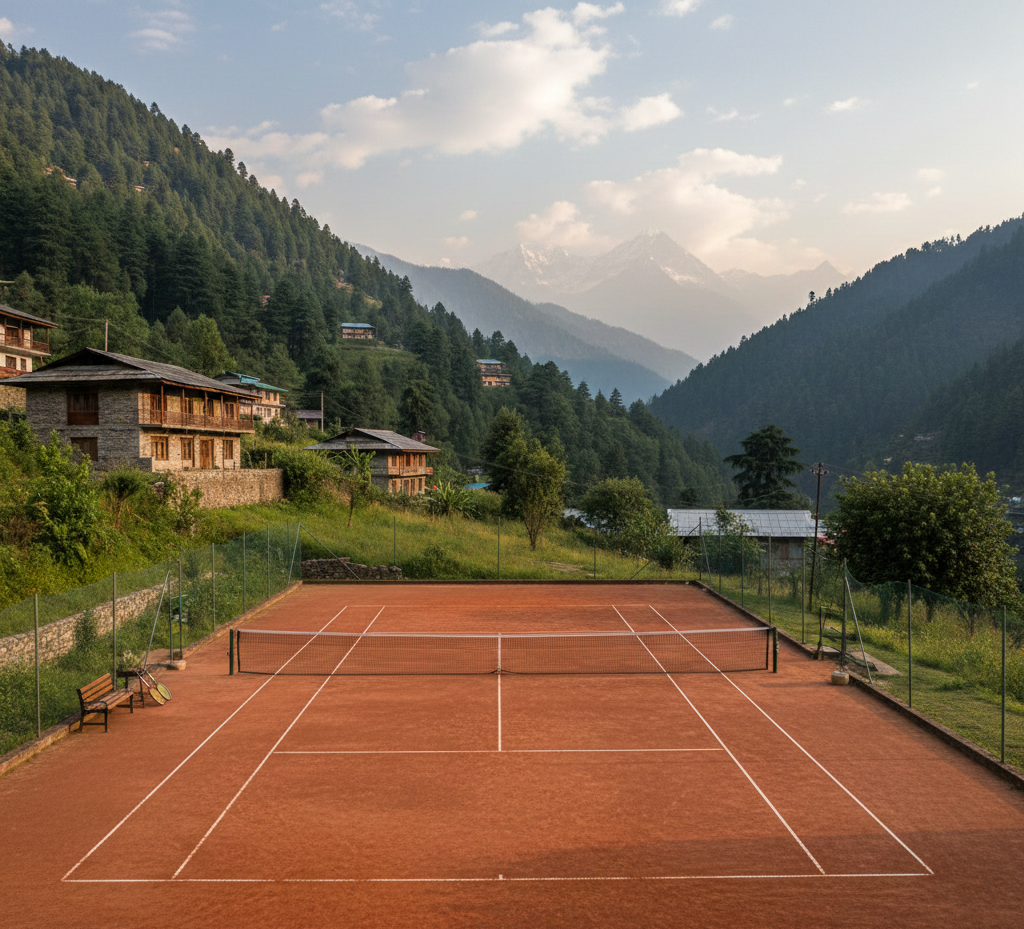
Himachal Pradesh, nestled in the lower Himalayas, offers a unique climate for sports infrastructure. With its cool summers, significant rainfall during monsoons, and occasional snowfall at higher altitudes, designing and maintaining a tennis court here demands careful material choices and climate-sensitive planning. Among the various court surfaces, clay tennis courts bring a blend of tradition, performance, and aesthetic appeal—but also present distinct challenges in this mountainous region.
Why Choose Clay for a Tennis Court in Himachal Pradesh?
-
Player Comfort & Game Feel
Clay courts are softer than hard courts, reducing the impact on players’ joints. The slow, high-bounce nature of clay encourages longer rallies, strategic play, and endurance—making it ideal for both recreational players and training environments. -
Aesthetic Harmony
Clay’s earthy tones blend naturally with Himachal Pradesh’s landscape. In hill stations or resorts, a red or green clay court can complement the surrounding terrain, preserving the region’s visual character. -
Cost-Effectiveness (Initial)
While clay courts demand continual maintenance, their initial construction cost can sometimes be lower than specialized synthetic courts, especially when local materials like crushed brick or stone are used. -
Joint-Friendly Surface
For players recovering from injuries or those who play frequently, clay is gentler on knees and ankles, offering a more forgiving surface.
Key Challenges in Himachal Pradesh
-
Weather & Moisture Management
-
Clay courts require consistent moisture to remain playable. If too dry, they become dusty; if too wet, they turn muddy.
-
Himachal’s rainfall (especially during monsoon) can lead to waterlogging. Without efficient drainage, the court surface may degrade or become unplayable.
-
In colder months or at higher altitudes, frost or freezing conditions may damage the clay or make lines (which are often canvas or tape) unstable.
-
-
Maintenance Demand
-
Daily upkeep is almost mandatory: watering, rolling, sweeping loose material.
-
Over time, clay is displaced by play, wind, or rain and must be replenished and compacted.
-
-
Water Usage & Resources
Maintaining the right moisture means regular irrigation—this can strain local water resources, especially in remote or ecologically sensitive areas. -
Labor and Expertise
Skilled personnel are needed for clay‑specific tasks like rolling, leveling, and resurfacing. In hilly regions, finding such staff or equipment could be more challenging.
Design & Construction Considerations for a Clay Court in Himachal
-
Site Selection & Orientation
-
Choose a well-drained, relatively flat location to minimize waterlogging risk.
-
Ensure a slope (typically ~ 0.8–1%) for surface drainage, directing water away from the playing area.
-
-
Court Base Structure
-
Underneath the clay layer, a solid base of compacted stone or gravel is needed to ensure stability.
-
Install a sub-surface drainage system (e.g., perforated pipes) to handle excess water, especially in the monsoon months.
-
-
Clay Material
-
Use quality crushed brick, shale, or stone-based clay. These materials should be well-compacted to create a consistent playing surface.
-
Lines for a clay court are often made from canvas or synthetic strips, which are fixed to the surface rather than painted. Surface Compaction
-
After laying clay, compact it using specialized rollers.
-
Periodic re-rolling is required throughout the season to maintain flatness and firmness.
-
-
Irrigation System
-
Integrate an automatic sprinkler system or overhead sprinklers on a timer to maintain moisture. This helps stabilize the court and prevents it from drying or cracking.
-
For Himachal, because water can freeze in off-season, design systems to be drained or protected against frost.
-
-
Fencing & Wind Protection
-
Use fences or windbreaks (hedges, mesh) to minimize clay displacement from wind, which can be more intense in hill regions.
-
Maintenance Strategy
To keep a clay court in peak condition in Himachal Pradesh:
-
Daily: Water, sweep, and lightly roll the court. Use a drag mat to remove loose particles.
-
Weekly: More intensive rolling to correct minor surface irregularities.
-
Monthly: Inspect drainage, check for soft spots, and address moisture inconsistencies.
-
Seasonal: Before monsoon, clear drains and verify slope. After heavy rains, re-level as needed. In winter, consider covering or shedding water from sprinklers to avoid freeze damage.
-
Annual: Replenish clay material, re-fix lines, and perform a major rolling to restore court profile.
Sustainability & Local Adaptation
-
Use Local Materials: Where possible, source clay locally (e.g., crushed brick or shale) to reduce transport cost and environmental footprint.
-
Water Conservation: Rainwater harvesting can supply the irrigation system. Given Himachal’s rainfall, collecting and storing water during monsoon can help maintain the court sustainably.
-
Traditional Architecture Integration: In Himachal Pradesh, vernacular architecture (like Kath-Kuni style) uses local stones and timber. While court construction is different, designers can borrow from this ethos by incorporating natural materials for ancillary structures (sheds, fencing posts), blending the court into the regional aesthetic.
Cost Considerations (Specific to India / Himachal)
-
Although detailed costs for clay courts in Himachal are not widely published, general tennis court construction in India ranges between ₹10 lakh to ₹35 lakh, depending on surface type, base construction, drainage, and extras like lighting or fencing.
-
For clay courts, while material costs may be lower, maintenance costs are significant (water, labor, clay top-ups). According to sports infrastructure guidelines, clay courts require regular resurfacing and consistent upkeep to remain playable.
Pros & Cons (Summary)
| Pros | Cons |
|---|---|
| Soft surface, gentle on joints | High water usage & maintenance |
| Slower game, tactical play | Sensitive to rain & moisture |
| Aesthetic appeal, natural look | Seasonal challenges (monsoon, frost) |
| Potentially lower initial material cost | Requires skilled labor for upkeep |
Conclusion
Establishing a clay tennis court in Himachal Pradesh can be a rewarding venture—both aesthetically and functionally—if planned carefully with respect to local climate, water resources, and maintenance capacity. While clay courts demand more effort than synthetic surfaces, they offer a rich playing experience and a natural feel that aligns beautifully with Himachal’s mountainous terrain. With thoughtful design, efficient drainage, and a sustainable maintenance plan, a clay court here can thrive for years and become a cherished facility in the region.