Introduction
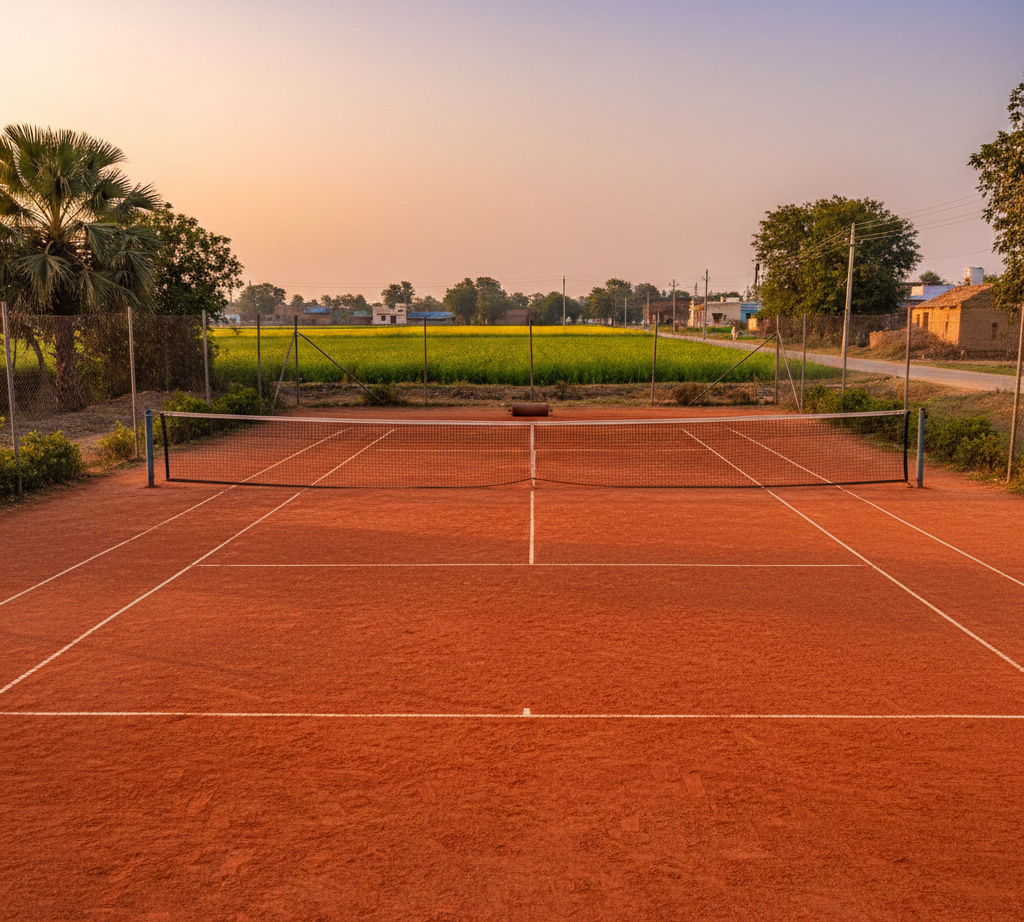
Haryana is one of India’s strongest sporting hubs—producing world-class athletes across wrestling, boxing, athletics, and tennis. With its dry climate, strong sunlight, and availability of construction materials, Haryana provides excellent potential for building high-quality clay tennis courts, especially for academies, schools, sports complexes, farmhouses, and training institutions.
Why Clay Tennis Courts Are Suitable for Haryana
1. Great for High-Intensity Training
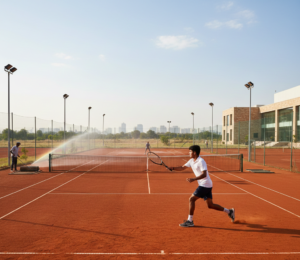
Clay courts slow down the ball and increase rally length, which helps players develop:
-
Stamina
-
Footwork
-
Tactical control
-
Spin-oriented play
Perfect for academies in Gurugram, Hisar, Faridabad, and Panchkula.
2. Comfortable Surface for All Players
Clay is a soft surface that absorbs impact—ideal for:
-
Young trainees
-
Recreational players
-
Senior players
-
High-volume coaching sessions
3. Cost-Effective Construction
Haryana has easy access to:
-
Crushed brick
-
Stone dust
-
Local clay soil
This significantly reduces the cost of making a premium clay tennis court.
4. Weather-Friendly for Most of the Year
Haryana’s dry climate actually helps maintain clay courts more easily compared to very humid regions.
Climate Considerations for Haryana
Haryana has:
-
Hot summers (May–July) – surface dries faster, requires more watering
-
Moderate winters – clay remains stable
-
Limited monsoon months – temporary challenges with rainwater
Because the state has less annual rainfall than many northern states, clay courts remain playable for most of the year.
Challenges of Clay Courts in Haryana
1. Summer Drying
Temperatures can exceed 40°C, which causes:
-
Surface cracks
-
Loose dust
-
Hardening of clay
This requires frequent watering in peak summer.
2. Strong Winds in Some Areas
Districts like Hisar and Bhiwani occasionally face dusty winds:
-
Additional sweeping needed
-
Court boundaries need windbreak nets
3. Uneven Rainfall
Sudden showers during monsoon can:
-
Erode the surface
-
Cause temporary puddles
Proper drainage design solves this.
Construction Guidelines for Haryana
1. Site Selection
Choose a location that:
-
Receives full sunlight
-
Is not prone to water stagnation
-
Has easy access to water supply
2. Base Construction (Standard Clay Court Layers)
-
Compacted stone foundation
-
Stone dust cushion layer
-
Crushed brick / clay top layer
-
Proper slope (0.8–1%) for drainage
3. Drainage Design
To handle monsoon rains:
-
Side drains on both lengths
-
Perimeter slope
-
Optional French drain with perforated pipes
4. Clay Surface Options
Suitable materials in Haryana include:
-
Red crushed brick
-
Local binding clay
-
Stone dust mix
A well-compacted top layer ensures consistent bounce.
5. Line Markings
Clay courts use:
-
White fabric or PVC lines
-
Fixed using nails/anchors
-
Never painted
6. Irrigation System
Essential due to dry weather:
-
Hose watering
-
Sprinkler systems
-
Automated irrigation (best for academies)
Maintenance Requirements in Haryana
Daily
-
Sprinkle water
-
Drag the surface with a drag mat
-
Light sweeping
Weekly
-
Roll the court
-
Fill minor depressions
-
Adjust lines
Monthly
-
Add fresh clay/bricks if required
-
Deep brushing and leveling
Seasonal
-
Summer: Increase watering frequency
-
Monsoon: Keep drains clean and surface protected
-
Winter: Normal grooming
Cost of Clay Tennis Court in Haryana
(Approximate and varies by city)
Construction Cost
₹8 lakh – ₹25 lakh
Based on:
-
Court size
-
Base quality
-
Irrigation system
-
Fencing & lighting
Annual Maintenance
Medium cost, mainly for:
-
Clay refills
-
Water
-
Labor
-
Equipment
Optional Additions
-
LED floodlights
-
Spectator seating
-
Windbreak nets
-
Shade structures
-
Court accessories
Ideal Places for Clay Courts in Haryana
Clay courts perform very well in:
-
Gurugram
-
Faridabad
-
Hisar
-
Sonipat
-
Karnal
-
Rohtak
-
Panchkula
-
Jhajjar
-
Panipat
These regions have dry or moderate climates suitable for clay.
Pros & Cons Summary
| Pros | Cons |
|---|---|
| Great for training & competition | Needs daily grooming |
| Affordable to build | More water needed in summer |
| Soft on joints | Dust in windy areas |
| Good ball control | Rain can cause erosion |
Conclusion
Clay tennis court flooring in Haryana is a practical, cost-effective, and performance-oriented choice. With the state’s dry climate and availability of raw materials, clay courts can be constructed efficiently and maintained with consistent care. For academies and institutions aiming to develop technically strong players, clay remains the top pick.