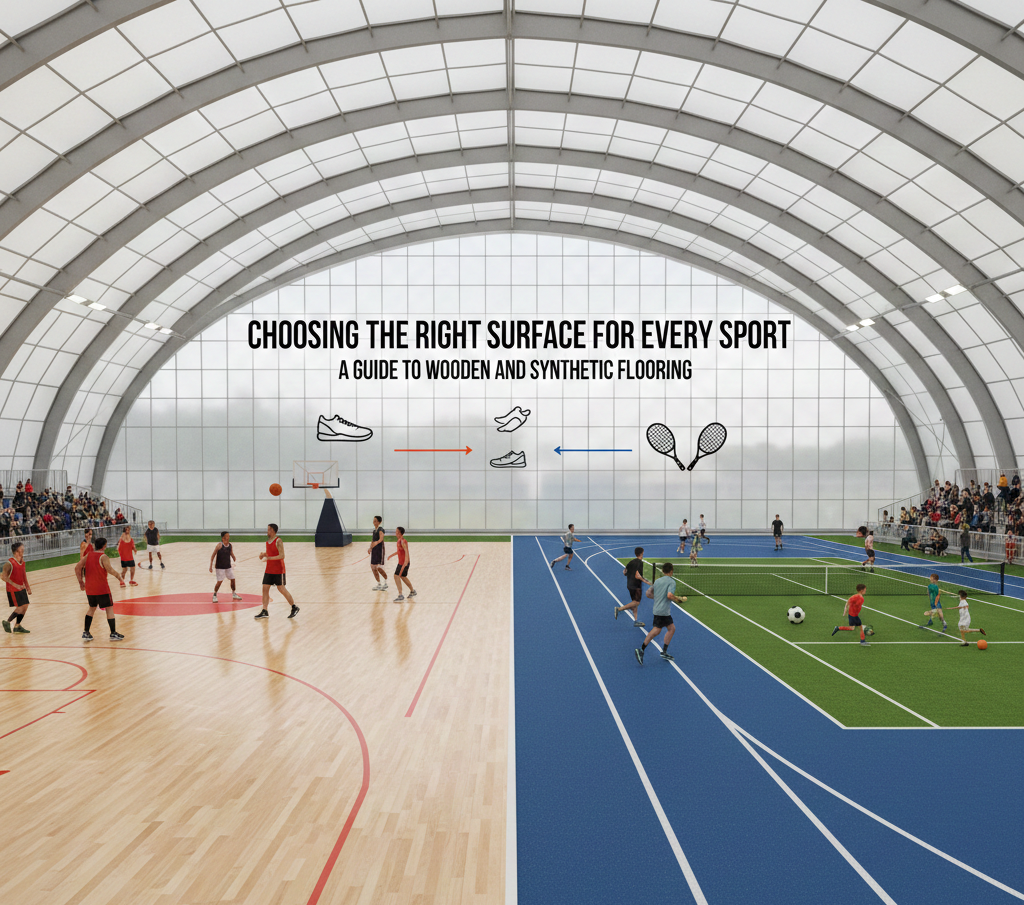
The performance, safety, and longevity of any sports facility depend heavily on one critical factor: the playing surface. Whether it’s a professional arena, a school gymnasium, a residential sports court, or a training academy, choosing the right sports flooring can significantly influence athlete comfort, injury prevention, and overall playing experience. Among the many options available today, wooden sports flooring and synthetic sports flooring stand out as the most widely used and reliable solutions.
This guide explores the differences between wooden and synthetic sports flooring, their benefits, applications, and how to select the right surface for every sport.
Why Sports Flooring Matters
Sports flooring is more than just a surface to play on. It directly affects:
-
Player safety and injury reduction
-
Shock absorption and energy return
-
Ball bounce and movement control
-
Noise reduction and comfort
-
Durability under high usage
Different sports place different demands on the floor. High-impact games require shock absorption, fast-paced sports need controlled traction, and multi-sport facilities require adaptable surfaces. Choosing the right flooring is essential to meet these needs effectively.
Understanding Wooden Sports Flooring
What Is Wooden Sports Flooring?
Wooden sports flooring is typically made from hardwood species, such as maple, engineered into multi-layer systems that include shock-absorbing subfloors. These floors are commonly used in indoor sports facilities due to their excellent performance characteristics and premium appearance.
Benefits of Wooden Sports Flooring
1. Superior Shock Absorption
Wooden flooring systems are designed to absorb impact efficiently, reducing stress on athletes’ joints and muscles. This makes them ideal for high-impact indoor sports.
2. Excellent Ball Response
The elasticity of wood provides consistent ball bounce, which is essential for sports like basketball and volleyball.
3. Enhanced Player Comfort
Wooden floors offer a balance between grip and smooth movement, enabling quick directional changes without excessive friction.
4. Aesthetic Appeal
Wooden flooring adds a professional and visually appealing finish, often associated with international-standard sports arenas.
5. Longevity with Proper Care
With regular maintenance, wooden sports floors can last for decades, making them a long-term investment.
Sports Best Suited for Wooden Flooring
-
Basketball
-
Volleyball
-
Badminton (indoor)
-
Squash
-
Gymnastics and aerobics
Wooden flooring is particularly suited for sports that require precise movement, consistent ball behavior, and player comfort.
Limitations of Wooden Flooring
Despite its advantages, wooden flooring has certain limitations:
-
Requires controlled indoor environments
-
Sensitive to moisture and humidity
-
Higher installation and maintenance costs
-
Not suitable for outdoor applications
Understanding Synthetic Sports Flooring
What Is Synthetic Sports Flooring?
Synthetic sports flooring includes a wide range of man-made materials such as acrylic, polyurethane (PU), PVC, rubber, and EPDM. These surfaces can be installed both indoors and outdoors and are designed to meet various sports requirements.
Benefits of Synthetic Sports Flooring
1. Multi-Sport Versatility
Synthetic flooring systems can accommodate multiple sports on the same surface, making them ideal for multi-purpose courts.
2. Durability and Weather Resistance
Many synthetic surfaces are resistant to UV rays, moisture, and temperature variations, making them suitable for outdoor use.
3. Low Maintenance
Synthetic floors require minimal upkeep compared to wooden surfaces, reducing long-term operational costs.
4. Customizable Performance
Synthetic flooring can be engineered for different levels of cushioning, traction, and surface texture depending on the sport.
5. Cost-Effective Solutions
Synthetic flooring often offers a lower initial investment and excellent value for facilities with heavy usage.
Sports Best Suited for Synthetic Flooring
-
Tennis
-
Basketball (indoor and outdoor)
-
Badminton (synthetic mats)
-
Pickleball
-
Futsal
-
Handball
-
Athletics training areas
Synthetic flooring is especially useful in facilities that host multiple sports or experience high foot traffic.
Comparing Wooden and Synthetic Sports Flooring
| Feature | Wooden Flooring | Synthetic Flooring |
|---|---|---|
| Application | Indoor only | Indoor & Outdoor |
| Shock Absorption | Excellent | Adjustable |
| Maintenance | High | Low |
| Durability | Long-term with care | Highly durable |
| Moisture Resistance | Low | High |
| Multi-Sport Use | Limited | Excellent |
| Aesthetic Appeal | Premium | Functional & customizable |
Choosing the Right Flooring Based on Sport Type
High-Impact Indoor Sports
Sports like basketball and volleyball benefit from wooden flooring due to superior shock absorption and energy return.
Multi-Purpose Sports Facilities
Synthetic flooring is ideal for facilities hosting multiple sports, thanks to customizable markings and adaptable performance.
Outdoor Sports Areas
Synthetic acrylic and rubber-based flooring systems perform best in outdoor environments due to weather resistance.
Training and Recreational Spaces
Synthetic surfaces provide durability and safety while keeping maintenance requirements low.
Safety and Injury Prevention
Both wooden and synthetic sports flooring systems are designed with athlete safety in mind. Key safety features include:
-
Anti-slip surface texture
-
Shock-absorbing layers
-
Controlled friction for stable movement
-
Reduced risk of fatigue injuries
Selecting the right surface based on usage intensity and player age group enhances safety and performance.
Maintenance Considerations
Wooden Flooring Maintenance
-
Regular cleaning and polishing
-
Periodic sanding and refinishing
-
Climate control to prevent warping
Synthetic Flooring Maintenance
-
Routine sweeping and washing
-
Occasional surface recoating
-
Minimal repair requirements
Facilities with limited maintenance resources often prefer synthetic flooring for long-term ease.
Environmental and Sustainability Factors
Modern sports flooring solutions increasingly focus on sustainability. Many synthetic systems use low-VOC materials and recyclable components, while wooden floors sourced from responsible forestry practices support environmental conservation.
Choosing long-lasting materials also reduces waste and resource consumption over time.
Budget and Long-Term Value
While wooden sports flooring offers premium performance and aesthetics, it requires a higher upfront investment and ongoing maintenance. Synthetic flooring, on the other hand, provides flexible pricing options and lower lifecycle costs.
The right choice depends on:
-
Type of sport
-
Frequency of use
-
Indoor or outdoor location
-
Budget and maintenance capacity
Future Trends in Sports Flooring
Advancements in sports flooring technology are bridging the gap between wooden and synthetic systems. Hybrid solutions, improved cushioning layers, and eco-friendly materials are shaping the future of athletic surfaces.
As sports participation continues to grow, facilities are increasingly seeking flooring solutions that balance performance, safety, sustainability, and cost efficiency.
Conclusion
Choosing the right surface for every sport is a crucial decision that impacts athlete performance, safety, and facility longevity. Wooden sports flooring remains the gold standard for premium indoor sports requiring high shock absorption and precise movement control. Synthetic sports flooring, with its versatility, durability, and low maintenance, offers an excellent solution for multi-sport, outdoor, and high-traffic environments.