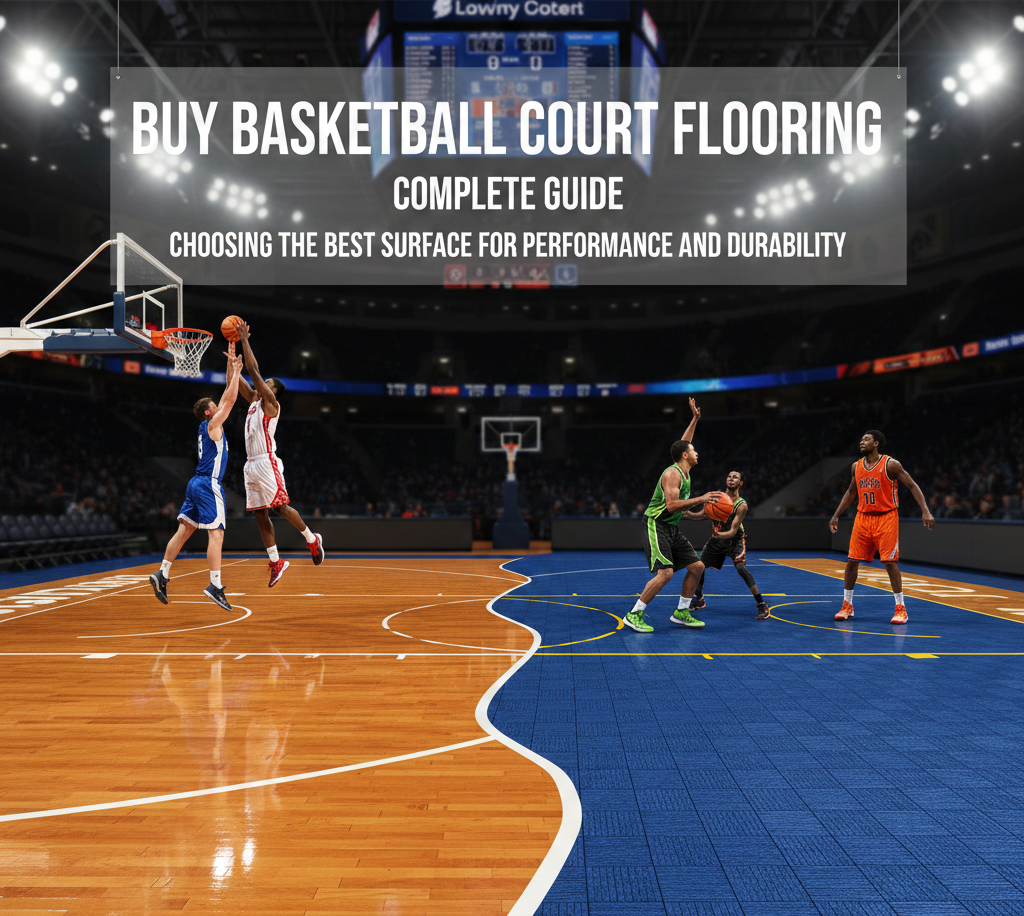
If you are planning to build or upgrade a basketball court, choosing the right flooring is one of the most important decisions you will make. Whether the court is for a home, school, academy, park, or professional facility, the quality of the surface directly affects player safety, game performance, and long-term maintenance costs. This comprehensive guide is designed to help you understand everything you need to know before you buy basketball court flooring, including types, materials, costs, installation considerations, and tips for selecting the best supplier.
1. Why Basketball Court Flooring Matters
Basketball is a high-intensity sport that involves running, jumping, quick direction changes, and sudden stops. The flooring must be engineered to handle impact while providing excellent traction and ball response.
Key reasons to invest in quality basketball court flooring:
- Reduces stress on joints and muscles
- Minimizes the risk of slips and injuries
- Ensures consistent ball bounce
- Enhances player comfort and performance
- Increases court lifespan and durability
- Lowers long-term maintenance costs
Cheap or poorly selected flooring often leads to cracks, surface wear, and safety issues, resulting in higher repair expenses over time.
2. Indoor vs Outdoor Basketball Court Flooring
Before you buy basketball court flooring, determine whether your court will be indoor or outdoor, as each environment requires different materials.
Indoor Basketball Court Flooring
Indoor courts are commonly built in schools, sports halls, gyms, and professional arenas.
Key requirements:
- High shock absorption
- Smooth yet slip-resistant surface
- Noise reduction
- Consistent playing conditions year-round
Outdoor Basketball Court Flooring
Outdoor courts are popular in residential areas, parks, and community spaces.
Key requirements:
- Weather and UV resistance
- Excellent drainage
- Durable surface that resists cracking
- Slip resistance in wet conditions
Choosing flooring designed specifically for the environment ensures long-lasting performance.
3. Types of Basketball Court Flooring You Can Buy
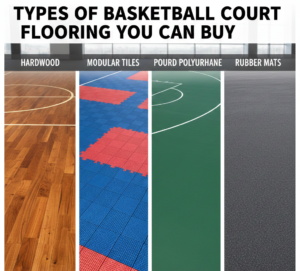
There are several basketball court flooring options available, each suited for different budgets and usage levels.
Hardwood Basketball Court Flooring
Hardwood flooring, typically maple wood, is the professional standard for indoor basketball courts.
Benefits:
- Superior ball bounce
- Excellent shock absorption
- Premium playing experience
- Long lifespan with proper maintenance
Best for:
- Professional indoor courts
- School and college gymnasiums
- Sports academies
Synthetic PVC or Vinyl Basketball Flooring
PVC sports flooring is a popular alternative to hardwood for indoor courts.
Benefits:
- Cushioned layers for impact protection
- Moisture-resistant
- Easy to install and maintain
- Cost-effective compared to wood
Best for:
- Indoor multi-purpose halls
- Training facilities
- Schools with budget constraints
Acrylic Basketball Court Flooring
Acrylic flooring systems are widely used for outdoor basketball courts.
Benefits:
- Weather-resistant and UV-stable
- Slip-resistant textured surface
- Customizable colors and logos
- Affordable installation and maintenance
Best for:
- Outdoor courts
- Community parks
- Residential backyards
Interlocking Modular Basketball Court Tiles
Modular tiles are one of the most popular modern basketball court flooring solutions.
Benefits:
- Quick installation
- Excellent drainage
- Shock absorption for joint safety
- Easy replacement of damaged tiles
Best for:
- Outdoor and semi-outdoor courts
- Residential and recreational courts
- Temporary or portable courts
Rubber Basketball Court Flooring
Rubber flooring is commonly used for training and recreational basketball areas.
Benefits:
- High impact absorption
- Anti-slip surface
- Noise reduction
- Long durability
Best for:
- Practice courts
- Indoor training zones
- Youth basketball facilities
4. How to Choose the Right Basketball Court Flooring
When buying basketball court flooring, consider the following factors:
Usage Level
- Recreational play
- Training and practice
- Competitive or professional games
Player Safety
- Shock absorption rating
- Slip resistance
- Surface uniformity
Budget
- Initial material cost
- Installation expenses
- Long-term maintenance
Climate Conditions
- Exposure to sun and rain
- Temperature variations
- Moisture levels
Maintenance Requirements
- Cleaning frequency
- Resurfacing needs
- Repair costs
Balancing these factors helps you select the best flooring solution for your needs.
5. Basketball Court Flooring Installation Considerations
Proper installation is as important as choosing the right flooring material.
Sub-Base Preparation
- Level and crack-free concrete or asphalt base
- Proper drainage for outdoor courts
- Moisture barriers for indoor installations
Professional Installation
Experienced installers ensure:
- Correct expansion gaps
- Secure tile locking or adhesive bonding
- Accurate court markings
- Compliance with safety standards
Poor installation can reduce flooring lifespan even if high-quality materials are used.
6. Cost of Buying Basketball Court Flooring
The cost of basketball court flooring varies depending on material and court size.
Cost categories:
- Budget: Acrylic coatings and basic rubber flooring
- Mid-range: PVC vinyl and modular sports tiles
- Premium: Hardwood and advanced polyurethane systems
While premium flooring has a higher upfront cost, it often delivers lower long-term maintenance expenses and better performance.
7. Maintenance and Care of Basketball Court Flooring
Regular maintenance keeps basketball court flooring safe and visually appealing.
- Daily or weekly sweeping
- Periodic deep cleaning
- Inspection for wear, cracks, or loose tiles
- Repainting lines or resurfacing as required
- Equipment and hoop checks
Well-maintained courts can last many years without major repairs.
8. Where to Buy Basketball Court Flooring
You can buy basketball court flooring from:
- Specialized sports flooring manufacturers
- Authorized distributors
- Professional sports court builders
- Online suppliers for modular systems
When choosing a supplier, look for:
- Certified materials
- Proven installation experience
- Warranty coverage
- After-sales support
9. Benefits of Buying Quality Basketball Court Flooring
Investing in high-quality flooring offers long-term advantages:
- Enhanced player safety
- Improved playing experience
- Reduced maintenance costs
- Increased property and facility value
- Professional appearance
Quality flooring ensures your basketball court remains functional and attractive for years.
Conclusion
Buying basketball court flooring is a critical investment that directly affects safety, performance, and durability. From professional hardwood systems to affordable outdoor acrylic surfaces and modular tiles, today’s basketball court flooring options offer solutions for every budget and application.
By understanding flooring types, installation requirements, and long-term maintenance needs, you can confidently buy basketball court flooring that delivers exceptional performance and lasting value. Partnering with reliable suppliers and professional installers ensures your court meets modern standards and provides an excellent playing experience for all users.
Frequently Asked Questions (FAQ)
1. What types of basketball court flooring are available?
There are several types of basketball court flooring:
-
Wooden flooring (maple): Professional-grade, ideal for indoor courts, offers excellent shock absorption.
-
PVC vinyl flooring: Affordable, durable, low-maintenance, suitable for schools and recreation centers.
-
Rubber flooring: Good for multi-purpose courts, outdoor or indoor use, provides high traction.
-
Acrylic or synthetic flooring: Outdoor-friendly, weather-resistant, easy to install.
2. Which basketball flooring is best for indoor courts?
Hardwood maple flooring is the preferred choice for indoor courts due to its durability, performance, and player comfort. PVC vinyl is a budget-friendly alternative for schools and community halls.
3. Can I use the same flooring for outdoor basketball courts?
Outdoor courts require weather-resistant surfaces like acrylic, synthetic, or rubber flooring. Hardwood is not suitable outdoors as it is prone to warping and damage from moisture.
4. How much does basketball court flooring cost?
Cost depends on the type, quality, and area of the court:
-
PVC vinyl flooring: ₹400–₹900 per sq. ft.
-
Hardwood flooring: ₹1,200–₹2,500 per sq. ft.
-
Rubber or synthetic flooring: ₹350–₹800 per sq. ft.
Installation and accessories may add to the cost.
5. How long does it take to install basketball flooring?
Installation time varies by type and area, typically 5–15 days for standard courts, including leveling, subfloor preparation, and finishing.
6. Do I need professional installation?
Yes. Proper installation ensures safety, durability, and optimal performance. Professional installers handle leveling, joints, cushioning, and finishing.
7. How do I maintain basketball court flooring?
Maintenance includes:
-
Regular cleaning to remove dust and debris
-
Checking for cracks or uneven surfaces
-
Refinishing or resurfacing wooden floors every 5–7 years
-
Avoiding water accumulation on outdoor surfaces
8. Can I customize basketball flooring?
Yes. Many suppliers offer custom colors, logos, court markings, and multi-purpose designs for schools, academies, and sports complexes.
9. Is basketball court flooring a good investment?
Yes. Quality flooring enhances safety, performance, and longevity of the court, and is ideal for schools, clubs, or commercial sports facilities.
10. Where can I buy reliable basketball court flooring?
Purchase from reputed sports flooring suppliers or certified dealers. Look for warranties, project references, and after-sales service for peace of mind.