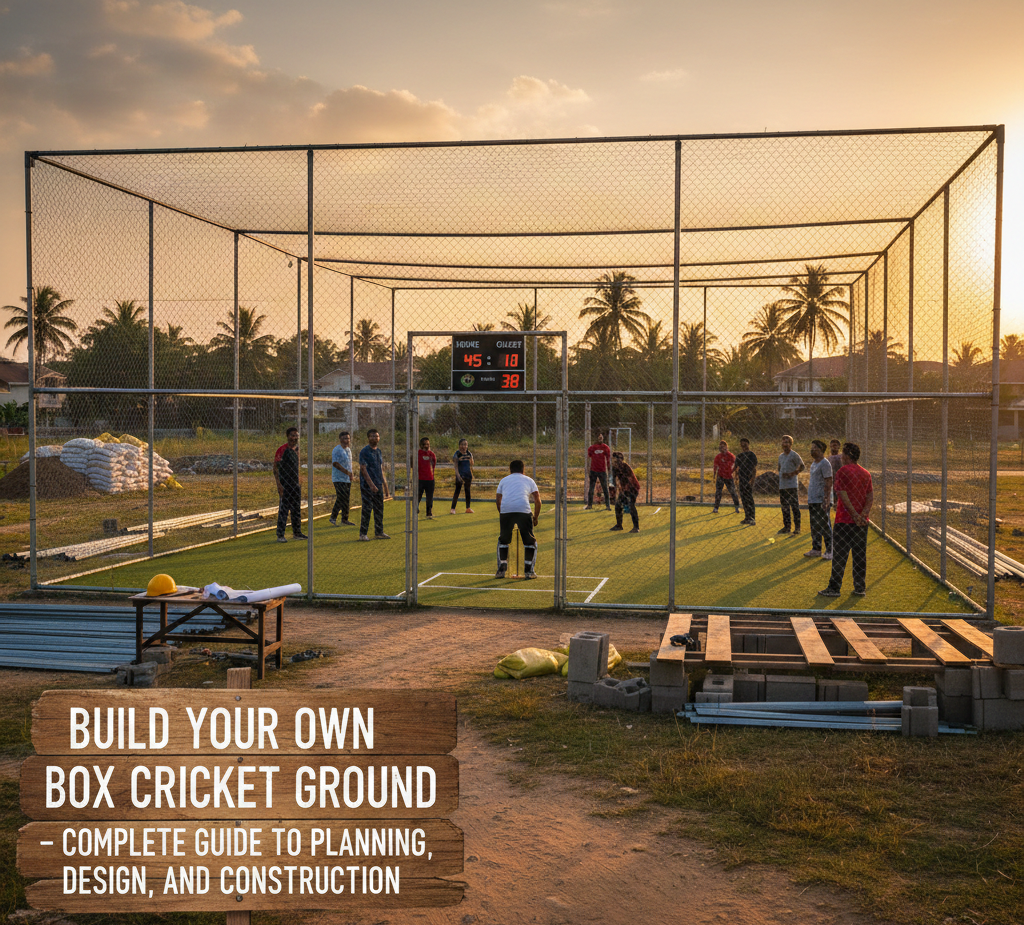
Cricket is not just a sport in India — it’s a passion that unites millions of fans across the country. In recent years, the rise of box cricket has made it easier than ever to enjoy cricket in smaller, urban-friendly spaces. Whether you have a rooftop, backyard, open plot, or commercial property, you can build your own box cricket ground with professional design and installation solutions.
A box cricket ground offers a perfect mix of fun, fitness, and entrepreneurship. From casual recreational play to organized tournaments, creating your own arena can provide year-round cricket entertainment while maximizing space efficiency.
Why You Should Build Your Own Box Cricket Ground

There are several compelling reasons to invest in a personal or commercial box cricket facility:
1. Play Cricket Anytime
One of the main advantages of a box cricket ground is convenience. No more worrying about ground bookings, weather interruptions, or scheduling conflicts. You can enjoy cricket anytime — morning, afternoon, or night.
2. Space Efficiency
Unlike traditional cricket fields, box cricket grounds require minimal space. They are ideal for rooftops, small open plots, residential complexes, schools, and urban areas where space is limited.
3. Business Opportunities
A professionally designed box cricket ground can generate revenue. You can host tournaments, memberships, training camps, or recreational leagues, making your cricket passion a profitable venture.
4. Customizable Design
Every box cricket ground is unique. You can choose indoor or outdoor setups, artificial turf or PU flooring, floodlighting, seating arrangements, branding, and more — all tailored to your budget and requirements.
Step-by-Step Process to Build Your Box Cricket Ground
Building a box cricket ground involves careful planning, precise execution, and quality materials. Here is a detailed step-by-step guide to ensure a professional, durable, and enjoyable facility.
1. Site Inspection and Feasibility Assessment
The first step in building your own box cricket ground is evaluating your available space. Professional experts conduct:
-
Accurate measurements of the area
-
Surface level and slope analysis
-
Soil strength and drainage assessment
-
Feasibility of indoor or rooftop installations
This assessment ensures optimal design, safety, and long-term usability.
2. Design and Layout Planning
The layout of your box cricket ground is crucial for gameplay and safety. Designers consider:
-
Pitch size based on 6-a-side or 8-a-side formats
-
Boundary net placement
-
Player zones and circulation space
-
Lighting and electrical layout
Modern design software helps create a 3D visualization so you can see the final result before construction begins.
3. Base Construction
A solid foundation is essential for consistent bounce, traction, and durability. Depending on the site, the base can include:
-
Compacted soil layers
-
Reinforced concrete or cement flooring
-
Shock-absorbing underlayers
A well-constructed base prevents turf sagging, uneven bounce, and premature wear.
4. Synthetic Turf Installation
High-quality artificial turf is the heart of a box cricket ground. Professional turf installation ensures:
-
Natural grass-like appearance
-
Consistent ball bounce and player grip
-
UV resistance and weatherproof durability
-
Low maintenance requirements
Premium turf options also offer shock absorption, reducing player fatigue and injury risk.
5. Netting and Fencing Setup
Safety is a top priority when building a box cricket ground. Netting and fencing solutions include:
-
Strong nylon or HDPE boundary nets
-
Galvanized steel or MS posts
-
Secure anchoring to prevent net sagging
-
Optional padding for pole protection
Proper netting ensures that balls stay within the arena, protecting spectators, players, and surrounding property.
6. Floodlights and Electrical Installations
To extend play hours and host evening tournaments, floodlighting is essential. Features include:
-
LED floodlights for energy efficiency and bright illumination
-
Pole positioning to avoid glare or shadows on the pitch
-
Wiring and electrical layout compliant with safety standards
Night-time visibility makes your box cricket ground versatile and commercially viable.
7. Branding and Custom Add-Ons
Your box cricket ground can be personalized for aesthetics, marketing, or team spirit. Popular customizations include:
-
Turf branding and logos
-
Signage, benches, and scoreboards
-
Customized boundary lines and colors
-
Shade structures or seating areas
These enhancements create a professional, visually appealing environment that attracts players and audiences.
8. Maintenance and After-Service
Routine maintenance is essential for long-term performance. Professional services include:
-
Regular cleaning and grooming of the turf
-
Infill top-ups to maintain bounce and firmness
-
Net inspection and repairs
-
Seasonal inspections for wear and tear
Proper maintenance ensures your box cricket ground remains safe, playable, and visually appealing for years.
Why Choose Professionals to Build Your Box Cricket Ground
Building a box cricket ground requires expertise, precision, and high-quality materials. Professional builders provide:
-
End-to-End Solutions: Complete project management from design to installation
-
Premium Materials: High-grade synthetic turf, PU flooring, and netting
-
Customized Packages: Solutions tailored to your budget, space, and usage
-
Experienced Team: Decades of experience in sports infrastructure projects across India
Working with professionals guarantees durability, safety, and a world-class playing experience.
Ideal Settings for Box Cricket Grounds
Box cricket grounds are versatile and suitable for a variety of environments:
-
Residential Societies: Encourage community sports and active lifestyles
-
Schools & Colleges: Provide students with safe, engaging cricket facilities
-
Sports Clubs & Academies: Ideal for training, coaching, and tournaments
-
Entrepreneurs: Start a cricket-based business with low investment and high returns
No matter the setting, a professionally designed box cricket ground maximizes utility and enjoyment.
Benefits of Building Your Own Box Cricket Ground
Investing in a box cricket ground offers multiple advantages:
-
Convenience: Play anytime without relying on external grounds or weather conditions
-
Safety: Shock-absorbing surfaces and proper netting reduce injuries
-
Durability: Premium materials ensure long-lasting performance
-
Profitability: Revenue generation through tournaments, coaching, and memberships
-
Community Engagement: Encourages sports culture and active participation
-
Aesthetic Appeal: Custom designs and branding make the arena visually attractive
A box cricket ground is not only a sports facility but also an investment in lifestyle, business, and community development.
Conclusion
To build your own box cricket ground, careful planning, professional guidance, and high-quality materials are key. From site inspection and base preparation to turf installation, netting, floodlights, and maintenance, every step contributes to creating a safe, durable, and enjoyable cricket facility.
Whether for recreational play, coaching, school activities, or commercial purposes, a professionally built box cricket ground ensures that cricket enthusiasts can play anytime, anywhere, and in style. Turn your available space into a mini cricket arena that combines passion, performance, and profitability — and make your cricket dreams a reality today.
Frequently Asked Questions (FAQ)
1. What are the standard dimensions of a tennis court?
A standard tennis court measures 78 feet × 36 feet for doubles and 78 feet × 27 feet for singles. Adequate clearance around the court is recommended for player safety and movement.
2. How much does it cost to build a tennis court?
The cost depends on whether it’s a clay, grass, or hard court, as well as indoor/outdoor setup, lighting, fencing, and drainage. On average, costs range from ₹15 lakhs to ₹50+ lakhs.
3. Which type of surface is best for a tennis court?
Common surfaces include:
-
Hard courts (asphalt or concrete with acrylic coating): Durable and low-maintenance
-
Clay courts: Softer, slower game, needs regular upkeep
-
Grass courts: Premium option, professional standard, high maintenance
4. How long does it take to build a tennis court?
Construction typically takes 30 to 60 days, depending on site preparation, surface type, and weather conditions.
5. Can a tennis court be built indoors?
Yes. Indoor tennis courts are possible and ideal for year-round play. They require proper flooring, high ceilings, and sufficient LED lighting.
6. What lighting is needed for a tennis court?
For competitive play, 500–1000 lux uniform LED lighting is recommended for outdoor or indoor courts. Placement should minimize shadows and glare.
7. Is drainage important for a tennis court?
Yes. Proper drainage ensures longevity of the surface, prevents waterlogging, and maintains playable conditions after rain.
8. Can an existing area be converted into a tennis court?
Yes. Large open spaces, school grounds, or unused plots can be converted with proper leveling, fencing, and surface installation.
9. How much maintenance does a tennis court need?
Maintenance varies by surface:
-
Hard courts: Regular cleaning and resurfacing every 5–7 years
-
Clay courts: Daily brushing and periodic rolling
-
Grass courts: Regular mowing and watering
10. Is building a tennis court a profitable investment?
Yes. Tennis courts in clubs, academies, or resorts generate revenue through hourly rentals, coaching programs, tournaments, and memberships.