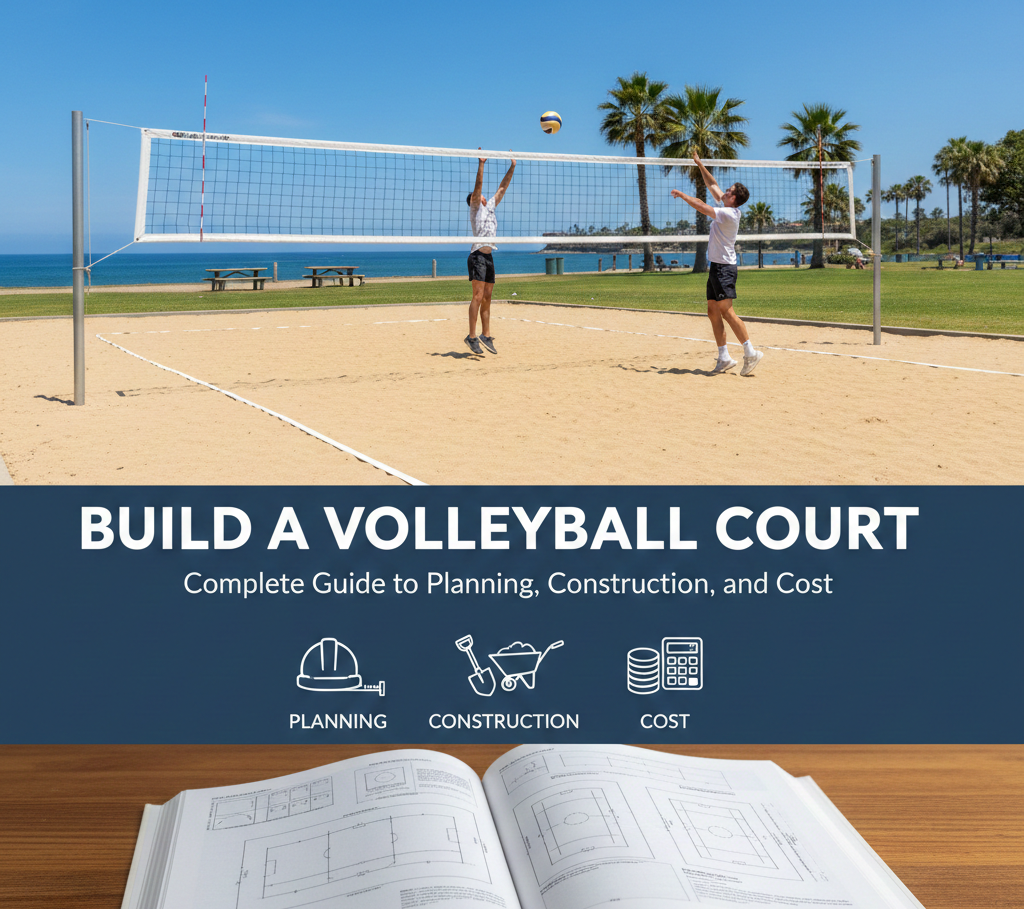
To build a volleyball court that delivers professional performance, safety, and durability, careful planning and expert execution are essential. Whether the court is intended for a school, sports academy, residential complex, or commercial facility, every stage—from site selection to surface installation—plays a crucial role in long-term success.
A well-constructed volleyball court enhances gameplay quality, reduces injury risks, and adds lasting value to the property. This guide explains everything you need to know to build a volleyball court that meets international standards and performs consistently over time.
Understanding Volleyball Court Standards
Before you build a volleyball court, it’s important to understand the standard dimensions and layout requirements. According to international guidelines:
-
The playing area measures 18 meters long and 9 meters wide
-
The court is divided equally by a central net
-
A free zone surrounds the court for player movement and safety
-
Boundary lines must be clearly visible and accurately marked
Following recognized standards ensures fair play, professional usability, and acceptance for tournaments or training purposes.
Site Selection and Ground Preparation
Choosing the right location is the foundation of a successful project when you build a volleyball court.
Key Site Requirements:
-
Flat and stable ground
-
Proper drainage to prevent water accumulation
-
Easy accessibility for players and maintenance
-
Adequate space for lighting and safety zones
For outdoor courts, a gentle slope (approximately 1%) is recommended to allow rainwater to drain naturally. Ground preparation includes excavation, compaction, and base leveling to ensure long-term surface stability.
Choosing the Right Type of Volleyball Court
When planning to build a volleyball court, selecting the correct court type is essential. The choice depends on usage, budget, and environmental conditions.
Indoor Volleyball Court
Indoor courts are commonly found in schools, colleges, and training centers. Popular flooring options include:
-
Wooden flooring
-
Vinyl sports flooring
-
Polyurethane (PU) surfaces
These materials offer excellent shock absorption, smooth traction, and consistent performance.
Outdoor Volleyball Court
Outdoor courts are designed to withstand weather exposure. Common surface choices include:
-
Acrylic flooring
-
Synthetic turf
-
Modular interlocking tiles
These surfaces are UV-resistant, slip-resistant, and durable, making them ideal for open environments.
Beach Volleyball Court
Beach volleyball courts are constructed using fine, soft sand with excellent drainage properties. Key features include:
-
Minimum sand depth of 40 cm
-
Clean, stone-free sand
-
Flexible boundary lines secured in the sand
This type of court is popular in recreational zones, resorts, and sports complexes.
Surface Construction and Layering Process
The surface system is one of the most important aspects when you build a volleyball court. Each surface type follows a specific layering process.
Wooden Flooring System
-
Concrete or asphalt base
-
Shock-absorbing underlayment
-
Plywood or hardwood planks
-
Protective surface coating
This system is ideal for professional indoor courts.
Acrylic Flooring System
-
Compacted sub-base
-
Concrete or asphalt base
-
Multiple acrylic coating layers
-
Final color and texture finish
Acrylic courts provide excellent grip and are easy to maintain.
Sand Court Construction
-
Crushed stone drainage layer
-
Geotextile fabric
-
Multiple layers of graded sand
This structure ensures stability and prevents sand displacement.
After surface installation, court lines are painted or installed according to official specifications, typically with a line width of 5 cm.
Net System and Pole Installation
The net system is the central element when you build a volleyball court. Proper installation ensures fairness and safety.
Standard Net Heights:
-
Men’s volleyball: 2.43 meters
-
Women’s volleyball: 2.24 meters
Net poles should be:
-
Made from rust-resistant materials
-
Firmly anchored into the ground
-
Adjustable for different age groups
Safety padding around the poles is essential, especially in professional and training environments.
Lighting and Drainage Systems
Lighting Setup
For courts used during evening hours, proper lighting is critical. LED floodlights are preferred due to:
-
Energy efficiency
-
Uniform light distribution
-
Reduced glare for players
Lights should be positioned to illuminate the entire court evenly without casting shadows.
Drainage Planning
Outdoor courts require effective drainage solutions to prevent surface damage. Proper slopes, drainage channels, and water outlets help maintain court quality and usability during all seasons.
Maintenance and Long-Term Performance
To ensure durability after you build a volleyball court, regular maintenance is necessary.
Indoor Court Maintenance:
-
Routine cleaning and sweeping
-
Periodic polishing
-
Humidity control to protect flooring
Outdoor Court Maintenance:
-
Regular surface washing
-
Crack inspection and repairs
-
Re-coating every 3–5 years for acrylic surfaces
Well-maintained courts offer better playability and extend the lifespan of materials.
Cost of Building a Volleyball Court
The cost to build a volleyball court varies depending on materials, location, and additional features.
Estimated Construction Costs:
-
Indoor wooden court: ₹10–18 lakhs
-
Outdoor acrylic court: ₹6–12 lakhs
-
Beach volleyball court: ₹3–6 lakhs
Additional expenses may include fencing, lighting systems, seating, and branding elements. Choosing the right materials and experienced installers helps maximize value and reduce future maintenance costs.
Choosing the Right Volleyball Court Construction Company
Selecting the right partner is crucial when you build a volleyball court. Look for a company that offers:
-
Proven experience in sports court construction
-
Knowledge of international standards
-
Skilled and certified installation teams
-
High-quality materials with warranty
-
End-to-end project management
A professional construction company handles everything—from site inspection and design layout to surface testing and final handover.
Benefits of Building a Professional Volleyball Court
When you build a volleyball court with expert planning and quality materials, the benefits are long-lasting:
-
Improved Performance: Consistent surface traction and ball response
-
Player Safety: Shock-absorbing layers reduce injury risks
-
Durability: Weather-resistant materials ensure longevity
-
Visual Appeal: Custom colors and branding enhance aesthetics
-
Property Value: Adds functional and commercial value to the facility
A professionally built court supports both recreational play and competitive training.
Conclusion
To build a volleyball court that meets global standards, delivers excellent playability, and remains durable over time, careful planning and professional execution are essential. From site preparation and surface selection to lighting and maintenance, every detail contributes to the final quality of the court.
By choosing the right construction approach and experienced professionals, you can create a volleyball court that offers safety, performance, and long-term value—serving players and communities for years to come.
Frequently Asked Questions (FAQ)
1. What are the standard dimensions of a volleyball court?
A standard volleyball court measures 18 meters × 9 meters, divided into two equal halves by a central net.
2. How much does it cost to build a volleyball court?
The cost depends on whether the court is indoor or outdoor, flooring type, base preparation, lighting, and location. On average, costs range from ₹6 lakhs to ₹25+ lakhs.
3. What type of flooring is best for a volleyball court?
Common options include PVC vinyl flooring (indoor), wooden flooring, synthetic acrylic flooring, and sand flooring for beach volleyball. PVC flooring is preferred for shock absorption and player safety.
4. How long does volleyball court construction take?
A volleyball court can typically be completed within 15 to 35 days, depending on site conditions and the selected flooring system.
5. Can a volleyball court be built outdoors?
Yes. Outdoor volleyball courts are widely built using synthetic or concrete bases with proper drainage. Beach volleyball courts require high-quality sand and edge containment.
6. What lighting is required for a volleyball court?
Indoor courts generally require 300–500 lux of uniform LED lighting, while outdoor courts need weather-resistant floodlights for night play.
7. Is proper base preparation important for volleyball court installation?
Absolutely. A well-leveled base with proper drainage ensures durability, prevents cracks, and improves playing performance.
8. Can an existing area be converted into a volleyball court?
Yes. Existing halls, playgrounds, school grounds, or open spaces can be converted into volleyball courts with suitable flooring and markings.
9. Does a volleyball court require regular maintenance?
Maintenance is minimal and includes surface cleaning, checking net systems, inspecting joints, and ensuring proper drainage for outdoor courts.
10. Is building a volleyball court a good investment?
Yes. Volleyball courts are ideal for schools, colleges, academies, resorts, and sports complexes, offering long-term usage and revenue opportunities.