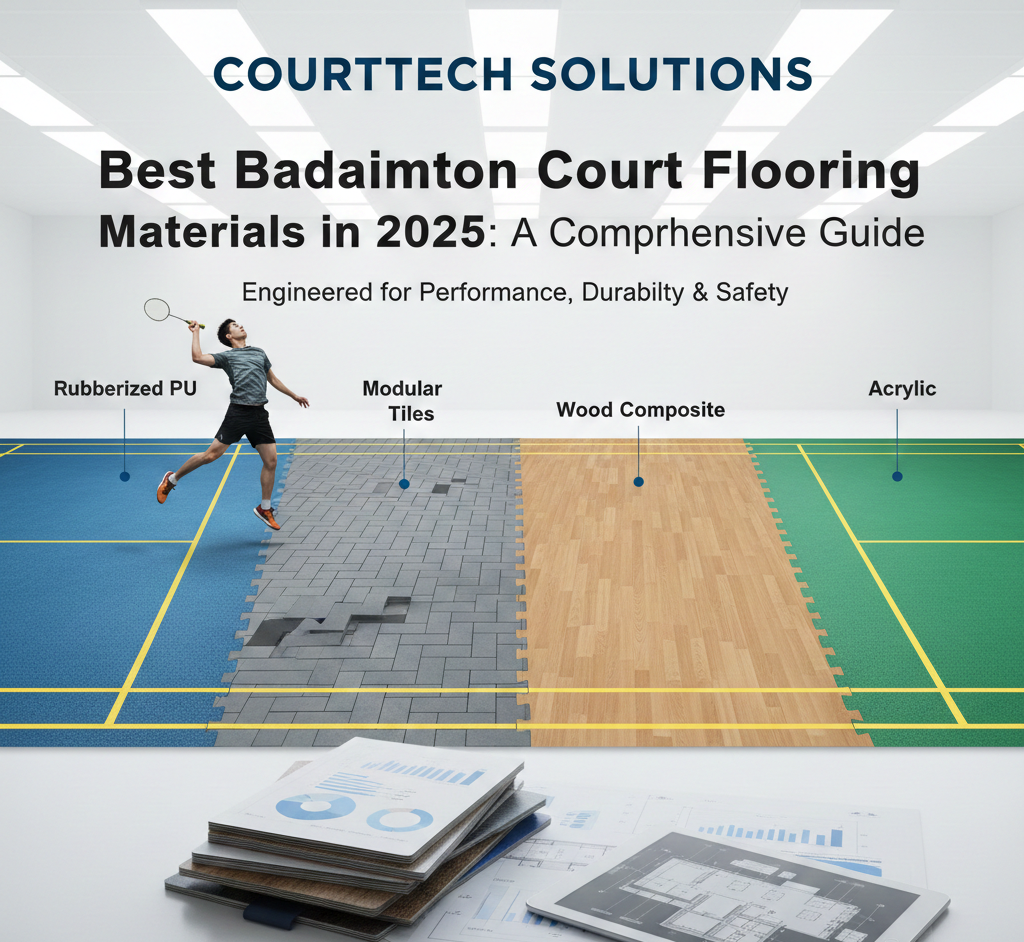
Selecting the right flooring for a badminton court is more than just an aesthetic choice—it is a critical factor that affects player performance, safety, durability, and long-term maintenance. As badminton continues to gain popularity in India and across the globe, facility managers, academies, schools, and residential sports complexes are increasingly focusing on high-quality court flooring that meets professional standards. With technological advancements in materials, 2025 brings a range of options tailored for both indoor and outdoor environments. This guide explores the top badminton court flooring materials available today, their advantages, considerations, and how to make an informed choice for your facility.
Key Factors to Consider in Badminton Court Flooring
Before selecting a floor, it’s essential to understand the criteria that define a high-performance badminton surface. According to industry standards and guidelines from organizations such as the Badminton World Federation (BWF), a good badminton court flooring must satisfy multiple functional requirements:
-
Shock Absorption & Force Reduction: A floor that cushions impact reduces stress on players’ joints, ankles, and knees. Metrics such as percentage force reduction are crucial; higher numbers indicate better protection.
-
Surface Consistency: Uniform bounce, friction coefficient, and texture are vital for fair play and consistent shuttle response. Any unevenness can affect ball trajectory and player movement.
-
Slip Resistance: The floor must offer adequate grip to prevent accidental slips without being overly sticky, allowing smooth footwork.
-
Durability & Maintenance: A quality court floor should withstand frequent use, foot traffic, and, in outdoor scenarios, exposure to sunlight, moisture, and temperature fluctuations. Maintenance requirements should align with the facility’s capacity.
-
Compliance with Standards: Professional indoor courts should conform to BWF or equivalent international standards, ensuring suitability for tournaments and high-level training.
Additional considerations include lifecycle cost, installation requirements, and compatibility with multi-sport use. Once these factors are assessed, the choice of flooring material can be narrowed down effectively.
Top Badminton Court Flooring Materials in 2025
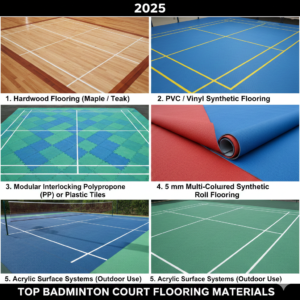
1. Hardwood Flooring (Maple / Teak)
Best Use Case: Indoor, professional-level courts for tournaments, training centers, and sports academies.
Why Hardwood Stands Out:
Maple and teak hardwood remain the benchmark for indoor badminton courts due to their natural combination of resilience, bounce consistency, and shock absorption. Modern hardwood systems often include a sprung subfloor or cushioned underlay that enhances player comfort while protecting joints. Premium hardwood floors also meet international standards, ensuring that athletes experience the same playing conditions as elite tournaments.
Key Benefits:
-
Excellent bounce and surface consistency.
-
High shock absorption to reduce injury risk.
-
Natural grip that improves footwork and stability.
-
Aesthetic appeal with long-lasting durability.
Considerations:
-
Higher upfront investment compared to synthetic options.
-
Requires periodic maintenance, including polishing, refinishing, and climate control.
-
Not suitable for outdoor use.
-
Installation demands a carefully engineered subfloor system to achieve optimal performance.
For facilities aiming for professional-level performance or hosting competitive events, hardwood remains the undisputed choice despite higher costs and maintenance requirements.
2. PVC / Vinyl Synthetic Flooring
Best Use Case: Indoor courts with moderate budgets, multi-purpose halls, and educational institutions.
Why PVC / Vinyl Works Well:
PVC and vinyl roll systems are increasingly popular for indoor badminton courts that demand affordability, ease of installation, and multipurpose use. These synthetic floors offer reliable shock absorption, a decent bounce for shuttle movement, and anti-slip finishes. Many manufacturers provide customizable thicknesses (typically 4.5 mm and above), multiple colors, and integrated surface textures designed specifically for badminton.
Key Benefits:
-
Lower cost compared to premium hardwood floors.
-
Simple installation with minimal downtime.
-
Moderate maintenance requirements.
-
Suitable for multi-sport halls, including basketball, volleyball, and futsal.
Considerations:
-
Limited lifespan compared to high-grade hardwood or advanced synthetic systems.
-
Surface performance differs slightly from the “feel” of natural wood, which may affect competitive play.
-
Not designed for outdoor exposure to sun or moisture.
PVC/vinyl floors strike a balance between performance, cost, and versatility, making them ideal for schools, clubs, and recreational facilities.
3. Modular Interlocking Polypropylene (PP) or Plastic Tiles
Best Use Case: Outdoor courts, semi-permanent installations, community spaces, and rooftop courts.
Why Modular Tiles Are Gaining Popularity:
Interlocking sports tiles made of polypropylene or similar plastics provide a flexible solution for outdoor or multipurpose spaces. These tiles can be installed quickly, relocated if needed, and integrated with drainage systems to manage rainwater. Many are UV stabilized and textured for traction, making them suitable for outdoor environments where traditional indoor flooring would degrade.
Key Benefits:
-
Quick installation and easy removal or relocation.
-
Resistant to weather, UV exposure, and moderate moisture.
-
Suitable for community and recreational courts where flexibility is key.
-
Available in vibrant colors and patterns to enhance court aesthetics.
Considerations:
-
Bounce and surface feel are not equivalent to indoor hardwood or premium synthetic systems.
-
Proper sub-surface preparation is required to avoid unevenness and thermal expansion issues.
-
Ensure the tiles are specifically rated for badminton use, not generic sports tiles.
For outdoor or temporary setups, modular interlocking tiles provide a cost-effective, durable, and functional solution.
4. 5 mm Multi-Coloured Synthetic Roll Flooring
Best Use Case: Indoor training centers, small sports academies, and budget-conscious facilities.
Why It’s a Smart Choice for Some Facilities:
5 mm synthetic rolls offer a simple, cost-effective solution while retaining the essential benefits of shock absorption and consistent play. These floors are fast to install and available in multiple colors, making them a visually appealing option for small or mid-sized facilities.
Key Benefits:
-
Affordable and low installation complexity.
-
Adequate shock absorption for recreational and training use.
-
Available in multiple colors for branding or aesthetics.
Considerations:
-
Performance does not match premium hardwood or thick synthetic rolls.
-
Shorter lifespan with potentially more frequent replacements.
This flooring is best suited for facilities where budget constraints and practicality outweigh the need for elite-level play characteristics.
5. Acrylic Surface Systems (Outdoor Use)
Best Use Case: Outdoor community or residential courts, semi-professional setups, and weather-exposed facilities.
Why Acrylic Surfaces Are Ideal for Outdoors:
Acrylic flooring systems are increasingly recommended for outdoor badminton courts due to their durability, low maintenance, and resistance to UV, moisture, and temperature fluctuations. These surfaces are applied over concrete or asphalt bases and provide good traction, allowing safe movement even in wet conditions.
Key Benefits:
-
UV and weather-resistant for outdoor conditions.
-
Low maintenance compared to indoor-style synthetic or wooden floors.
-
Customizable in color and finish to suit residential or public spaces.
Considerations:
-
Provides less cushioning than indoor systems, which may stress joints during high-intensity play.
-
Requires a well-prepared base to prevent surface defects.
Acrylic systems are an excellent choice for outdoor courts where durability, low maintenance, and affordability are priorities.
How to Choose the Right Flooring in 2025
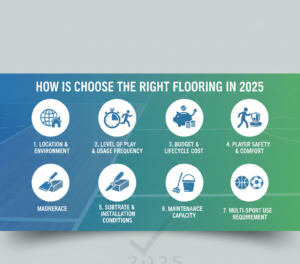
Selecting the best badminton court flooring requires careful evaluation of your facility’s specific needs. Here’s a quick checklist to guide your decision:
-
Location & Environment: Determine if the court is indoor or outdoor. Consider climate, humidity, and sun exposure for outdoor options.
-
Level of Play & Usage Frequency: Recreational vs. professional; high-frequency use requires more durable surfaces.
-
Budget & Lifecycle Cost: Factor in initial cost, installation, maintenance, and expected replacement frequency.
-
Player Safety & Comfort: Prioritize shock absorption, grip, and slip-resistance, particularly for competitive play.
-
Substrate & Installation Conditions: Concrete, asphalt, or wooden subfloor? Will relocation or temporary installation be needed?
-
Maintenance Capacity: Can you manage periodic polishing, recoating, or climate control for wood or premium synthetic floors?
-
Multi-Sport Use Requirement: Does the facility need to accommodate basketball, volleyball, or other sports alongside badminton?
Scenario Examples:
-
A professional indoor badminton academy should opt for hardwood flooring with a sprung subfloor.
-
Schools or multi-purpose sports halls may benefit from PVC or vinyl synthetic floors for cost-effective versatility.
-
Outdoor residential or community courts are best served by acrylic surfaces or modular interlocking tiles for durability and weather resistance.
Final Thoughts
In 2025, there is no single “best” flooring material universally suitable for all badminton courts. Instead, the optimal choice depends on the intended use, environment, budget, and performance expectations.
-
For elite indoor performance: Hardwood maple or teak flooring remains unmatched in feel, shock absorption, and durability.
-
For versatile, cost-conscious indoor setups: Synthetic PVC, vinyl, or PU systems offer reliable performance and lower maintenance.
-
For outdoor or flexible arrangements: Acrylic systems and modular interlocking tiles provide durability, weather-resistance, and installation flexibility.
Investing in the right badminton court flooring is an investment in player safety, performance, and the longevity of your facility. By understanding your options and evaluating your priorities carefully, you can select a flooring solution that enhances playability while minimizing long-term costs and maintenance challenges.