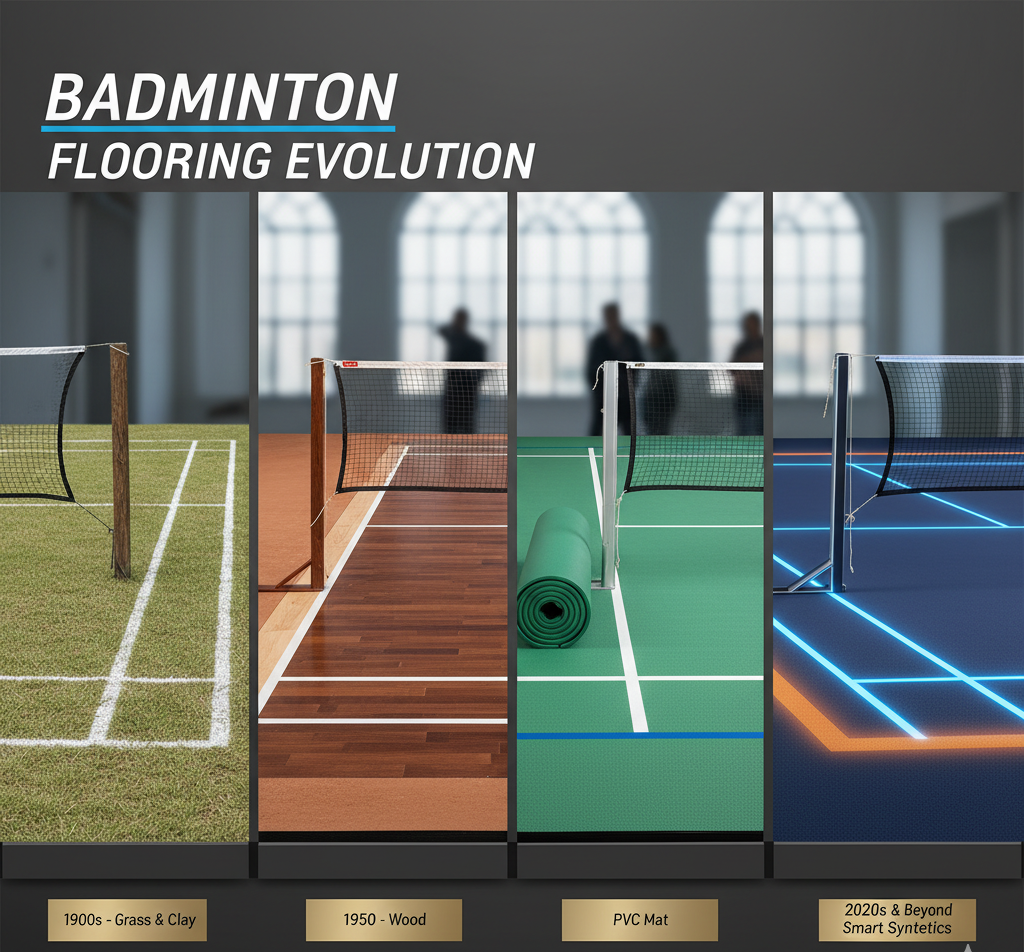
Badminton has long been celebrated as one of the most dynamic indoor sports, combining speed, agility, precision, and strategy. While players often focus on rackets, shuttlecocks, and techniques, the playing surface beneath their feet is just as crucial. Over the years, badminton flooring has undergone a remarkable evolution, shaping performance, safety, and the overall playing experience.
In 2025, the evolution of badminton flooring reflects the fusion of science, sustainability, and smart technology, offering players, coaches, and facility owners an array of options to enhance gameplay and longevity. This comprehensive guide traces the journey of badminton court surfaces — from traditional wooden courts to advanced synthetic and intelligent flooring systems — and explains what these innovations mean for modern sports facilities.
1. The Early Era: Wooden Badminton Courts
Wood has been the gold standard for badminton flooring for decades. High-quality hardwoods, such as maple and teak, were preferred for indoor courts in gyms, sports academies, and professional arenas.
Why Wood Dominated
Wooden floors were favored because they offered:
-
Natural shock absorption that reduced stress on knees, ankles, and joints.
-
Consistent bounce essential for fast-paced directional changes.
-
Excellent traction, helping players maintain stability during sudden movements.
-
Aesthetic appeal, providing a professional and premium look for indoor courts.
The “springy” feel of a wooden court became synonymous with quality, setting a benchmark for professional play.
Limitations of Traditional Wooden Courts
Despite its advantages, wooden flooring posed several challenges:
-
High maintenance requirements: Polishing, refinishing, and humidity control were essential to preserve performance.
-
Sensitivity to climate: Wood could warp, crack, or expand due to moisture and temperature fluctuations.
-
Costly installation: Premium hardwood and proper understructure significantly increased upfront costs.
These limitations prompted innovators to explore synthetic alternatives that offered durability, reduced maintenance, and wider accessibility.
2. The Shift to Synthetic Surfaces
By the late 1990s and early 2000s, synthetic flooring materials began replacing traditional wood in many facilities. These floors combined performance, durability, and affordability, making badminton accessible to a broader audience.
PVC & Vinyl Flooring
Polyvinyl chloride (PVC) and vinyl became popular choices for indoor badminton courts due to:
-
Consistent playability: Smooth texture and uniform bounce across the entire court.
-
Enhanced safety: Anti-slip surfaces minimized the risk of injury.
-
Low maintenance: Easy cleaning and minimal upkeep compared to wood.
-
Quick installation: Could be installed over concrete subfloors, reducing construction time.
PVC floors come in roll formats, thickness options (4.5–7 mm), and layered construction to provide shock absorption, making them ideal for schools, sports complexes, and multi-purpose halls.
Polyurethane (PU) Flooring
PU flooring further improved indoor court performance by offering:
-
High elasticity and resilience, suitable for heavy foot traffic.
-
Seamless surfaces for smoother gameplay.
-
Resistance to cracks, abrasion, and wear.
-
Multi-sport versatility, performing well for volleyball, futsal, and basketball.
Synthetic flooring marked a turning point in badminton court design, allowing facilities to reduce costs, improve durability, and maintain consistent playability, especially in regions with tropical or humid climates.
3. Modular and Outdoor Innovations
As badminton became popular beyond indoor arenas, outdoor courts and portable systems gained prominence. Innovations in flooring technology allowed flexible, weather-resistant, and easily maintainable surfaces.
Acrylic Flooring Systems
Acrylic surfaces applied over asphalt or concrete became the go-to solution for outdoor badminton courts. Key features include:
-
UV-resistant and weatherproof for all-weather durability.
-
Customizable colors and pre-marked lines for professional play.
-
Low maintenance and long lifespan, ideal for residential societies, community parks, and schools.
Although acrylic floors provide slightly less cushioning than indoor wooden or synthetic surfaces, their affordability, accessibility, and resilience make them practical for public use.
Modular Interlocking Tiles
The rise of polypropylene (PP) modular tiles revolutionized portable badminton setups:
-
Easy to install and relocate, perfect for temporary tournaments.
-
Anti-slip, shock-absorbing surfaces protect players during fast footwork.
-
Drainage features ensure safety and longevity outdoors.
These tiles allow badminton courts to be installed in unconventional spaces, such as rooftops, driveways, and temporary event locations, expanding the sport’s reach.
4. The Era of Performance Science and Technology
In the 2020s, the focus of badminton flooring evolution shifted to player-centric solutions, integrating biomechanics, sustainability, and smart technologies.
Smart Flooring Systems
Modern smart floors incorporate sensors and IoT technologies to monitor player performance and optimize safety:
-
Track player movement, speed, and impact zones.
-
Analyze load distribution to reduce injury risks.
-
Identify wear patterns to guide maintenance schedules.
Smart flooring is becoming popular in elite training centers and research-focused academies, providing valuable insights for coaches and athletes.
Bio-Based and Recycled Materials
Sustainability has become a priority in 2025, with flooring manufacturers using:
-
Recycled PVC, rubber, and composite materials.
-
Low-VOC adhesives and coatings for healthier indoor environments.
-
Eco-friendly manufacturing processes to minimize carbon footprint.
These eco-conscious solutions ensure durable, safe, and environmentally responsible badminton courts.
Nano-Enhanced Coatings
Advances in coating technology have further strengthened badminton flooring:
-
Improved wear resistance for high-traffic courts.
-
Superior slip control for player safety.
-
Moisture protection and easy cleaning, extending surface life.
Nano-enhanced coatings help maintain consistent bounce, traction, and appearance, even under intense usage.
5. Choosing the Right Badminton Flooring in 2025
Selecting the ideal badminton floor depends on purpose, location, and budget. Here’s a modern guide:
| Court Type | Best Flooring Material | Advantages |
|---|---|---|
| Professional Indoor Court | Maple Wood or BWF-Approved PVC | Superior bounce, competition-quality performance |
| Multi-Sport Indoor Hall | PU or Vinyl Synthetic | Durable, versatile, cost-efficient |
| Outdoor Community Court | Acrylic Surface or Modular Tiles | Weather-resistant, low maintenance |
| Portable/Event Court | Interlocking PP Tiles | Quick installation, reusable, adaptable |
| Eco-Friendly Facility | Bio-Based Synthetic Flooring | Sustainable, non-toxic, environmentally responsible |
Key Considerations:
-
Shock absorption (≥25%)
-
Slip resistance (0.4–0.6)
-
Durability and maintenance cycle
-
Climate compatibility
-
Compliance with BWF standards
6. The Future of Badminton Flooring
The next phase of badminton flooring evolution integrates AI, smart analytics, and eco-engineering. Expected innovations include:
-
Dynamic shock absorption adjustment based on player weight and movement.
-
AI-powered injury prevention and performance tracking.
-
Fully recyclable modular materials for circular sustainability.
-
Embedded sensors providing real-time motion feedback, turning courts into intelligent training platforms.
These developments will create safer, more responsive, and eco-friendly badminton environments, empowering players and facility managers alike.
Conclusion
The evolution of badminton flooring reflects decades of innovation, balancing player safety, performance, sustainability, and technology. From the iconic spring of wooden courts to modern synthetic, modular, and smart surfaces, badminton floors have transformed from mere playing surfaces into high-performance platforms.