Introduction
Badminton is no longer just a recreational sport in India — it’s now a competitive, fitness-driven, and lifestyle activity. From local clubs and school gyms to international academies, the demand for professional badminton flooring has increased dramatically over the last decade.
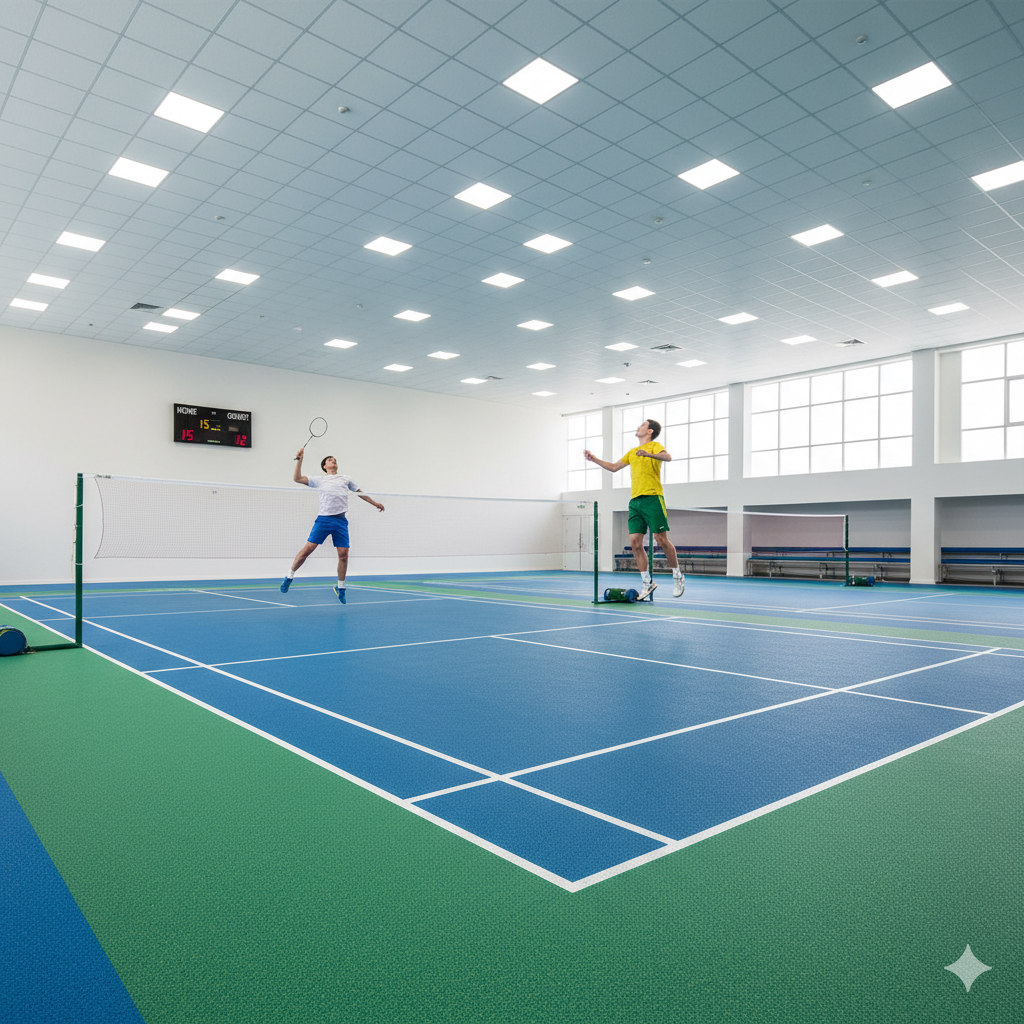
A perfectly constructed badminton court does more than look good — it enhances player performance, ensures safety, and extends the facility’s lifespan. The quality of the flooring system directly affects the bounce, grip, and comfort experienced by the players.
In this detailed guide, we’ll explore types of badminton flooring, construction process, cost breakdown, maintenance, and why synthetic sports flooring is considered the gold standard for modern badminton courts.
Why Flooring Matters in Badminton Courts
Badminton is a sport that demands speed, agility, and precision. The flooring must therefore provide:
-
Excellent grip to prevent slipping
-
Proper cushioning to reduce impact on joints
-
Consistent bounce for accurate gameplay
-
Durability to withstand frequent play
The right badminton flooring ensures a safe and smooth playing experience, while poor-quality surfaces can cause injuries, cracks, or uneven bounce — all of which ruin the game and increase maintenance costs.
Types of Badminton Flooring
There are several high-performance flooring options available today, each designed for different budgets, environments, and player needs. Let’s take a closer look.
1. Wooden Flooring (Maple, Teak, or Beech Wood)
Wooden flooring has long been the traditional choice for indoor badminton courts due to its premium finish, high shock absorption, and professional feel.
Features:
-
BWF (Badminton World Federation) approved
-
Layered construction with shock-absorbing undercarriage
-
Smooth finish with optimal bounce and friction
-
Long lifespan when maintained properly
Advantages:
-
Best playing comfort
-
Professional-level performance
-
High resale and aesthetic value
Average Cost: ₹7 lakh – ₹12 lakh per court
Ideal for: Indoor stadiums, professional academies, and corporate sports centers.
2. PVC Synthetic Flooring
PVC (Polyvinyl Chloride) synthetic flooring has become India’s most popular choice for badminton due to its durability, flexibility, and affordability.
Features:
-
Available in multiple thicknesses (4.5mm–8mm)
-
Anti-slip, anti-bacterial, and easy to clean
-
Uniform shock absorption and ball bounce
-
Resistant to wear, moisture, and stains
Advantages:
-
Affordable and quick installation
-
Requires minimal maintenance
-
BWF-approved quality available
Average Cost: ₹4.5 lakh – ₹7.5 lakh per court
Ideal for: Schools, academies, fitness clubs, and community centers.
3. PU (Polyurethane) Sports Flooring
PU flooring is a seamless, joint-free surface often used for multi-sport indoor facilities. It is a poured system that bonds directly with the base concrete.
Features:
-
Seamless finish for safety and aesthetics
-
Elastic and comfortable surface
-
Long-lasting and easy to repair
-
Suitable for multiple indoor sports
Advantages:
-
High shock absorption
-
Excellent durability
-
Professional and modern look
Average Cost: ₹6 lakh – ₹10 lakh per court
Ideal for: Multi-sport halls, commercial gyms, and indoor arenas.
4. Acrylic Flooring
Acrylic flooring is commonly used for outdoor badminton courts due to its UV resistance and all-weather performance.
Features:
-
Multiple acrylic resin layers
-
Slip-resistant and weatherproof
-
Suitable for concrete or asphalt bases
-
Available in multiple colors
Advantages:
-
Cost-effective and durable
-
Excellent for outdoor use
-
Low maintenance
Average Cost: ₹3.5 lakh – ₹6 lakh per court
Ideal for: Schools, housing societies, and outdoor sports complexes.
5. Rubber Flooring
Rubberized synthetic flooring provides extra cushioning and resilience, making it ideal for training centers and multi-sport areas.
Features:
-
High impact resistance
-
Eco-friendly and non-toxic
-
Good traction and grip
Advantages:
-
Safe for intense practice sessions
-
Noise absorption
-
Long-lasting surface
Average Cost: ₹6 lakh – ₹9 lakh per court
Construction Process of Badminton Flooring
Building a badminton court is not just about laying flooring — it’s a technical process that requires expert engineering, precise leveling, and the right materials.
Step 1: Site Inspection and Design
Experts assess the site’s level, drainage, and space availability. The court layout is designed according to BWF standards (13.4m × 6.1m for doubles).
Step 2: Base Preparation
A strong and even base is crucial. Usually, RCC (Reinforced Cement Concrete) or asphalt is used. It must be level, smooth, and moisture-free.
Step 3: Flooring Installation
Depending on the chosen material:
-
Wooden Flooring: Installed with rubber pads and fixed over sleepers.
-
PVC Synthetic: Glued and heat-welded for a seamless finish.
-
PU Flooring: Applied in self-leveling liquid form for a smooth, elastic surface.
Step 4: Line Marking and Finishing
After installation, lines are painted with non-fading, wear-resistant paint according to international badminton standards.
Step 5: Accessories and Lighting Setup
Poles, nets, wall padding, and LED lighting are added to complete the setup for professional gameplay.
Factors Affecting Badminton Flooring Cost
The price of badminton flooring can vary depending on several factors:
-
Type of flooring material
-
Court size and layout
-
Indoor or outdoor setup
-
Brand and quality of materials
-
Base condition and civil work
-
Accessories such as nets, poles, and lighting
A professional contractor provides a detailed estimate after on-site inspection and consultation.
Maintenance Tips for Long Life and Performance
Proper maintenance keeps your badminton flooring looking new and performing perfectly.
✅ Clean regularly – Remove dust and debris daily.
✅ Use non-marking shoes – Prevent scuff marks.
✅ Avoid moisture exposure – Especially for wooden courts.
✅ Recoat or polish – Every few years for surface rejuvenation.
✅ Maintain proper humidity – In air-conditioned indoor setups.
A well-maintained badminton floor can last 10–15 years or more.
Benefits of Synthetic Badminton Flooring
Modern synthetic sports flooring systems are replacing traditional options because they combine performance, safety, and long-term savings.
Key Benefits:
-
Enhanced grip and shock absorption
-
Quick installation and easy maintenance
-
Anti-slip and anti-bacterial surfaces
-
Cost-effective compared to hardwood
-
Compatible with multi-sport use
For most modern facilities, PVC or PU synthetic flooring is the perfect balance between price and performance.
Why Choose Us for Badminton Flooring Construction
At sports-facility.in, we specialize in turnkey badminton court construction and sports flooring solutions across India.
Our Expertise Includes:
-
Over 100+ completed badminton courts
-
Use of BWF-approved materials and international standards
-
End-to-end service: design, supply, installation, and maintenance
-
Custom court colors and branding
-
On-time delivery and professional execution
We work with schools, academies, developers, and sports authorities to build courts that deliver world-class quality at competitive pricing.https://www.sports-facility.in/index.php
Conclusion
The right badminton flooring transforms the playing experience — ensuring comfort, consistency, and longevity. Whether you choose wooden, PVC, PU, or acrylic flooring, make sure it meets BWF standards and is installed by an experienced professional.
A well-built court is a long-term investment that enhances the value of your facility and motivates players to perform their best.
If you’re planning to build a badminton court, trust only certified sports flooring experts who can deliver quality, performance, and durability — all within your budget.
Bring your game to the next level with premium badminton flooring that’s built to perform and built to last.