Introduction
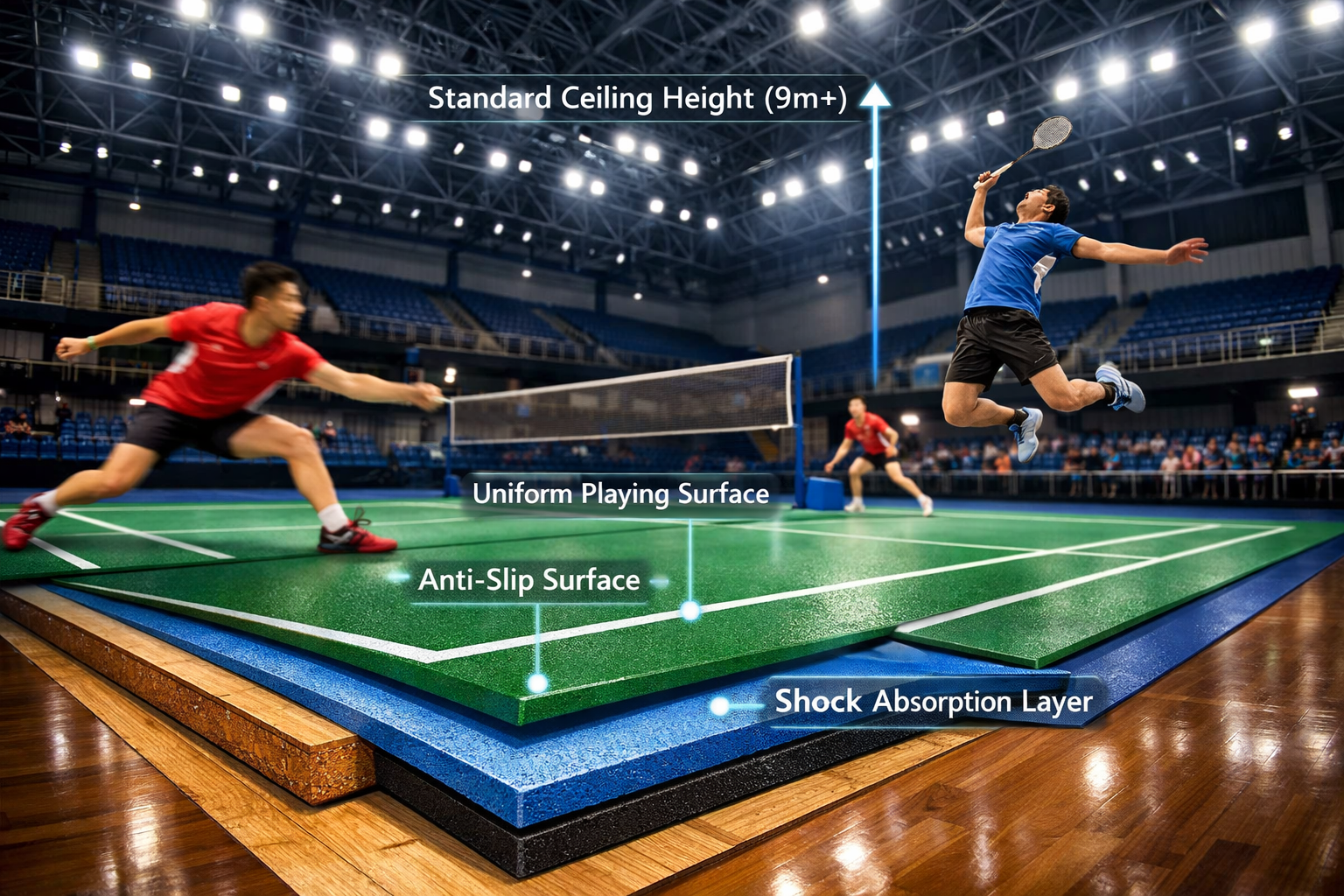
Designing a high-performance badminton court requires precision, planning, and the right combination of materials and structural specifications. Among all elements, flooring quality and ceiling height play the most critical role in determining player safety, movement efficiency, and overall gameplay experience.
A well-constructed badminton court ensures smooth footwork, proper shuttle response, and sufficient vertical clearance for high shots. Whether you are building a court for a sports academy, indoor stadium, school, or recreational facility, understanding these technical aspects is essential for long-term performance and compliance with global standards.
Importance of Proper Flooring in Badminton
Badminton is an intense sport involving rapid direction changes, jumps, lunges, and quick reflexes. The flooring system must support these movements while minimizing injury risks.
Key Benefits of Quality Flooring
-
Player Safety: Shock-absorbing surfaces reduce stress on knees, ankles, and joints
-
Enhanced Performance: Proper grip and traction enable fast and controlled movement
-
Durability: High-quality flooring withstands heavy usage without surface damage
-
Low Maintenance: Engineered surfaces reduce cleaning time and maintenance costs
Choosing the right flooring is not just about appearance—it directly impacts player health, comfort, and court longevity.
Types of Badminton Court Flooring
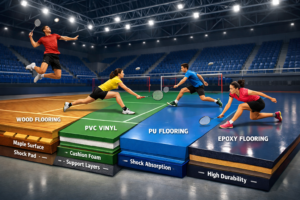
1. Wooden Sports Flooring
Material: Maple or engineered hardwood
Advantages:
-
Superior shock absorption and energy return
-
Natural playing feel preferred by professionals
-
Smooth, uniform surface for consistent gameplay
Best For: Professional indoor stadiums and tournament courts
2. PVC Vinyl Flooring
Material: Multi-layer polyvinyl chloride sheets
Advantages:
-
Cost-effective and easy to install
-
Anti-slip surface with consistent grip
-
Comfortable cushioning for long sessions
Best For: Schools, academies, and indoor sports halls
3. PU (Polyurethane) Sports Flooring
Material: Multi-layer synthetic polyurethane system
Advantages:
-
Seamless and highly durable surface
-
Excellent shock absorption
-
Anti-skid and long-lasting performance
Best For: Professional and semi-professional indoor courts
4. Epoxy Flooring
Material: Resin-based coating applied over concrete
Advantages:
-
Seamless and hard-wearing
-
Resistant to wear and chemicals
-
Customizable colors and finishes
Best For: Multi-purpose sports facilities
Standard Badminton Court Dimensions
To meet international guidelines set by the Badminton World Federation, courts must follow precise measurements:
-
Court Length: 13.4 meters
-
Court Width: 6.1 meters (doubles), 5.18 meters (singles)
-
Net Height: 1.55 meters at edges, 1.524 meters at center
-
Clear Space Around Court: Minimum 2 meters for safe movement
-
Surface Requirement: Flat, smooth, and free from irregularities
These specifications ensure fair play and professional-level performance.
Ceiling Height Requirements for Badminton Courts
Ceiling height is a crucial yet often underestimated factor in court design. It directly affects shuttle trajectory, especially during high clears and smashes.
Recommended Standards
-
Minimum Height: 7.5 meters
-
Optimal Height: 9–12 meters for professional-level courts
Why Ceiling Height Matters
-
Unobstructed Gameplay: Allows players to execute high shots without interference
-
Safety: Prevents collisions with overhead structures
-
Professional Experience: Essential for tournaments and advanced training
Additional Considerations
-
Lighting fixtures should be positioned to avoid glare
-
Ventilation ducts and fans must not obstruct shuttle movement
-
Uniform ceiling design improves visual tracking of the shuttle
Flooring and Ceiling Integration
The true performance of a badminton court depends on how well flooring and ceiling specifications work together.
-
Smooth Movement + Vertical Clearance: Enables complete freedom during rallies
-
Shock Absorption + Open Space: Reduces fatigue and enhances endurance
-
Consistent Surface + Adequate Height: Improves shot accuracy and control
A balanced design ensures both horizontal and vertical performance efficiency.
Subfloor Preparation
A strong and well-prepared base is essential for long-lasting flooring performance.
Key Steps
-
Concrete Base: Must be level, strong, and crack-free
-
Moisture Control: Prevents damage to wooden and vinyl flooring
-
Precision Leveling: Ensures a perfectly even playing surface
Proper subfloor preparation enhances durability, safety, and consistent gameplay.
Lighting Considerations
Lighting plays a major role in indoor badminton courts and must complement ceiling height.
-
Illumination Level:
-
300–500 lux for recreational play
-
750–1000 lux for professional courts
-
-
Positioning:
-
Overhead but angled to reduce glare
-
Even distribution across the court
-
-
Preferred Option: LED lighting for energy efficiency and uniform brightness
Maintenance of Badminton Court Flooring
Regular maintenance ensures long-term performance and player safety.
Best Practices
-
Sweep and clean surfaces regularly
-
Inspect for cracks, wear, or damage
-
Recoat wooden or PU flooring when needed
-
Avoid excessive moisture exposure
-
Use proper cleaning agents to protect the surface
Consistent maintenance extends the lifespan of the court and maintains playing quality.
Additional Design Considerations
To create a complete and professional badminton facility, consider:
-
Acoustics: Reduce echo for better player focus
-
Temperature Control: Maintain comfortable indoor conditions
-
Multi-Purpose Usage: Flexible flooring for multiple sports
-
Safety Padding: Protect players from accidental collisions
Conclusion
Badminton court flooring and ceiling height are the foundation of a high-quality playing environment. Together, they determine player safety, movement efficiency, and overall game experience.
Investing in premium flooring materials, maintaining proper ceiling clearance, and ensuring professional installation will result in a durable, safe, and performance-driven badminton court. By following international standards and best practices, your facility can deliver a world-class experience suitable for training, competition, and recreation.
A well-designed badminton court is not just a playing area—it is a long-term investment in performance, safety, and excellence.
FAQs – Badminton Court Flooring and Ceiling Height
Q1. What is the ideal flooring for badminton courts?
Wooden and PVC vinyl flooring are widely preferred due to their shock absorption and professional performance.
Q2. What is the minimum ceiling height for a badminton court?
The minimum recommended height is 7.5 meters, while professional courts require 9–12 meters.
Q3. Why is ceiling height important in badminton?
It ensures unobstructed shuttle movement during high shots like clears and smashes.
Q4. Can badminton courts be used for multiple sports?
Yes, with appropriate flooring like PU or modular systems, courts can support multiple activities.
Q5. How often should badminton court flooring be maintained?
Regular cleaning is required weekly, while recoating or refinishing depends on usage and material type.