Introduction
Badminton court flooring is a vital component of any professional or recreational sports facility. The quality of the playing surface directly affects player movement, safety, comfort, and overall game consistency. A well-designed badminton court floor ensures optimal grip, balanced shock absorption, and a stable surface for fast-paced rallies. On the other hand, poor flooring can lead to injuries, uneven play, and increased maintenance costs.
Modern badminton flooring systems are engineered to deliver durability, performance, and compliance with global standards. Whether for indoor stadiums, training centers, schools, or outdoor courts, selecting the right flooring solution is essential for long-term value and player satisfaction.
Types of Badminton Court Flooring
Wooden Badminton Court Flooring
Material: Engineered hardwood (such as maple)
Key Features:
-
Excellent shock absorption and energy return
-
Smooth and uniform surface for professional gameplay
-
Premium appearance with high-end finish
-
Consistent shuttle response
Ideal For: Stadiums, sports academies, and professional indoor courts
Synthetic / PVC Vinyl Court Flooring
Material: Multi-layer PVC or vinyl with cushioning backing
Key Features:
-
Durable and moisture-resistant
-
Anti-slip surface with controlled traction
-
Comfortable for extended gameplay
-
Easy to clean and maintain
Ideal For: Indoor sports halls, schools, colleges, and multi-purpose facilities
Rubber Badminton Court Flooring
Material: High-density rubber sheets or tiles
Key Features:
-
Superior grip and slip resistance
-
High impact absorption for joint safety
-
Noise reduction properties
-
Long-lasting and eco-friendly
Ideal For: Training areas, fitness centers, and recreational courts
Modular Badminton Court Flooring
Material: Interlocking tiles made from PVC, rubber, or composite materials
Key Features:
-
Quick and hassle-free installation
-
Replaceable and portable design
-
Flexible layout options
-
Cost-effective solution
Ideal For: Temporary courts, events, and shared sports spaces
Key Factors When Selecting Badminton Court Flooring
Shock Absorption
Proper cushioning reduces stress on joints during jumps, lunges, and rapid directional movements, helping prevent injuries.
Slip Resistance
A high-quality surface ensures consistent traction, allowing players to move confidently during intense gameplay.
Durability
The flooring must withstand heavy usage, frequent training sessions, and competitive matches without degradation.
Maintenance Requirements
Low-maintenance flooring systems reduce long-term operational costs and ensure consistent performance.
Compliance with Standards
Professional badminton courts should follow guidelines established by the Badminton World Federation to ensure correct dimensions, markings, and playing conditions.
Indoor vs Outdoor Badminton Court Flooring
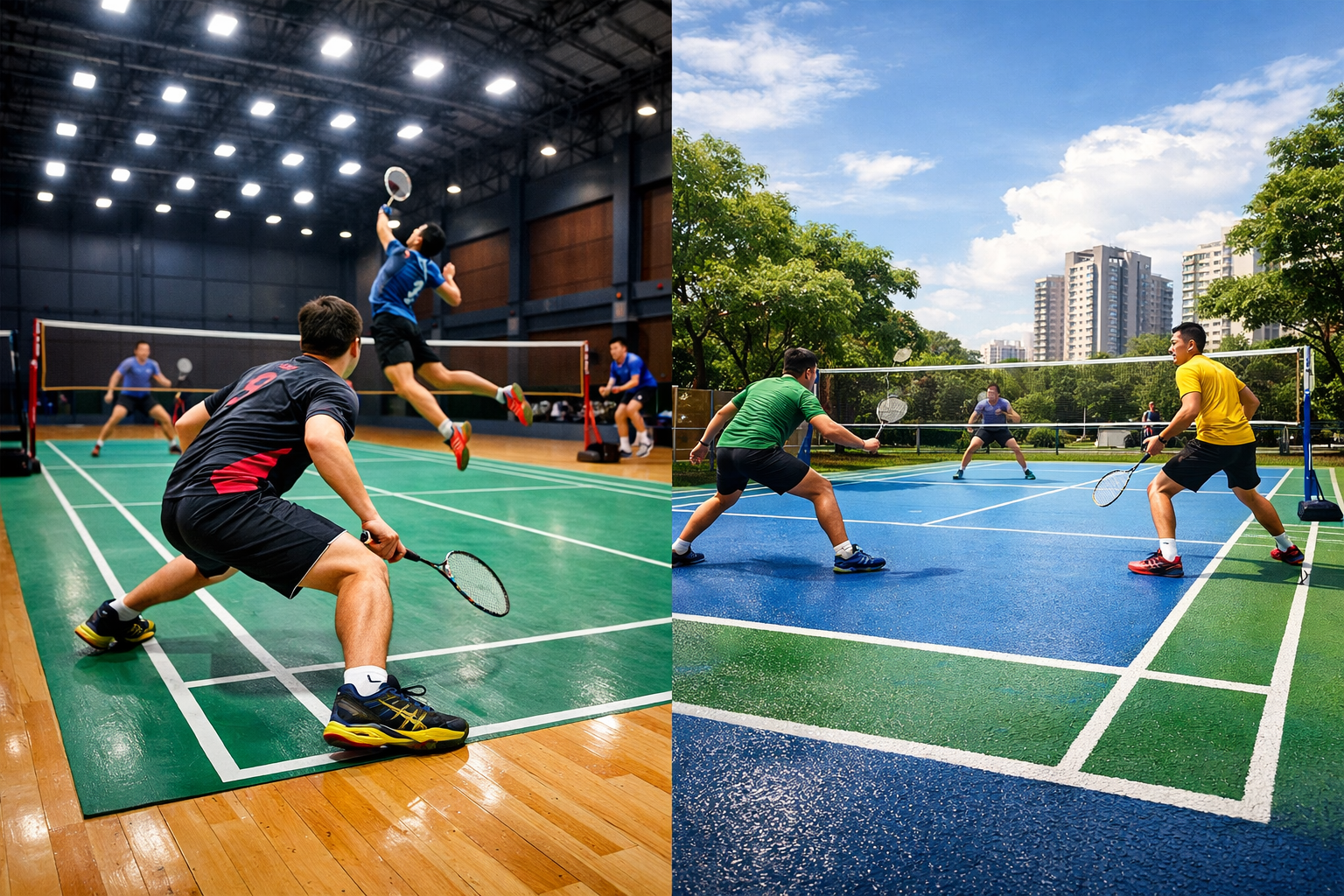
Indoor Courts
-
Controlled environment for consistent gameplay
-
Preferred materials: Wooden or PVC vinyl flooring
-
Requires proper lighting and ventilation
Outdoor Courts
-
Designed to handle weather exposure
-
Preferred materials: Acrylic or PU-based systems
-
Requires UV resistance and proper drainage
Professional Badminton Court Installation Process
1. Site Assessment & Preparation
-
Surface leveling and moisture inspection
-
Subfloor preparation (concrete or wooden base)
2. Flooring Installation
-
Layered installation based on selected material
-
Precision alignment for seamless finish
3. Court Line Marking
-
Accurate markings as per international standards
4. Accessories Setup
-
Installation of nets, poles, lighting systems, and optional seating
5. Final Quality Inspection
-
Testing surface grip, uniformity, and safety compliance
Benefits of Professional Court Flooring
-
Enhances player performance and agility
-
Reduces risk of injuries with cushioned surfaces
-
Ensures long-term durability and reliability
-
Improves overall aesthetics of the facility
-
Suitable for professional, training, and recreational use
Conclusion
Badminton court flooring is a long-term investment that defines the quality and safety of the playing environment. Choosing the right material—whether wooden, PVC, rubber, or modular—combined with expert installation ensures a high-performance court that meets global standards.
A well-constructed badminton court not only improves gameplay but also increases the value and usability of the facility. Investing in advanced flooring solutions guarantees durability, comfort, and an exceptional playing experience for years to come.
FAQs – Badminton Court Flooring
Q1. Which flooring is best for indoor badminton courts?
Wooden and PVC vinyl flooring are ideal due to their superior cushioning and professional performance.
Q2. How long does badminton court flooring last?
With proper maintenance, high-quality flooring can last 8–15 years or more.
Q3. Is synthetic flooring better than wooden flooring?
Synthetic flooring is more cost-effective and low maintenance, while wooden flooring offers premium performance.
Q4. Can badminton courts be built outdoors?
Yes, acrylic and PU flooring systems are suitable for outdoor courts due to their weather resistance.
Q5. Does badminton flooring need to follow international standards?
Yes, following Badminton World Federation standards ensures proper gameplay and safety.