Introduction
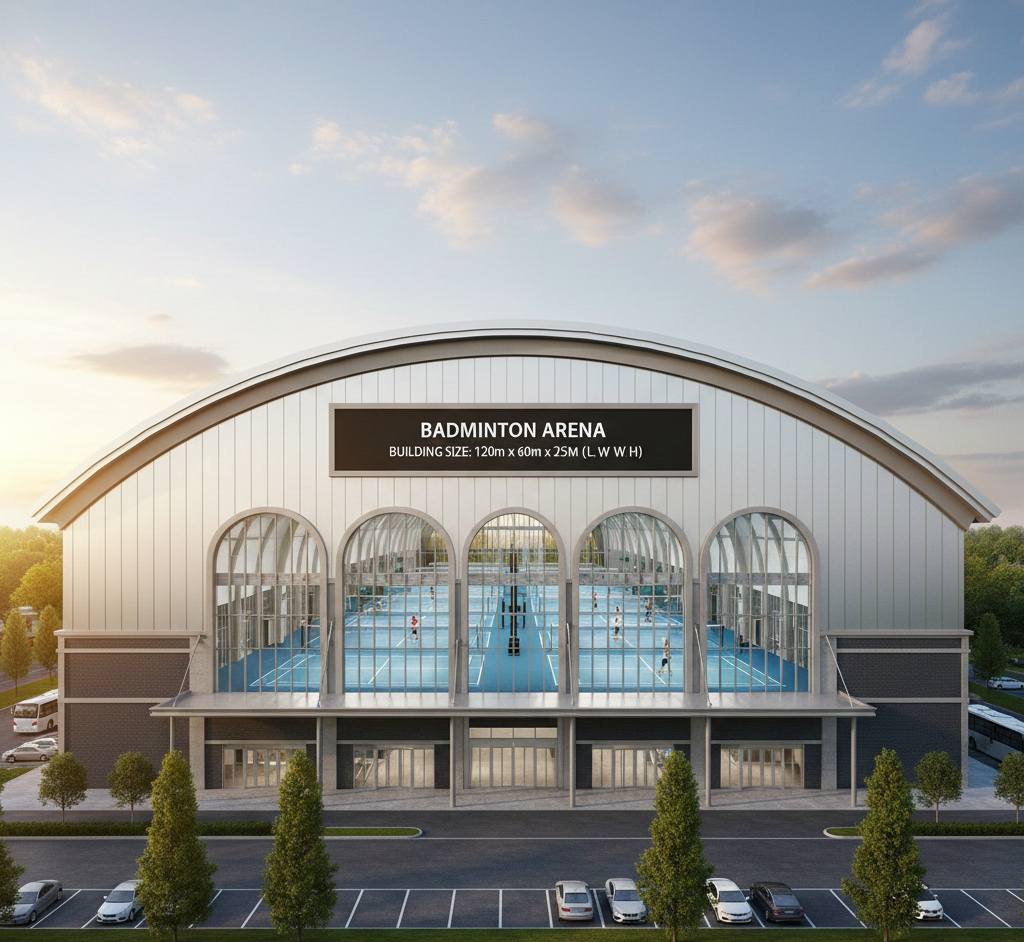
Badminton is a dynamic sport that demands agility, speed, and precision. While the court markings and flooring are essential for gameplay, the size of the building housing the badminton court plays an equally crucial role in ensuring player safety, comfort, and performance. Proper building dimensions affect ventilation, lighting, player movement, and the facility’s adaptability for future expansion. This comprehensive guide outlines the recommended building sizes, design standards, and considerations to create an optimal badminton facility.
Standard Dimensions of a Badminton Court
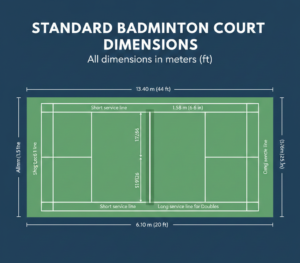
Before determining the building size, it’s essential to understand official court dimensions defined by the Badminton World Federation (BWF):
-
Length: 13.4 meters (44 feet)
-
Width: 6.1 meters (20 feet) for doubles, 5.18 meters (17 feet) for singles
-
Net Height: 1.55 meters (5 feet 1 inch) at the edges and 1.524 meters (5 feet) at the center
While these dimensions define the playable area, the building must provide additional clearance for safety, movement, and equipment setup.
Minimum Building Size Requirements
A functional badminton facility must accommodate the court, safety zones, player movement, and optional seating. Recommended minimum building sizes include:
-
Length: Minimum of 20 meters (65.6 feet) to provide 3–4 meters of free space at each end.
-
Width: Minimum of 12 meters (39.3 feet) to allow 3 meters of side clearance.
-
Height: Minimum of 7.5 meters (24.6 feet) from floor to ceiling to allow high clears and smashes without interference. Professional or multi-court setups may require heights of 8–9 meters.
These dimensions ensure gameplay is safe, comfortable, and unrestricted.
Multi-Court Facility Considerations
For facilities with multiple courts, the building size should be scaled to accommodate additional space requirements:
-
Two-Court Facility: Minimum 30 meters in length and 14 meters in width to allow clearance between courts.
-
Four or More Courts: Recommended 45–50 meters in length and 20–25 meters in width for optimal spacing, walking lanes, and emergency access.
Adequate spacing prevents shuttle interference and ensures players can move freely without risk of injury.
Roof and Ceiling Design
Ceiling height and roof design are critical for gameplay and structural stability:
-
Ceiling Height: Minimum 7.5 meters; 8–9 meters preferred for professional or multi-court facilities.
-
Structural Support: Roof trusses and beams must be positioned outside the playable area. Steel trusses are ideal for taller buildings.
-
Lighting Fixtures: Overhead lighting must be installed high enough to avoid glare and interference with shuttle flight.
Pitched or sloped roofs can provide higher central clearance while maintaining structural integrity along the sides.
Safety Zones and Player Movement
Safety and comfort require dedicated clearance zones:
-
Behind Baselines: Minimum 3 meters for safe movement during smashes and clears.
-
Side Clearance: 2.5–3 meters on each side of the court.
-
Walkways: Additional space around court perimeters for players, coaches, and spectators.
These areas also facilitate tournament organization and allow referees and linesmen to work without obstruction.
Ventilation and Lighting
Environmental comfort is a vital part of building size planning:
-
Airflow Systems: Fans or HVAC systems to regulate temperature and humidity.
-
Natural Ventilation: Windows or vents positioned for cross-ventilation.
-
Lighting: Sufficient building height ensures uniform LED or fluorescent lighting without shadows or glare.
Proper ventilation and lighting enhance player performance and overall comfort.
Material Selection and Structural Design
The building size influences the choice of materials and structural framework:
-
Steel Frames: Strong, durable, and capable of spanning large areas without intermediate supports.
-
Aluminum or Lightweight Alloys: Useful for smaller or modular structures.
-
Concrete and Masonry: Permanent structures providing stability, insulation, and acoustic benefits.
Roofing materials such as insulated panels, polycarbonate sheets, or corrugated metal ensure durability, water drainage, and thermal control while supporting adequate ceiling height.
Accessibility and Future Expansion
A well-planned badminton facility should allow for growth and accessibility:
-
Expandable Designs: Modular structures for adding courts or seating areas.
-
Accessibility: Entrances, exits, and aisles complying with safety and accessibility standards.
-
Emergency Exits: Strategically positioned without compromising building size or safety.
Cost Implications
Building size directly impacts construction and operational costs:
-
Larger buildings require more materials and labor.
-
Higher ceilings may need more powerful lighting and ventilation systems.
-
Proper sizing ensures long-term usability, safety, and versatility, offsetting initial investment costs.
Conclusion
The building size of a badminton court is a fundamental aspect of facility design that influences gameplay, safety, comfort, and longevity. Minimum recommended dimensions include 20 meters in length, 12 meters in width, and 7.5 meters in height, with adjustments for multi-court or professional setups. Considerations such as roof design, safety zones, ventilation, lighting, materials, and future expansion are essential to create an optimal environment.