Introduction
When it comes to creating safe and efficient environments, anti-slip flooring stands out as one of the most essential innovations in modern infrastructure design. From sports courts and gymnasiums to schools, hospitals, and industrial areas, these surfaces are designed to prevent accidents, enhance traction, and maintain performance even in wet or high-traffic conditions.
An anti-slip floor isn’t just about safety—it’s about confidence. It allows athletes, workers, and everyday users to move freely without the constant risk of slipping or falling. Whether indoors or outdoors, anti-slip flooring solutions provide the perfect balance between functionality, aesthetics, and long-term durability.
What Is Anti-Slip Flooring?
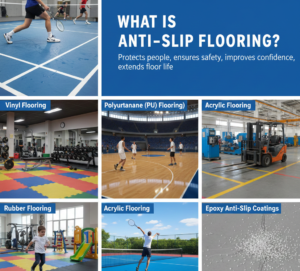
Anti-slip flooring refers to any surface treatment or flooring material designed to reduce the risk of slips and falls by improving grip underfoot. It achieves this through specific surface textures, coatings, or materials that enhance friction—even when the floor is wet or oily.
These flooring systems are engineered using advanced polymers, coatings, or composite layers that resist slipping while maintaining easy maintenance and comfort. The goal is to offer a reliable surface that remains safe in all conditions—whether on a sports court, swimming pool deck, gym, or industrial workspace.
Importance of Anti-Slip Flooring
Slip and fall accidents are among the most common causes of injuries across public, commercial, and sports environments. Installing anti-slip flooring not only reduces these risks but also:
-
Protects people from injuries during movement or play.
-
Ensures compliance with safety standards and regulations.
-
Improves confidence for players and users during activities.
-
Extends floor life by providing additional protection against wear and tear.
In sports environments, especially, the flooring must balance traction and flexibility, allowing for quick direction changes, running, and jumping—without compromising on safety.
Types of Anti-Slip Flooring
There are several types of anti-slip flooring solutions available, each designed for specific environments and uses. Below are the most popular options used in sports, commercial, and industrial spaces:
1. Vinyl Flooring
-
One of the most widely used types of anti-slip flooring.
-
Made with textured surfaces that provide superior grip.
-
Ideal for badminton courts, schools, gyms, and multipurpose halls.
-
Offers water resistance, easy cleaning, and long-lasting durability.
2. Rubber Flooring
-
Commonly used in gyms, fitness centers, and children’s play zones.
-
Excellent shock absorption and anti-slip performance, even in wet areas.
-
Provides cushioning and sound insulation.
-
Available in tiles or rolls for easy installation.
3. Polyurethane (PU) Flooring
-
Seamless, highly durable, and designed for both indoor and outdoor sports.
-
Combines excellent grip with a smooth, attractive finish.
-
Resistant to chemicals, abrasion, and weather conditions.
-
Ideal for basketball, handball, and multipurpose halls.
4. Acrylic Flooring
-
Specifically designed for outdoor sports courts.
-
UV and weather-resistant, offering superior traction for tennis, volleyball, and basketball.
-
Low maintenance and available in vibrant color options.
5. Epoxy Anti-Slip Coatings
-
A high-performance coating system for industrial and commercial floors.
-
Can be customized with anti-slip additives such as quartz, silica, or aluminum oxide.
-
Perfect for areas with heavy machinery or liquid spills.
Features of Anti-Slip Flooring
-
Enhanced Grip and Traction
The primary feature is a surface that provides excellent friction, ensuring stable footing even when the surface is wet or dusty. -
Durability Under Pressure
Designed to handle heavy use, anti-slip floors resist wear, scratches, and scuff marks, maintaining their performance for years. -
Low Maintenance
Most anti-slip floors are easy to clean and maintain, with surfaces that resist stains and dirt buildup. -
Shock Absorption and Comfort
Especially in sports facilities, flooring systems combine anti-slip texture with cushioning for joint protection and fatigue reduction. -
Weather and Chemical Resistance
Many anti-slip floors are resistant to UV rays, moisture, and chemicals, making them suitable for both indoor and outdoor use. -
Customizable Designs
Available in various colors, textures, and finishes to match the aesthetic needs of different spaces—whether a gym, court, or commercial facility.
Applications of Anti-Slip Flooring
Anti-slip flooring finds applications across a wide range of sectors. Some of the most common include:
Sports and Fitness Facilities
-
Badminton, tennis, and volleyball courts
-
Indoor gymnasiums and yoga studios
-
Swimming pool decks and locker rooms
Educational Institutions
-
School corridors, playgrounds, and activity halls
-
Multi-purpose auditoriums
Industrial and Commercial Areas
-
Warehouses, factories, and workshops
-
Food processing units and laboratories
Public and Residential Spaces
-
Hospitals, hotels, and shopping complexes
-
Residential balconies, driveways, and bathrooms
Wherever there is high foot traffic or moisture exposure, anti-slip flooring ensures safety without compromising on looks or comfort.
Benefits of Anti-Slip Flooring
-
Prevents Accidents and Injuries
Significantly reduces the risk of slipping, especially in moisture-prone areas like gyms, kitchens, and sports halls. -
Improves Athletic Performance
In sports, secure footing means better control, agility, and confidence during play. -
Long-Term Durability
Made from robust materials designed to withstand heavy use, ensuring a long service life. -
Easy to Clean and Maintain
Resistant to stains and water absorption, making them hygienic and low-maintenance. -
Cost-Effective Safety Solution
Though an initial investment, anti-slip flooring saves long-term costs by reducing injury liabilities and maintenance needs. -
Aesthetic Appeal
Available in various textures and shades, allowing customization for branding, zoning, or visual appeal. -
Compliance with Safety Standards
Meets international standards such as ASTM, EN, and ISO for slip resistance and safety.
How Anti-Slip Flooring Works
The secret lies in surface texture and material composition. Anti-slip floors are engineered with micro-textures or embedded particles that increase surface friction. Some use a fine-grain coating, while others rely on naturally rough finishes or embedded aggregate particles.
When a foot contacts the surface, the friction coefficient between the sole and floor increases, preventing sliding. Even when water, sweat, or oil is present, the surface maintains its grip—ensuring stability and safety at all times.
Installation and Maintenance
Proper installation is crucial to achieve the desired performance of anti-slip flooring. The process includes:
-
Cleaning and preparing the base surface.
-
Applying a primer or adhesive layer.
-
Installing or rolling out the chosen flooring material.
-
Sealing edges and joints to prevent moisture penetration.
-
Performing friction tests for quality assurance.
Regular cleaning with mild detergents and non-abrasive tools keeps the surface in excellent condition, maintaining both appearance and safety.
Conclusion
In today’s fast-paced world, where safety and performance are equally important, anti-slip flooring has become a necessity rather than a luxury. It combines science, design, and innovation to create surfaces that protect, perform, and impress.
Whether it’s for a professional sports arena, a school gym, or an industrial workspace, anti-slip flooring ensures every step is secure. It’s a long-term investment in safety, functionality, and peace of mind—providing the ideal foundation for confident movement and enhanced performance.