Acrylic flooring has become one of the most popular and versatile surface solutions for both indoor and outdoor sports facilities, commercial areas, and residential complexes. Known for its durability, vibrant appearance, and weather resistance, acrylic flooring offers an ideal combination of aesthetics and performance. Whether it’s a tennis court, basketball court, jogging track, or multi-purpose play area, acrylic flooring provides a safe, smooth, and long-lasting surface that meets international standards.
In this comprehensive guide, we’ll explore what acrylic flooring is, its structure, types, advantages, applications, installation process, and maintenance requirements—offering a complete understanding of why it’s a preferred choice in modern sports and infrastructure development.
1. What is Acrylic Flooring?
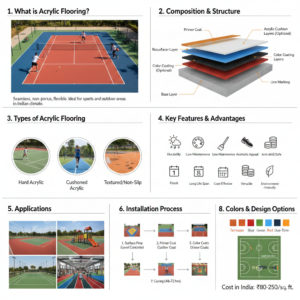
It forms a seamless, non-porous, and flexible surface ideal for sports and outdoor areas. Typically installed over concrete or asphalt bases, the flooring can withstand heavy usage, intense sunlight, rain, and temperature variations, making it suitable for Indian climatic conditions.
2. Composition and Structure of Acrylic Flooring
Acrylic flooring is composed of multiple layers, each serving a unique purpose to ensure long-term durability and comfort. A standard acrylic flooring system includes:
-
Base Layer (Concrete or Asphalt):
The foundation must be level, crack-free, and water-drainable to ensure the top layers adhere properly. -
Primer Coat:
A bonding agent that enhances adhesion between the base and subsequent acrylic layers. -
Resurfacer Layer:
This layer fills small surface imperfections and provides a uniform base for the color coatings. -
Acrylic Cushion Layers (Optional):
Made using fine rubber granules mixed with acrylic emulsions, these layers add resilience and shock absorption, reducing the risk of injury and fatigue. -
Color Coating Layers:
These top layers provide a smooth, non-glare, and skid-resistant finish. The color coatings also protect the floor from UV damage. -
Line Marking:
The final markings (white or contrast colors) define play boundaries and zones for different sports.
3. Types of Acrylic Flooring Systems
Acrylic flooring systems can vary depending on usage, budget, and performance requirements. The main types include:
-
Hard Acrylic Flooring:
-
Consists of fewer layers and provides a firm, high-speed playing surface.
-
Commonly used for tennis, basketball, and multi-purpose courts.
-
Ideal for competitive play with higher ball bounce.
-
-
Cushioned Acrylic Flooring:
-
Incorporates multiple cushion coats for better shock absorption.
-
Provides comfort and reduces stress on joints.
-
Best suited for schools, recreational courts, and jogging tracks.
-
-
Textured or Non-Slip Acrylic Flooring:
-
Designed for outdoor sports areas and walkways.
-
Offers enhanced grip, even in wet conditions.
-
-
Acrylic Coating Over Existing Surfaces:
-
Used for renovation of worn-out concrete or asphalt courts.
-
Cost-effective and quick to install.
-
4. Key Features and Advantages of Acrylic Flooring
Acrylic flooring is preferred worldwide due to its unique set of benefits:
a) Durability and Weather Resistance
Acrylic surfaces are designed to withstand UV rays, heavy rain, and temperature variations, making them suitable for all-weather play.
b) Low Maintenance
The non-porous surface prevents dust accumulation and is easy to clean with minimal maintenance.
c) Excellent Aesthetic Appeal
Acrylic flooring is available in a variety of colors, allowing facility owners to customize courts and areas with attractive designs and branding.
d) Anti-Skid and Safe Surface
The texture provides slip resistance, reducing the risk of falls and injuries during play.
e) Long Life Span
When installed and maintained properly, acrylic flooring can last 8–10 years with periodic resurfacing.
f) Cost-Effective Solution
Compared to other synthetic surfaces, acrylic flooring offers excellent value for money.
g) Versatile Application
Can be used for multiple sports, including tennis, basketball, badminton, volleyball, and skating rinks.
h) Environment-Friendly
Acrylic coatings are water-based and non-toxic, making them safe for players and the environment.
5. Applications of Acrylic Flooring
Acrylic flooring systems are widely used in various sectors, including:
-
Sports Courts:
Tennis, basketball, badminton, volleyball, handball, and pickleball courts. -
Jogging and Walking Tracks:
Provides cushioned, non-slip surfaces ideal for parks and residential complexes. -
Schools and Colleges:
Durable flooring for multi-purpose sports areas and playgrounds. -
Commercial and Recreational Areas:
Used in clubs, gyms, and fitness centers for aesthetic and functional flooring. -
Stadiums and Sports Complexes:
Professional-grade acrylic systems that meet international standards.
6. Installation Process of Acrylic Flooring
Installing acrylic flooring involves technical precision and surface preparation. The step-by-step process includes:
-
Surface Preparation:
-
Ensure a clean, smooth, and crack-free concrete or asphalt base.
-
Proper slope (1%) is maintained for water drainage.
-
-
Application of Primer Coat:
-
Enhances adhesion between the base and acrylic layers.
-
-
Resurfacer Layer:
-
Fills pores and minor unevenness, creating a uniform surface.
-
-
Cushion or Base Layers:
-
Applied in multiple coats using rubberized compounds for flexibility and comfort.
-
-
Acrylic Color Coats:
-
Two or more color coats are applied for durability and visual appeal.
-
-
Line Marking:
-
Final markings are made using high-quality acrylic paint in contrasting colors.
-
-
Curing Period:
-
The surface must be left to cure for 48 to 72 hours before use.
-
7. Maintenance of Acrylic Flooring
Acrylic flooring requires minimal maintenance, but regular care ensures long life and consistent performance:
-
Regular Cleaning:
Sweep or wash with mild soap and water to remove dust and debris. -
Avoid Harsh Chemicals:
Use only recommended cleaning solutions to avoid surface damage. -
Resurfacing:
Every 4–5 years, reapply top coats to maintain appearance and grip. -
Repair Damages Promptly:
8. Acrylic Flooring Colors and Design Options
Acrylic flooring comes in vibrant colors like green, blue, red, orange, and terracotta, allowing facilities to customize their aesthetic appeal. Courts can also feature dual tones—such as blue inner courts with green outer zones—for professional styling.
Custom logos, boundary highlights, and contrast markings further enhance visibility and branding.
9. Cost of Acrylic Flooring Installation
The cost of acrylic flooring varies depending on the following factors:
-
Total area (in square meters or feet)
-
Type of system (hard or cushioned)
-
Number of layers used
-
Base preparation requirements
In India, the average cost ranges from ₹80 to ₹250 per sq. ft., depending on material quality and design specifications.
10. Conclusion
Acrylic flooring stands out as one of the most durable, versatile, and cost-effective surface solutions for sports and outdoor applications. With its excellent weather resistance, vibrant finish, and minimal maintenance, it’s an ideal choice for schools, clubs, residential complexes, and professional sports arenas alike.
Whether you need a tennis court, basketball court, or jogging track, acrylic flooring offers superior performance and visual appeal. When installed by professionals using quality materials, it ensures long-lasting performance and a premium playing experience for athletes and enthusiasts alike.
In summary, acrylic flooring combines performance, safety, and beauty—making it one of the most trusted choices in modern sports infrastructure development.
FAQ – Acrylic Flooring: Complete Guide for Homes, Sports, and Commercial Spaces
1. What is acrylic flooring?
Acrylic flooring is a type of synthetic floor finish made with acrylic resins, often applied over concrete or wood surfaces. It provides a durable, smooth, and glossy finish, commonly used in sports arenas, commercial spaces, and residential areas.
2. What are the types of flooring?
- Acrylic Sports Flooring: Used in badminton, basketball, and tennis courts
- Commercial Acrylic Flooring: Used in offices, showrooms, and hospitals
- Decorative Acrylic Flooring: Available in vibrant colors and textures for homes and lobbies
3. What are the advantages of flooring?
- Durable and long-lasting
- Slip-resistant and safe for sports and commercial use
- Low maintenance and easy to clean
- Customizable colors and designs
- UV-resistant for outdoor use
4. Where is flooring commonly used?
- Indoor sports courts: Badminton, basketball, tennis, squash
- Schools and gyms
- Hospitals, offices, and commercial spaces
- Residential homes and decorative spaces
5. How is flooring installed?
- Surface Preparation: Cleaning and leveling the concrete or wooden base
- Primer Application: Ensures adhesion
- Acrylic Coat Application: Multiple layers for durability and smooth finish
- Optional Markings: Lines or designs for sports courts
6. How long does acrylic flooring last?
With proper maintenance, flooring can last 8–15 years, depending on usage, surface preparation, and environmental conditions.
7. How much does flooring cost?
- Sports court flooring: ₹400–700 per sq. ft
- Commercial or decorative flooring: ₹300–600 per sq. ft
Cost varies based on thickness, design, and surface preparation.