
Delhi, the heart of India, is not just a political and cultural hub — it’s also a growing center for sports and athletics. With prestigious institutions, universities, and stadiums, the demand for world-class running track construction in Delhi is rapidly increasing. From school grounds to international arenas, modern tracks are essential for training, fitness, and competitive events.
Why Running Track Construction is Essential in Delhi
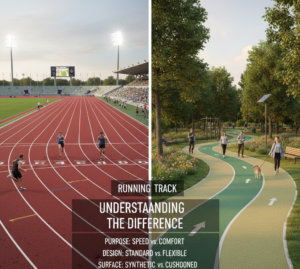
-
Rising Sports Culture: Schools, universities, and fitness communities in Delhi are investing heavily in athletics.
-
International Events: Delhi has hosted global tournaments, making certified tracks a necessity.
-
Weather Durability: Synthetic tracks withstand Delhi’s extreme summers, monsoons, and winters.
-
Public Fitness Initiatives: Jogging tracks in parks encourage community health and fitness.
Standard Running Track Specifications
-
Length: 400 meters (measured in Lane 1)
-
Lanes: 6–9 lanes (8 is standard for competitions)
-
Lane Width: 1.22 meters each
-
Area Required: ~176.91m x 92.5m
📏 These comply with World Athletics (IAAF) standards for fairness and precision.
Running Track Flooring Options in Delhi
-
Polyurethane System (PU): Long-lasting, weather-resistant, ideal for stadiums & colleges.
-
Sandwich System: Shock-absorbent with multi-layer cushioning for athlete safety.
-
Prefabricated Sheets: Fast installation, consistent quality, popular for schools & universities.
Running Track Construction Process
-
Site Survey & Planning – Choosing a well-drained, flat surface.
-
Base Preparation – Laying asphalt or concrete for stability.
-
Track Surfacing – Applying PU, sandwich, or prefabricated flooring.
-
Line Marking & Finishing – Accurate lane markings, staggered starts, and event-specific markings.
⏱️ Timeline: 4–6 months (depending on site and weather conditions in Delhi).
Cost of Running Track Construction in Delhi
-
Full-Sized Synthetic Track (400m): ₹3.5 – ₹7 crore
-
Smaller Jogging/Training Tracks: ₹40 lakh – ₹1.5 crore
(Costs vary based on surface type, number of lanes, and site preparation requirements.)
Running Track Projects in Delhi
-
Jawaharlal Nehru Stadium: International-standard track used for global athletics events.
-
Delhi University & Jawaharlal Nehru University: Multiple institutional tracks for student athletes.
-
Public Parks (e.g., Lodhi Gardens, Siri Fort): Jogging tracks encouraging fitness culture.
Why Choose Professional Track Construction in Delhi?
✔️ Compliance with World Athletics standards
✔️ Weather-proof & durable surfaces
✔️ Shock absorption for athlete safety
✔️ Professional installation & maintenance support
✔️ Eligibility to host national & international competitions
Conclusion
Running track construction in Delhi is more than infrastructure — it’s about shaping the future of Indian athletics. With expert design, durable materials, and professional installation, schools, universities, and sports complexes can provide world-class facilities that inspire athletes to achieve their best.
👉 Learn more: Sports Facility India
Running Track Construction in Delhi – FAQ
❓ 1. What types of running tracks are commonly constructed in Delhi?
In Delhi, the most common types include:
-
400m Synthetic Athletic Tracks (PU Systems) – For stadiums and professional training
-
200m or Custom Training Tracks – For schools and academies
-
EPDM Rubber Jogging Tracks – For parks, residential societies, and public spaces
-
Acrylic Running Tracks – Budget-friendly options for schools
The choice depends on usage level, budget, and available space.
❓ 2. Which surface is best for Delhi’s climate?
Delhi experiences extreme heat in summer and cold winters. Suitable surfaces include:
-
Full PU (Polyurethane) Systems – Highly durable and heat-resistant
-
Sandwich System Tracks – Strong base with EPDM top layer
-
UV-Resistant EPDM Surfaces – Ideal for jogging tracks
Proper material selection ensures resistance to cracking, fading, and surface damage.
❓ 3. What is the standard size of a running track?
The standard outdoor athletic track size is:
-
400 meters (8 lanes) – International standard
Other common layouts include:
-
6-lane 400m tracks
-
200m tracks for smaller campuses
-
Custom jogging loops for parks
Dimensions must comply with athletic federation guidelines for competitive use.
❓ 4. What are the main steps in running track construction?
The construction process typically includes:
-
Site inspection and soil testing
-
Ground leveling and compaction
-
Sub-base installation (WMM layer)
-
Asphalt or concrete base laying
-
PU primer application
-
Rubber/PU surface installation
-
Line marking and finishing
-
Final inspection and curing
Drainage planning is critical during the base preparation stage.
❓ 5. How long does it take to construct a running track in Delhi?
-
Jogging track: 3–5 weeks
-
400m synthetic athletic track: 6–10 weeks
Timelines may vary depending on weather conditions, especially during monsoon season.
❓ 6. What is the cost of running track construction in Delhi?
The cost depends on:
-
Track size and number of lanes
-
Surface type (PU, EPDM, Acrylic)
-
Base preparation and soil condition
-
Drainage system
-
Lighting and additional facilities
Professional 400m synthetic tracks cost more than park jogging tracks due to higher performance standards.
❓ 7. Why is drainage important for running tracks in Delhi?
Delhi receives heavy monsoon rainfall. Without proper drainage:
-
Water pooling can damage the surface
-
Slippery areas may cause injuries
-
Surface life reduces significantly
Tracks are typically designed with a slight slope (around 1%) for effective water runoff.
❓ 8. How long does a synthetic running track last?
With proper maintenance:
-
Full PU tracks: 10–15 years
-
Sandwich systems: 8–12 years
-
EPDM jogging tracks: 8–10 years
Regular inspections help extend lifespan.
❓ 9. What maintenance is required?
Routine maintenance includes:
-
Cleaning dust and debris
-
Checking for cracks or surface wear
-
Repainting lane markings when needed
-
Avoiding heavy vehicles on the track
Periodic professional inspection is recommended.
❓ 10. Are synthetic running tracks safe for athletes?
Yes. They offer:
-
Shock absorption
-
Reduced joint stress
-
Slip-resistant texture
-
Improved traction for sprinting and turning
They are much safer than concrete or traditional hard surfaces.
❓ 11. Can running tracks be customized?
Yes. Customization options include:
-
Lane colors
-
School or academy logos
-
Event markings
-
Multi-sport integration
EPDM systems allow multiple color combinations.