
Athletics is one of the oldest and most celebrated sports, and in India, the demand for world-class running track construction is at an all-time high. From schools and universities to stadiums and sports complexes, synthetic and polyurethane running tracks are transforming the way athletes train and compete.
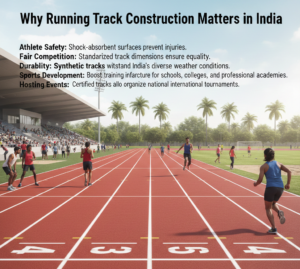
Why Running Track Construction Matters in India
-
Athlete Safety: Shock-absorbent surfaces prevent injuries.
-
Fair Competition: Standardized track dimensions ensure equality.
-
Durability: Synthetic tracks withstand India’s diverse weather conditions.
-
Sports Development: Boosts training infrastructure for schools, colleges, and professional academies.
-
Hosting Events: Certified tracks allow India to organize national and international tournaments.
Standard Running Track Dimensions (World Athletics Approved)
-
Length: 400 meters (Lane 1)
-
Lanes: 6–9 lanes (8 lanes standard for competitions)
-
Lane Width: 1.22m each
-
Total Area Required: ~176.91m x 92.5m
📏 Accurate measurements are critical for fair timing, safety, and compliance.
Running Track Flooring Options in India
-
Polyurethane (PU) System – Highly durable, weather-resistant, used for competitive events.
-
Sandwich System – Combines rubber granules + PU layers for enhanced cushioning.
-
Prefabricated Sheets – Quick installation, consistent quality, ideal for schools & colleges.
Construction Process of a Running Track in India
-
Site Survey & Planning – Selecting suitable land with proper drainage.
-
Base Preparation – Asphalt or concrete base for stability.
-
Surface Installation – Applying PU, sandwich, or prefabricated flooring.
-
Markings & Finishing – Adding lanes, staggered starts, and event-specific lines.
Cost of Running Track Construction in India
The cost varies by material, number of lanes, and site requirements:
-
Full-Sized 400m Track: ₹3.5 – ₹7 crore
-
Smaller Jogging/Training Tracks: ₹40 lakh – ₹1.5 crore
⏱️ Typical completion time: 4–6 months, depending on site preparation and weather.
Benefits of Professional Running Track Construction
✔️ Compliance with World Athletics standards
✔️ Longer lifespan & lower maintenance costs
✔️ Athlete-friendly with shock absorption & grip
✔️ Supports school, college & community sports culture
✔️ Enables hosting of national & international events
Running Track Projects in India
-
Jawaharlal Nehru Stadium, Delhi – International athletics venue
-
Kalinga Stadium, Odisha – Synthetic tracks for elite training
-
National Institute of Sports, Patiala – Premier athletics facility
-
Lucknow & Bengaluru universities – Upgrading school & college tracks
Future of Running Track Construction in India
-
🌱 Use of eco-friendly flooring systems
-
📊 Smart tracks with sensors for performance analytics
-
🛡️ Advanced injury-prevention cushioning
Conclusion
Running track construction in India is not just about laying a surface — it’s about creating a platform for excellence. By choosing certified manufacturers, high-performance materials, and expert installation, schools, universities, and sports authorities can ensure facilities that last for decades and support athletes in achieving their dreams.
👉 Learn more: Sports Facility India
Here is a professionally written and SEO-friendly FAQ for:
🏃 Running Track Construction in India – Frequently Asked Questions (FAQ)
❓ 1. What types of running tracks are constructed in India?
In India, the most common types of running tracks include:
-
400m Synthetic Athletic Tracks (Full PU System) – Used in stadiums and professional sports complexes
-
Sandwich System Tracks – Combination of SBR base and EPDM top layer
-
EPDM Jogging Tracks – Popular in parks, schools, and residential projects
-
Acrylic Running Tracks – Cost-effective solution for schools and training centers
-
Cinder or Clay Tracks – Traditional tracks (less common today)
The selection depends on usage level, budget, and project requirements.
❓ 2. What is the standard size of a running track in India?
The standard competitive track size is:
-
400 meters (8 lanes) – As per World Athletics guidelines
Other common layouts include:
-
6-lane 400m tracks
-
200m training tracks
-
Custom jogging loops for parks and institutions
❓ 3. What materials are used in synthetic running track construction?
Running tracks in India are typically constructed using:
-
Polyurethane (PU) binder systems
-
EPDM rubber granules (UV resistant)
-
SBR rubber base layer
-
Asphalt or concrete base
-
WMM (Wet Mix Macadam) sub-base
Material quality directly impacts durability and athlete safety.
❓ 4. What are the main steps involved in running track construction?
The general construction process includes:
-
Site survey and soil testing
-
Ground leveling and compaction
-
Sub-base preparation (WMM layer)
-
Asphalt or concrete base installation
-
PU primer application
-
Rubber surface laying (SBR + EPDM or Full PU)
-
Line marking and finishing
-
Curing and quality inspection
Proper drainage planning is essential at the base stage.
❓ 5. How long does it take to construct a running track in India?
Construction timelines depend on project size:
-
Jogging tracks: 3–6 weeks
-
400m synthetic tracks: 8–12 weeks
Weather conditions such as monsoon season can affect timelines.
❓ 6. What is the cost of running track construction in India?
The cost depends on:
-
Track size and number of lanes
-
Type of surface (Full PU, Sandwich, EPDM, Acrylic)
-
Base preparation quality
-
Drainage system
-
Location and logistics
Professional 400m synthetic athletic tracks require higher investment compared to recreational jogging tracks.
❓ 7. Why is drainage important in Indian conditions?
India experiences heavy rainfall in many regions. Poor drainage can lead to:
-
Water pooling
-
Surface damage
-
Reduced lifespan
-
Safety hazards
Tracks are generally constructed with a 1% slope to allow proper water runoff.
❓ 8. How long does a synthetic running track last?
With proper maintenance:
-
Full PU systems: 10–15 years
-
Sandwich systems: 8–12 years
-
EPDM jogging tracks: 8–10 years
-
Acrylic tracks: 5–8 years
Regular inspections extend durability.
❓ 9. Is a synthetic running track safe for athletes?
Yes. Synthetic tracks provide:
-
Shock absorption
-
Reduced joint impact
-
Anti-slip surface
-
Better grip during turns
-
Enhanced performance
They significantly reduce injury risks compared to concrete or hard surfaces.
❓ 10. What maintenance is required for running tracks?
Maintenance includes:
-
Regular cleaning of dust and debris
-
Periodic inspection of high-wear zones
-
Repainting lane markings when needed
-
Preventing heavy vehicle access
Professional resurfacing may be required after several years.