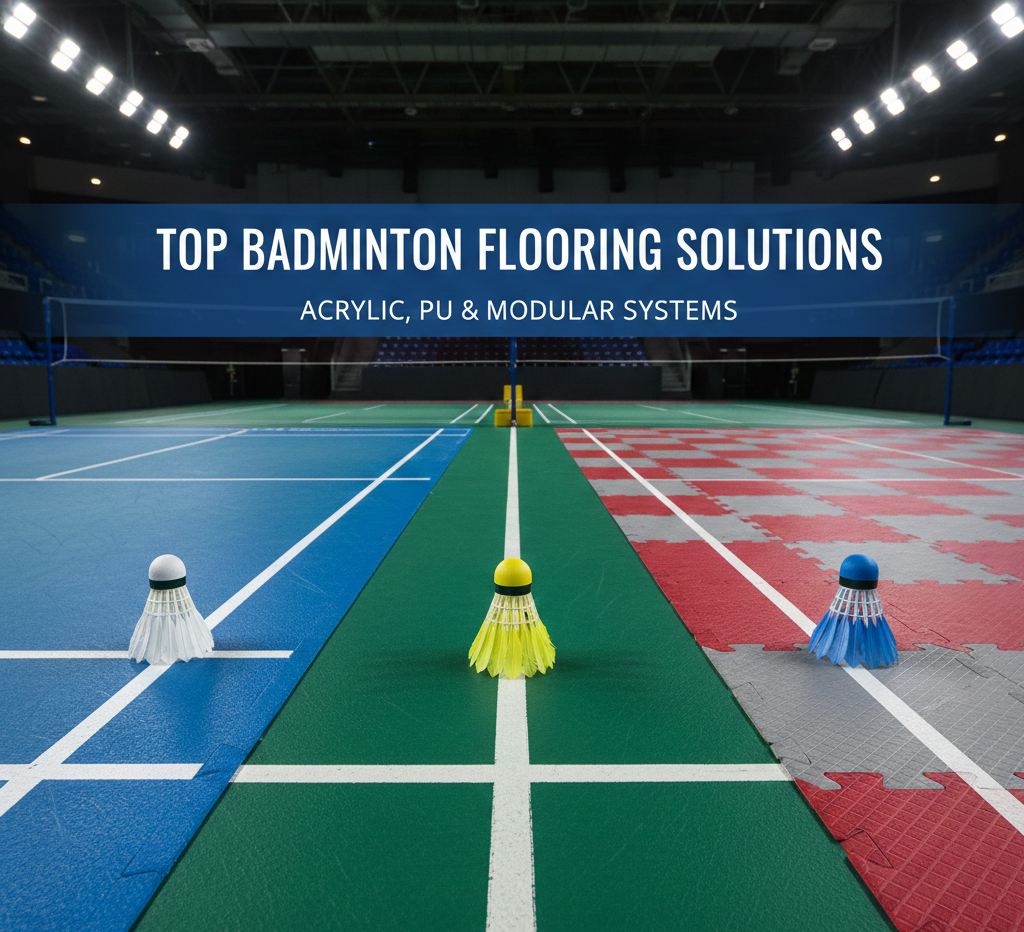
Badminton is a sport that demands agility, precision, and speed. Every movement—from quick lateral steps to high jumps—relies on a stable, resilient, and safe playing surface. While players focus on perfecting their skills, the flooring beneath their feet plays an equally crucial role in performance, safety, and durability. With the evolution of sports facilities, traditional wooden courts are no longer the only choice. Today, acrylic, polyurethane (PU), and modular flooring systems have emerged as leading options for professional, recreational, and multi-purpose badminton courts.
Understanding these flooring solutions helps facility owners, sports academies, and stadium managers make informed decisions for long-lasting, high-performance courts.
Why Choosing the Right Flooring Matters
The right badminton flooring provides multiple benefits:
-
Player Safety: Courts absorb shocks, reducing the risk of joint injuries, sprains, or slips.
-
Performance Optimization: Proper traction allows players to pivot quickly, maintain balance, and execute fast footwork without losing control.
-
Durability: Premium flooring withstands heavy usage and environmental wear, ensuring longevity.
-
Maintenance Efficiency: Low-maintenance surfaces save cost, labor, and time for facility managers.
Professional-grade flooring is more than just a surface; it is an investment in player experience, safety, and the reputation of your sports facility.
Acrylic Flooring for Badminton Courts
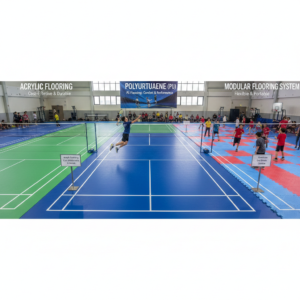
Acrylic flooring is a synthetic solution widely used in indoor and outdoor sports courts. Made from multiple layers of acrylic resin, it provides a firm yet slightly cushioned surface suitable for fast-paced sports like badminton.
Key Features of Acrylic Flooring:
-
Shock Absorption: The slight cushioning reduces stress on joints, ideal for recreational and semi-professional players.
-
Uniform Bounce: Ensures consistent shuttle behavior, essential for competitive play.
-
Durability: Resistant to wear, scratches, and UV exposure, making it suitable for both indoor and outdoor courts.
-
Easy Maintenance: Acrylic surfaces are simple to clean and maintain, requiring occasional resurfacing.
Advantages:
-
Cost-effective compared to hardwood or PU floors
-
Can be customized in various colors and finishes
-
Suitable for multi-purpose courts
Considerations:
-
Less cushioning compared to PU floors, which may not suit high-intensity professional play
-
Requires proper subfloor preparation to ensure smooth installation
Acrylic floors are ideal for schools, community sports centers, and outdoor recreational courts, offering an affordable and visually appealing solution with reliable performance.
Polyurethane (PU) Flooring for Badminton Courts
Polyurethane flooring is a synthetic, elastic solution designed to provide superior shock absorption and comfort. PU surfaces are often chosen for professional indoor badminton courts due to their durability and performance consistency.
Key Features of PU Flooring:
-
Excellent Shock Absorption: Reduces fatigue and prevents injuries in high-intensity gameplay.
-
Seamless Surface: Ensures smooth movement and prevents accidental trips or slips.
-
High Durability: Resistant to heavy foot traffic, abrasions, and chemicals, making it ideal for professional arenas.
-
Versatile Design: Available in multiple thicknesses and finishes to suit various facility requirements.
Advantages:
-
Protects players’ joints and minimizes injury risk
-
Durable under heavy usage and ideal for competitive training
-
Low maintenance and easy to clean
-
Can be combined with line markings for other sports, creating multi-purpose courts
Considerations:
-
Slightly higher initial cost compared to acrylic or modular solutions
-
Requires professional installation to ensure optimal performance
PU flooring is perfect for professional badminton academies, indoor stadiums, and high-performance training centers, offering a combination of safety, comfort, and longevity.
Modular Flooring Systems for Badminton
Modular flooring systems, also known as interlocking sports tiles, are gaining popularity for their flexibility, portability, and ease of installation. These are made from durable synthetic materials like PVC or polypropylene and are designed to snap together seamlessly.
Key Features of Modular Flooring:
-
Portability: Can be installed quickly and moved if needed, making them suitable for temporary or multi-purpose spaces.
-
Customizable Layouts: Tiles can be arranged according to court dimensions or multi-sport requirements.
-
Durable Surface: Resistant to wear, scratches, and moisture.
-
Shock Absorption: Modern interlocking tiles offer cushioned surfaces to protect players’ joints.
Advantages:
-
Quick installation without professional machinery
-
Easy to repair—individual tiles can be replaced if damaged
-
Lightweight and portable for event setups
-
Affordable and flexible for schools, clubs, and community centers
Considerations:
-
Less natural feel compared to PU or wooden courts
-
Requires precise installation to prevent uneven surfaces
-
Best suited for recreational or semi-professional use rather than elite competitive play
Modular systems are ideal for community sports centers, schools, temporary event courts, or multi-purpose sports halls, providing a convenient, budget-friendly, and safe option.
Comparing Acrylic, PU, and Modular Flooring
To make an informed decision, understanding the differences between these flooring types is essential:
| Feature | Acrylic Flooring | PU Flooring | Modular Flooring |
|---|---|---|---|
| Shock Absorption | Moderate | High | Moderate to High |
| Durability | Moderate | High | Moderate |
| Maintenance | Low | Low | Very Low |
| Installation Complexity | Medium | High | Low |
| Cost | Affordable | High | Moderate |
| Professional Play Suitability | Semi-professional | Professional | Recreational/Semi |
| Customization | Color & Design | Thickness & Finish | Layout & Design |
Each flooring type has its strengths. Acrylic is cost-effective and versatile, PU is ideal for high-performance professional courts, and modular systems offer flexibility and portability. Facility owners should evaluate their usage intensity, budget, and long-term goals before choosing the right solution.
Benefits of Professional Flooring Installation
Choosing the right flooring material is only part of the equation. Professional installation ensures:
-
Accurate court dimensions for singles and doubles play
-
Smooth, level surfaces with consistent shock absorption
-
Proper alignment of lines and markings for competitive standards
-
Longer lifespan and minimal maintenance needs
Professional suppliers also provide guidance on cleaning routines, periodic resurfacing, and safety compliance, extending the life of the court and keeping players safe.
Safety Considerations
Safety should be the top priority when selecting badminton flooring:
-
Slip Resistance: Floors should provide sufficient grip without being too sticky.
-
Shock Absorption: Prevents overuse injuries and reduces strain on knees and ankles.
-
Even Surface: Avoids trips, falls, and shuttle inconsistencies.
-
Durable Materials: Prevents cracks, uneven wear, and hazardous edges.
Professional flooring solutions balance performance with safety, protecting players while enhancing gameplay.
Conclusion
The world of badminton flooring has evolved far beyond traditional wood. Acrylic, PU, and modular flooring systems now offer tailored solutions for recreational, professional, and multi-purpose courts.
-
Acrylic floors provide an affordable, visually appealing, and moderately cushioned surface, ideal for schools and community centers.
-
PU floors deliver high shock absorption, durability, and professional-level performance for training academies and indoor stadiums.
-
Modular systems offer flexibility, portability, and ease of installation, making them perfect for temporary setups or multi-sport halls.
Choosing the right flooring solution involves considering usage intensity, budget, safety, and performance standards. Coupled with professional installation and maintenance support, the right badminton court flooring ensures player safety, enhances performance, and provides long-term value.
Investing in high-quality flooring is not just a choice; it is a commitment to the players, the sport, and the longevity of your facility. Whether you aim for professional tournaments or recreational play, acrylic, PU, and modular systems provide versatile, durable, and safe options to elevate every game.
(FAQ) – Top Badminton Flooring Solutions
1. What types of flooring are suitable for badminton courts?
Badminton courts require flooring that offers excellent shock absorption, grip, and durability. The most common options include:
-
Vinyl flooring – Smooth, durable, and easy to maintain.
-
PU (Polyurethane) flooring – Provides high cushioning and anti-slip surface.
-
Wooden flooring (Maple or Oak) – Preferred for professional indoor courts for better bounce and feel.
-
Modular interlocking mats – Ideal for temporary or multi-purpose courts.
2. How do I choose the best badminton flooring solution for my facility?
Consider the following factors:
-
Usage frequency – Professional vs. recreational use.
-
Budget – Vinyl and PU flooring are cost-effective, while wooden flooring is premium.
-
Maintenance – Vinyl and PU require minimal upkeep, wooden floors need periodic polishing.
-
Safety & Comfort – Cushioning and slip-resistance are critical to prevent injuries.
3. What is the cost of badminton court flooring per sq. ft?
The cost varies depending on material and quality:
-
Vinyl flooring: ₹150–₹300 per sq. ft
-
PU flooring: ₹250–₹400 per sq. ft
-
Wooden flooring: ₹400–₹700 per sq. ft
-
Modular mats: ₹100–₹250 per sq. ft
(Prices are indicative and may vary by region and installation complexity.)
4. How long does it take to install a badminton court floor?
-
Wooden flooring: 10–15 days
-
PU or Vinyl flooring: 5–7 days
-
Modular mats: 1–2 days
The timeline depends on the court size, preparation, and type of flooring selected.
5. How do I maintain badminton court flooring?
-
Regular sweeping and mopping with a damp cloth.
-
Avoid using harsh chemicals or excessive water.
-
For wooden floors, periodic polishing and varnishing ensures durability.
-
Inspect for wear and tear to replace damaged tiles or mats immediately.
6. Can these flooring solutions be installed outdoors?
-
PU and modular mats are suitable for outdoor use as they resist moisture and UV damage.
-
Wooden flooring is not recommended outdoors due to exposure to weather elements.
7. Do you provide custom court marking and layouts?
Yes. Professional flooring services include line marking according to Badminton World Federation (BWF) standards, ensuring precise dimensions for competitive play.
8. How durable are badminton flooring solutions?
-
Vinyl and PU: 5–10 years with proper maintenance
-
Wooden floors: 10–15 years for professional indoor use
-
Modular mats: 3–7 years, depending on usage intensity
9. Can old floors be repaired or resurfaced?
Yes. Many flooring solutions allow repair, resurfacing, or repainting, which extends the life of the court and maintains safety standards.
10. Do you offer complete installation services?
Absolutely. Top badminton flooring providers offer end-to-end services including:
-
Site assessment
-
Material selection
-
Installation and court marking
-
Maintenance guidance