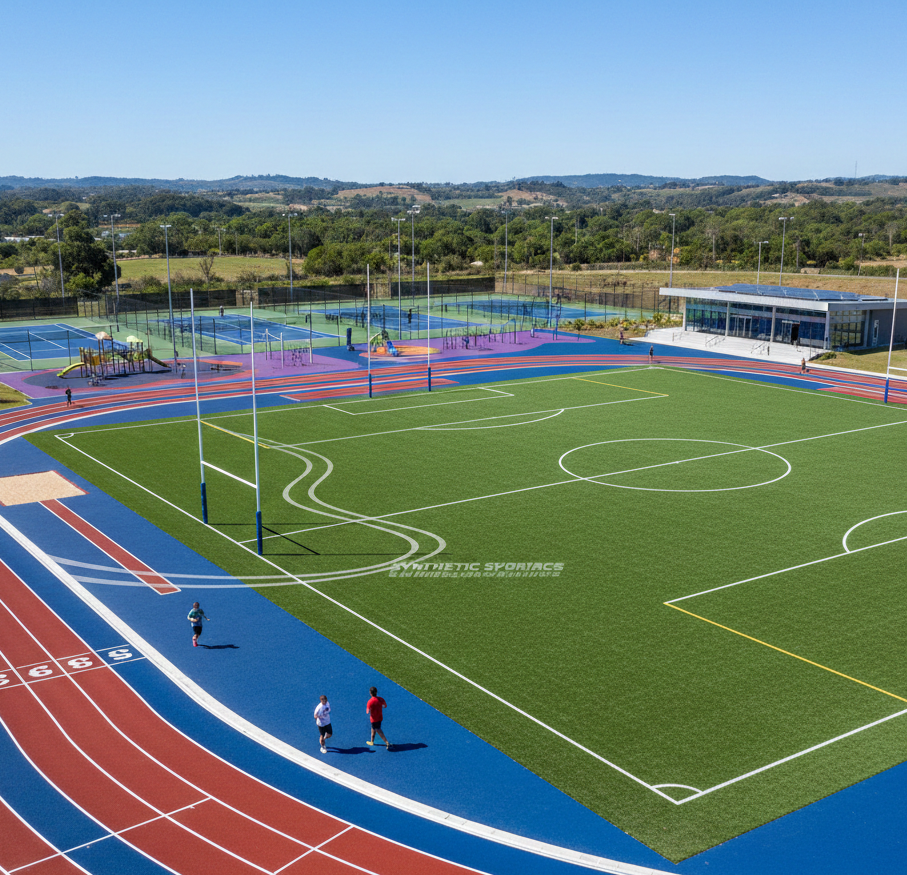
Synthetic sports surfaces have revolutionized the way sports facilities are designed, built, and maintained. From professional stadiums and sports academies to schools, parks, and residential courts, synthetic surfaces offer durability, safety, and performance that traditional natural surfaces often cannot match. This in-depth guide explores everything you need to know about synthetic sports surfaces, including types, benefits, applications, installation process, costs, maintenance, and long-term value.
1. What Are Synthetic Sports Surfaces?
Synthetic sports surfaces are engineered flooring systems made from man-made materials such as acrylic, polyurethane, PVC, rubber, and polypropylene. These surfaces are specifically designed to support athletic activities by providing controlled traction, shock absorption, consistent ball bounce, and resistance to weather and wear.
Unlike natural grass or clay, synthetic sports surfaces deliver predictable performance year-round with significantly lower maintenance requirements.
2. Why Synthetic Sports Surfaces Are in High Demand
The global shift toward synthetic sports surfaces is driven by several practical advantages:
- All-weather usability
- Long service life
- Reduced maintenance costs
- Improved player safety
- Consistent performance standards
- Customizable design and colors
These benefits make synthetic surfaces ideal for facilities with high usage and limited downtime.
3. Types of Synthetic Sports Surfaces
Different sports require different surface characteristics. Modern synthetic sports flooring systems are engineered to meet specific performance needs.
Acrylic Sports Surfaces
Acrylic surfaces are one of the most widely used synthetic sports surfaces, especially for outdoor courts.
Key features:
- Slip-resistant textured finish
- UV and weather resistance
- Cost-effective installation
- Easy resurfacing
Common applications:
- Basketball courts
- Tennis courts
- Pickleball courts
- Multi-sport outdoor courts
Polyurethane (PU) Sports Surfaces
Polyurethane sports flooring is a premium synthetic system commonly used in professional facilities.
Key features:
- Seamless finish
- Excellent shock absorption
- High elasticity
- Long-term durability
Common applications:
- Indoor sports halls
- Athletic tracks
- Multipurpose arenas
PVC and Vinyl Sports Flooring
PVC and vinyl synthetic sports surfaces are popular for indoor applications.
Key features:
- Cushioned underlayers
- Moisture resistance
- Easy cleaning
- Cost-effective alternative to hardwood
Common applications:
- Badminton courts
- Volleyball courts
- School gymnasiums
- Fitness studios
Rubber Sports Surfaces
Rubber flooring systems are designed for high-impact activities.
Key features:
- Superior shock absorption
- Anti-slip texture
- Noise reduction
- Long service life
Common applications:
- Gyms and fitness centers
- Cross-training areas
- Playgrounds
- Indoor and outdoor training zones
Synthetic Turf Systems
Synthetic turf replicates the look and feel of natural grass while offering improved durability.
Key features:
- All-weather performance
- Minimal maintenance
- High drainage capacity
- Consistent playing conditions
Common applications:
- Football fields
- Cricket practice pitches
- Multi-sport fields
Modular Interlocking Sports Tiles
Interlocking synthetic tiles are among the most versatile sports surface solutions.
Key features:
- Fast installation
- Excellent drainage
- Shock-absorbing design
- Easy replacement of damaged tiles
Common applications:
- Outdoor basketball courts
- Futsal courts
- School playgrounds
- Recreational sports areas
4. Advantages of Synthetic Sports Surfaces
Synthetic sports surfaces provide measurable benefits for players, facility owners, and operators.
Player Safety and Comfort
- Reduced impact on joints
- Controlled slip resistance
- Uniform playing surface
Performance Consistency
- Predictable ball bounce
- Reliable traction
- Stable surface under all conditions
Durability and Longevity
- Resistant to cracking, fading, and wear
- Designed for high foot traffic
- Long lifespan with minimal repairs
Cost Efficiency
- Reduced water and chemical usage
- Fewer repairs and downtime
5. Applications of Synthetic Sports Surfaces
Synthetic sports flooring is suitable for a wide range of environments:
- Schools and colleges
- Sports academies
- Stadiums and arenas
- Community parks
- Residential sports courts
- Commercial fitness centers
6. Installation Process of Synthetic Sports Surfaces
Professional installation is critical for optimal performance.
Site Assessment
- Surface measurement
- Soil and base evaluation
- Drainage planning
Base Preparation
- Excavation and leveling
- Concrete or asphalt base construction
- Moisture barrier installation (indoor floors)
Surface Installation
- Laying base layers
- Installing synthetic surface material
- Applying shock-absorption systems
Finishing and Marking
- Line marking for sports
- Texture application
- Final quality inspection
7. Cost Factors for Synthetic Sports Surfaces
The cost of synthetic sports surfaces depends on:
- Type of synthetic material
- Area size
- Indoor or outdoor installation
- Sub-base condition
- Custom design requirements
Cost categories:
- Entry-level: Acrylic and basic modular tiles
- Mid-range: PVC and rubber flooring
- Premium: Polyurethane systems and synthetic turf
8. Maintenance and Care
designed for low maintenance.
- Regular sweeping or vacuuming
- Occasional washing with water
- Inspection for surface damage
- Timely repairs to prevent wear
Proper maintenance ensures consistent performance and extends surface lifespan.
9. Safety Standards and Quality Compliance
High-quality meet international safety standards.
- Shock absorption ratings
- Slip resistance performance
- Load-bearing strength
- Fire resistance for indoor applications
Certified installers ensure surfaces meet sport-specific regulations.
10. Sustainability and Eco-Friendly Benefits
Modern synthetic surfaces support sustainability goals:
- Recycled raw materials
- Reduced water consumption
- Long lifespan reducing material waste
- Low-VOC adhesives and coatings
Eco-friendly synthetic surfaces combine performance with environmental responsibility.
Conclusion
Synthetic sports surfaces are the future of modern infrastructure. Offering superior durability, safety, and consistent performance, these engineered systems are ideal for indoor and outdoor sports facilities of all sizes.
By choosing the right type of synthetic sports surface and ensuring professional installation, facility owners can create safe, high-performance environments that serve athletes and communities for years. With low maintenance demands and strong long-term value,remain one of the smartest investments in development today.