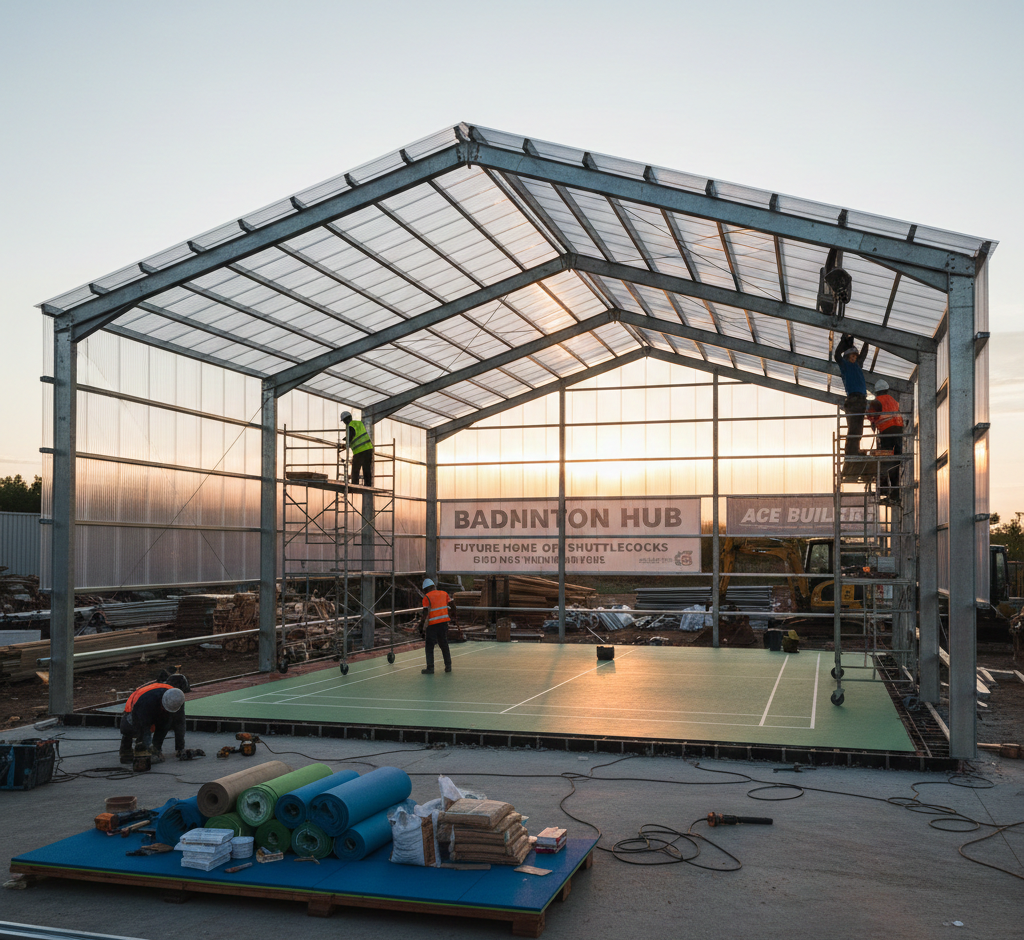
Introduction
Badminton has become one of the most popular sports worldwide, appreciated for its agility, reflex, and recreational value. Whether for professional training or community engagement, constructing a well-designed badminton court is crucial for ensuring optimum performance and safety. Among the essential aspects of building a functional badminton facility is the shed structure, which not only provides shelter but also creates an environment conducive to playing and training. The construction of a badminton court shed involves meticulous planning, precise engineering, and careful selection of materials to ensure durability, safety, and comfort.
Importance of a Badminton Court Shed
The shed over a badminton court plays multiple roles. First, it protects players from harsh weather conditions such as rain, excessive sunlight, and wind, ensuring uninterrupted gameplay. Second, it contributes to the longevity of the court surface by preventing exposure to moisture and debris. Third, a well-constructed shed enhances the aesthetic appeal of the facility, attracting players, clubs, and recreational users. Moreover, a shaded court can improve visibility by minimizing glare, creating an even distribution of natural light, and supporting the installation of artificial lighting for evening matches. Therefore, investing in a robust and thoughtfully designed shed is fundamental to the overall success of a badminton facility.
Planning and Design Considerations
Constructing a badminton court shed requires thorough planning and adherence to specific design guidelines. The first step is to determine the size and dimensions of the court and the surrounding area. Standard badminton court dimensions measure 13.4 meters in length and 6.1 meters in width for doubles, with a recommended minimum clearance height of 7.5 meters for indoor play. The shed must accommodate these dimensions comfortably, leaving additional space for movement around the court and safety zones.
The design should also consider the type of structure to be used. Options include steel-framed sheds, aluminum structures, wooden frameworks, or hybrid materials that combine strength and lightweight characteristics. The choice of material affects durability, maintenance requirements, and overall cost. Steel frames, for example, are highly durable and resistant to weather, whereas wooden frameworks offer aesthetic appeal but require periodic treatment against moisture and pests.
Another essential consideration is ventilation and lighting. Proper airflow ensures that players remain comfortable during extended gameplay, while strategically positioned lighting reduces shadows and enhances visibility. The roof design must facilitate water drainage to prevent water accumulation and potential structural damage.
Material Selection
Material selection is a critical factor in the longevity and safety of a badminton court shed. Roofing materials may include galvanized sheets, polycarbonate panels, or insulated metal panels. Galvanized sheets are durable and cost-effective, while polycarbonate panels allow natural light penetration, reducing dependency on artificial lighting. Insulated metal panels provide both protection from weather extremes and energy efficiency.
The framework material must provide stability and resist corrosion. Mild steel or galvanized steel is preferred due to its high tensile strength and long-term durability. Wooden frameworks, although visually appealing, should be treated to resist termites, rot, and moisture damage. Fasteners, bolts, and joints should be corrosion-resistant to prevent weakening over time.
The flooring surface beneath the shed is equally important. Although the shed primarily protects the playing area, the court surface must comply with badminton standards. Hardwood, synthetic vinyl, or modular interlocking tiles are commonly used surfaces. These materials provide optimal grip, shock absorption, and low maintenance while complementing the protective function of the shed.
Construction Process
The construction of a badminton court shed involves several sequential steps to ensure structural integrity and safety:
-
Site Preparation: The area must be cleared of debris, leveled, and graded to ensure proper drainage. Soil testing may be conducted to determine the stability and suitability of the ground for supporting the shed structure.
-
Foundation Laying: A strong foundation is essential for the stability of the shed. Concrete footings or piers are typically used to support steel or wooden columns. The foundation must be designed to withstand wind loads, seismic activity, and the weight of the shed and roofing materials.
-
Framework Erection: Once the foundation is ready, the structural framework is erected. Columns, beams, and trusses are assembled according to the engineering design. Precision is critical to maintain alignment and prevent future structural issues.
-
Roof Installation: The roofing sheets or panels are installed over the framework. Proper insulation and waterproofing measures are applied to protect the court from moisture, heat, and cold. Gutters and drainage systems are integrated to channel rainwater away from the playing area.
-
Sidewall and Net Installation: Depending on the design, sidewalls or partial walls may be added for additional protection against wind and dust. The badminton net system is installed, ensuring compliance with standard height and tension requirements.
-
Lighting and Ventilation: Artificial lighting fixtures are installed for evening play, with energy-efficient LED lights often preferred. Ventilation openings or exhaust fans are added to maintain airflow and reduce heat buildup inside the shed.
-
Final Inspection and Finishing: The structure is inspected for alignment, stability, and safety. Paint or protective coating may be applied to metal or wooden surfaces to enhance durability and aesthetics. The court is cleaned and prepared for use.
Safety and Maintenance
Safety is paramount in badminton court shed construction. The structure must withstand environmental stressors such as strong winds, heavy rain, and seismic activity. Regular maintenance ensures that the shed remains functional and safe over the years. This includes checking for rust or corrosion on metal components, inspecting wooden elements for rot or pests, cleaning roofing panels, and ensuring the net system is secure. A well-maintained shed minimizes accidents and contributes to a positive playing experience for athletes of all ages.
Cost Considerations
The cost of constructing a badminton court shed depends on various factors, including materials, size, design complexity, and labor. Steel-framed structures tend to be more expensive initially but offer long-term durability with minimal maintenance. Wooden or hybrid sheds may have lower upfront costs but require ongoing care. Budget planning should also account for lighting, ventilation, foundation work, and landscaping around the court. Investing in high-quality materials and professional construction ultimately results in a safer, more enjoyable, and long-lasting facility.
Conclusion
Building a badminton court shed is more than just erecting a roof over a playing surface. It requires careful planning, strategic design, and quality materials to create a safe, durable, and comfortable environment for players. A well-constructed shed enhances the functionality of the badminton court, protects the surface from environmental damage, and ensures a pleasurable experience for athletes and enthusiasts alike. By prioritizing structural integrity, lighting, ventilation, and aesthetics, a badminton court shed can become a valuable addition to sports facilities, educational institutions, and recreational centers, promoting health, fitness, and community engagement for years to come.