Introduction
-
Importance of high-quality turf for cricket grounds.
-
Differences between amateur and professional cricket grounds.
-
Benefits of properly installed turf:
-
Safety for players
-
Consistent bounce and ball behavior
-
Aesthetic appeal
-
-
Overview of the installation process and expected timeline.
2. Understanding Cricket Turf
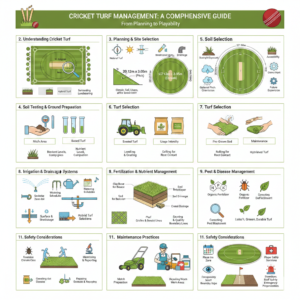
-
Definition and components of a cricket turf ground:
-
Outfield turf
-
Pitch area
-
Surrounding landscaping
-
-
Types of turf:
-
Natural turf vs hybrid turf
-
Common grasses: Bermuda, Ryegrass, Couch grass
-
-
How climate, soil, and usage affect grass selection.
-
The role of turf in cricket playability and player performance.
3. Planning and Site Selection
-
Choosing a location for a cricket ground:
-
Sunlight exposure
-
Drainage and slope considerations
-
Soil type and quality
-
Accessibility and space
-
-
Measurement and layout:
-
Standard cricket ground dimensions
-
Pitch orientation for optimal sunlight
-
-
Environmental considerations:
-
Rainfall and humidity
-
Wind and microclimates
-
-
Planning for future expansion and maintenance access.
4. Soil Testing and Ground Preparation
-
Importance of soil testing:
-
pH, nutrient levels, texture, and compaction
-
-
Soil amendments:
-
Sand, clay, and organic matter
-
Fertilization planning
-
-
Clearing existing vegetation and debris.
-
Levelling and grading:
-
Slope management for drainage
-
Compaction techniques
-
-
Preparing the base for turf installation.
5. Turf Selection
-
Choosing the right grass species based on:
-
Climate zone
-
Usage intensity (matches vs practice)
-
Maintenance capabilities
-
-
Seeded turf vs pre-grown sod:
-
Pros and cons
-
Time to establish
-
-
Disease-resistant and drought-tolerant varieties.
-
Sourcing high-quality turf suppliers.
6. Turf Installation Techniques
Seeding
-
Preparing seedbed
-
Optimal seeding rates and patterns
-
Mulching and irrigation schedules
-
Initial care for germination
Sod Installation
-
Delivery and storage of sod rolls
-
Laying techniques:
-
Alignment and staggering seams
-
Rolling for root contact
-
-
Watering schedules and initial fertilization
Hybrid and Advanced Turf Solutions
-
Hybrid turf installation methods
-
Advantages and disadvantages
-
Maintenance considerations
7. Pitch Construction
-
Standard cricket pitch dimensions
-
Soil composition and layers:
-
Clay base for bounce
-
Sand top layer for drainage
-
-
Turf preparation for the pitch:
-
Grass type and density
-
-
Rolling techniques for consistency
-
Marking creases and boundary lines
-
Techniques for match-ready pitch preparation
8. Irrigation and Drainage Systems
-
Importance of consistent watering
-
Types of irrigation systems:
-
Sprinklers, drip systems, underground irrigation
-
-
Watering schedules for different soil types
-
Drainage planning:
-
Surface and subsurface drainage solutions
-
Avoiding waterlogging and turf damage
-
9. Fertilization and Nutrient Management
-
Essential nutrients for cricket turf:
-
Nitrogen, Phosphorus, Potassium
-
-
Organic vs chemical fertilizers
-
Fertilization schedules by season and grass type
-
Correcting nutrient deficiencies based on soil tests
-
Tips for lush, green, and durable turf
10. Pest and Disease Management
-
Common pests affecting turf cricket grounds
-
Fungal and bacterial diseases
-
Preventive and curative measures
-
Integrated pest management strategies
-
Monitoring and reporting
11. Maintenance Practices
-
Mowing schedules and best practices
-
Rolling for pitch and outfield
-
Aeration and top-dressing
-
Seasonal care:
-
Summer, monsoon, winter
-
-
Repairing worn areas
-
Preparing the ground for matches
12. Safety Considerations
-
Ensuring player safety:
-
Even bounce and traction
-
Soft edges near boundaries
-
-
Maintenance staff safety:
-
Machinery handling
-
Chemicals and fertilizers
-
-
Emergency preparedness for ground conditions
13. Cost Estimation and Budgeting
-
Material costs:
-
Soil, seeds, sod, irrigation
-
-
Labor and machinery costs
-
Long-term maintenance budgeting
-
Return on investment for clubs, schools, and stadiums
14. Challenges and Solutions
-
Common installation challenges:
-
Uneven turf, soil compaction
-
Drainage and erosion issues
-
-
Climate-related issues:
-
Drought, excessive rainfall, temperature extremes
-
-
Long-term maintenance pitfalls
-
Case studies of successful cricket grounds
15. Technological Innovations
-
Hybrid grass and reinforced turf
-
Smart irrigation systems
-
Soil sensors for monitoring
-
Drones and AI for ground monitoring
16. Conclusion
-
Recap of critical steps for turf cricket ground installation
-
Importance of planning, installation quality, and maintenance
-
Long-term benefits for players, clubs, and spectators
FAQ: Turf Cricket Ground Installation
1. What is turf cricket ground installation?
Turf cricket ground installation is the process of creating a natural grass cricket pitch and outfield that meets professional standards. It involves soil preparation, turf selection, leveling, and ongoing maintenance to ensure optimal playing conditions.
2. What are the key steps in installing a turf cricket ground?
The main steps include:
Site preparation: clearing, leveling, and compacting the soil
Soil treatment: ensuring proper drainage and fertility
Turf laying: using natural grass suitable for cricket
Pitch preparation: creating a flat, firm, and even wicket
Maintenance setup: irrigation, mowing, and rolling equipment
3. How long does it take to install a turf cricket ground?
Installation typically takes 6–12 weeks, depending on ground size, soil conditions, and turf type. This includes soil preparation, turf establishment, and initial growth before the ground is ready for play.
4. What types of grass are best for turf cricket grounds?
Common grass varieties for cricket grounds include:
Bermuda grass – durable, heat-tolerant, and fast-growing
Ryegrass – ideal for cool climates, provides smooth bounce
Couch grass – resistant to wear and tear, maintains a firm surface
5. What factors affect the cost of turf cricket ground installation?
Costs depend on:
Ground size and layout
Type of turf and soil treatment
Drainage and irrigation systems
Labor and maintenance equipment
Budget planning ensures a balance between quality and affordability.