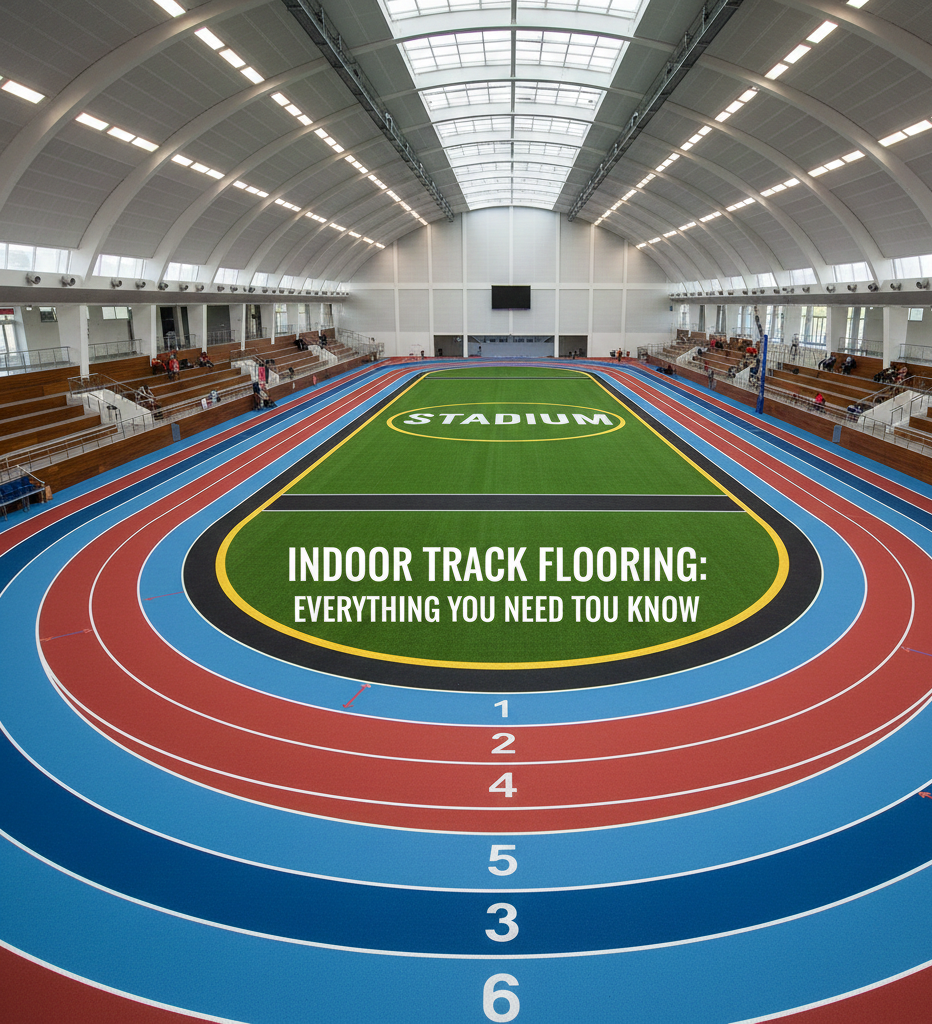
Indoor tracks are an essential feature for gyms, athletic centers, schools, and sports complexes. They provide a safe, controlled, and consistent environment for running, walking, and training, regardless of weather conditions. But one key element that often gets overlooked is the flooring. The right indoor track flooring not only ensures safety and durability but also enhances performance and reduces the risk of injuries.
In this blog, we’ll explore the types of indoor track flooring, the benefits, installation considerations, and tips for maintenance.
Why Indoor Track Flooring Matters
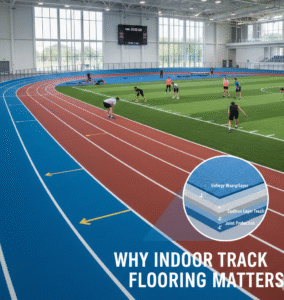
Indoor track flooring is more than just a surface to run on. Its quality and composition affect the following:
-
Performance: The right flooring allows for proper traction and energy return, which improves speed and efficiency.
-
Safety: Indoor track surfaces help absorb impact, reducing the risk of joint strain, sprains, and other injuries.
-
Durability: High-quality flooring withstands heavy foot traffic, running spikes, and constant use.
-
Aesthetics: Modern indoor tracks with attractive flooring design enhance the overall look of sports facilities.
The flooring must balance durability with comfort. Hard surfaces may last longer but increase the risk of injury, while softer surfaces provide cushioning but may wear faster.
Common Types of Indoor Track Flooring
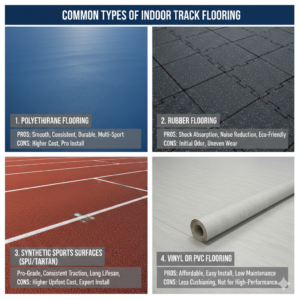
Indoor track flooring comes in various materials, each designed for specific needs. Here are the most common types:
1. Polyurethane Flooring
Polyurethane is a popular choice for professional and recreational indoor tracks. It provides excellent shock absorption, reducing the impact on knees and joints. The material is seamless, easy to clean, and available in different colors and textures.
Pros:
-
Smooth, consistent surface
-
High durability
-
Resistant to wear and tear
-
Suitable for multi-sport use
Cons:
-
Higher installation cost
-
Requires professional installation
2. Rubber Flooring
Rubber flooring is another common choice for indoor tracks. It is known for its slip-resistant surface and cushioning, making it ideal for high-intensity workouts and running. Rubber flooring often comes in interlocking tiles or rolls, making it versatile for different track designs.
Pros:
-
Excellent shock absorption
-
Noise reduction
-
Eco-friendly options available
-
Easy to maintain
Cons:
-
May have a strong odor initially
-
Can wear unevenly with heavy usage
3. Synthetic Sports Surfaces (SPU, Tartan, or EPDM Tracks)
Synthetic surfaces like SPU (synthetic polyurethane) or Tartan tracks are widely used in professional indoor sports arenas. They are durable, weather-resistant, and provide a high level of traction. EPDM (ethylene propylene diene monomer) granules are often used to improve grip and cushioning.
Pros:
-
Professional-grade performance
-
Consistent traction
-
Long lifespan
-
Low maintenance
Cons:
-
Higher upfront cost
-
Requires expert installation
4. Vinyl or PVC Flooring
Some indoor tracks use vinyl or PVC flooring, especially in multi-purpose gyms or schools. While not as high-performing as polyurethane or rubber, it provides a smooth, inexpensive, and easy-to-clean surface suitable for casual runners.
Pros:
-
Affordable
-
Easy installation
-
Low maintenance
Cons:
-
Less cushioning and impact absorption
-
Not ideal for high-performance athletes
Key Considerations When Choosing Indoor Track Flooring
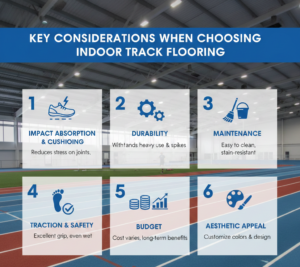
Choosing the right indoor track flooring involves more than just picking a material. Here are the factors to consider:
1. Impact Absorption and Cushioning
Running on hard surfaces for long periods can lead to injuries. High-quality indoor track flooring should provide shock absorption to reduce stress on the joints. Polyurethane and rubber are top choices for cushioning.
2. Durability
Indoor tracks are high-traffic areas. The flooring must withstand repeated use, running spikes, and heavy foot traffic without showing signs of wear.
3. Maintenance
The flooring should be easy to clean and resistant to staining. Surfaces like polyurethane and synthetic tracks are low-maintenance and highly durable, making them ideal for commercial use.
4. Traction and Safety
Slips and falls are a major concern in indoor sports facilities. Track flooring should provide excellent grip, even when wet, to prevent accidents.
5. Budget
Costs vary depending on material, installation complexity, and durability. Vinyl and basic rubber tracks are budget-friendly, while professional synthetic tracks or polyurethane surfaces may cost more upfront but offer long-term benefits.
6. Aesthetic Appeal
Indoor track flooring comes in a variety of colors and designs. Facilities can customize the surface to match their branding, logo, or overall interior design.
Benefits of Installing Indoor Track Flooring
Installing high-quality indoor track flooring provides numerous advantages:
1. Enhanced Athletic Performance
The right flooring improves grip, traction, and energy return, enabling athletes to perform better and run faster.
2. Reduced Injury Risk
Shock-absorbing surfaces protect joints, ligaments, and muscles, minimizing the risk of injuries during training.
3. All-Weather Training
Indoor tracks allow athletes to train year-round, regardless of rain, heat, or cold weather, ensuring consistency in workouts.
4. Versatility
Modern indoor tracks often serve multiple purposes, accommodating running, jogging, walking, and even fitness classes, thanks to their durable flooring.
5. Long-Term Cost Savings
Investing in high-quality flooring reduces long-term maintenance costs and replacement needs, making it cost-effective over time.
Installation Tips for Indoor Track Flooring
Proper installation is crucial for performance and longevity. Here are some tips:
-
Hire Professionals: Expert installers ensure proper surface preparation, leveling, and seamless finishing.
-
Subfloor Preparation: The base should be smooth, clean, and dry to prevent uneven wear or damage.
-
Choose Appropriate Thickness: High-traffic tracks require thicker materials to withstand repeated use.
-
Regular Maintenance: Follow manufacturer guidelines for cleaning and inspection to extend the life of your flooring.
Maintaining Your Indoor Track Flooring
Maintenance is key to longevity. Here’s what to do:
-
Regular Cleaning: Sweep and mop to remove dust, dirt, and debris.
-
Avoid Sharp Objects: Running spikes or heavy equipment can damage the surface.
-
Periodic Inspection: Check for cracks, tears, or worn spots, and repair promptly.
-
Temperature Control: Keep indoor humidity and temperature stable to prevent material expansion or shrinkage.
Conclusion
Indoor track flooring is a critical component of any indoor sports facility. Choosing the right material, installing it correctly, and maintaining it properly ensures athlete safety, performance, and long-term durability. From polyurethane and rubber to synthetic tracks and vinyl, there are options for every budget and requirement.
Whether you’re building a professional athletic arena, a school gym, or a fitness center, investing in high-quality indoor track flooring pays off in performance, safety, and satisfaction. The right flooring isn’t just a surface—it’s a foundation for athletes to run, train, and achieve their best.