
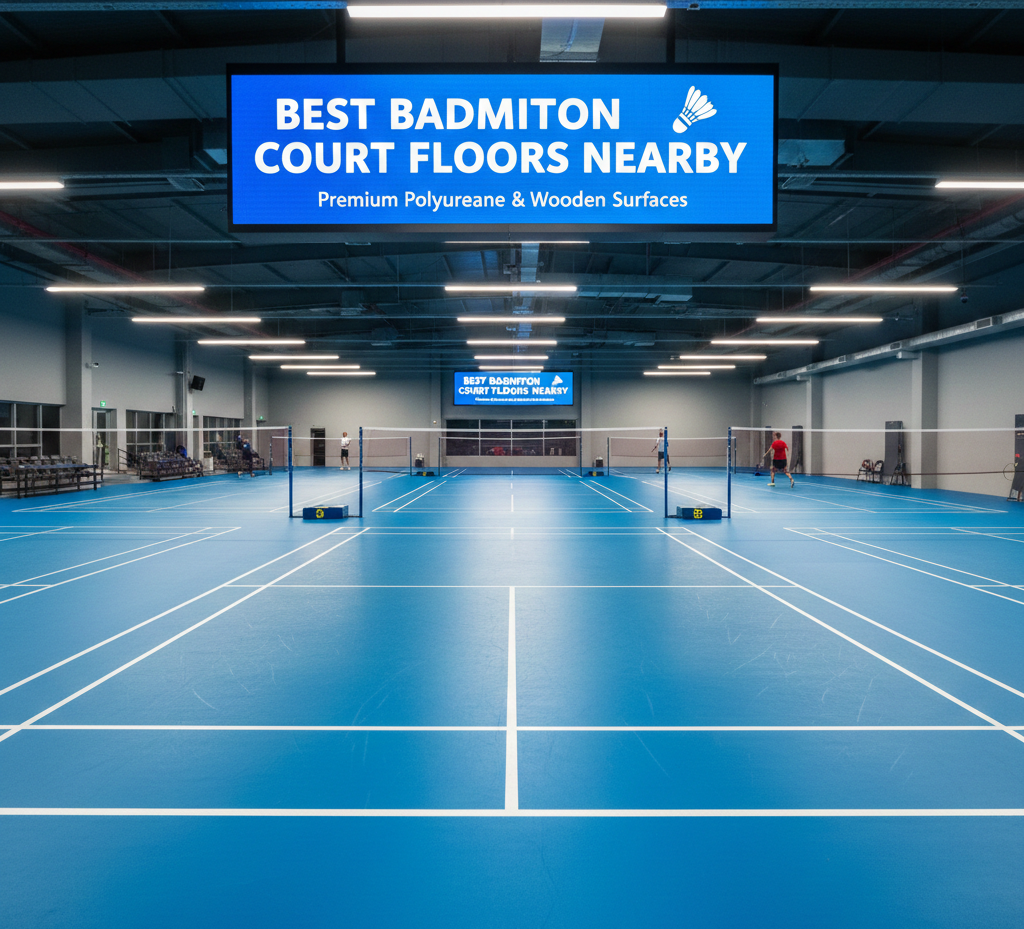
Looking for the best badminton court floors nearby? Whether you’re a club manager, school administrator, coach, or a serious player scouting a new venue, the right playing surface makes all the difference. From traction and shock absorption to weather resistance and maintenance needs, this guide explains what to look for in local courts and how to choose a surface that fits your level, budget, and purpose.
Why the Court Surface Matters
Badminton is fast, agile, and impact-heavy. A court’s surface affects player safety, comfort, and performance. The wrong floor increases injury risk and reduces enjoyment; the right one helps players move confidently, stop and switch direction safely, and extend playing careers by minimizing joint stress.
Key performance characteristics to evaluate:
- Traction: Prevents slipping on starts and stops.
- Shock absorption: Minimizes impact on ankles, knees, and hips.
- Evenness: Consistent shuttle behavior and footwork.
- Durability: Resistance to scuffs, UV, and weather (for outdoor courts).
- Maintenance needs: How often the surface needs cleaning, recoating, or repair.
Common Types of Badminton Court Floors (and where to find them nearby)
When searching for local courts, you’ll typically encounter four main surface types. Each suits a different budget and use-case.
1. Wooden (Maple or Engineered Hardwood)
- Where to find: Professional indoor halls, university gyms, high-end clubs.
- Pros: Classic feel, excellent shock absorption, ideal for competitive play.
- Cons: Higher cost, needs climate control and ongoing maintenance (polishing, varnish).
2. Vinyl/PVC Sports Flooring
- Where to find: Community centers, school gyms, mid-range clubs.
- Pros: Good traction, consistent play, affordable, low maintenance.
- Cons: Can wear faster in heavy-use areas; cheaper variants may feel less “premium.”
3. PU (Polyurethane) or Synthetic Elastomer Floors
- Where to find: Dedicated sports academies, newer multi-sport halls.
- Pros: Lightweight, excellent shock absorption, durable, available in professional grades.
- Cons: Moderate installation cost; recoating may be needed periodically.
4. Outdoor Acrylic/PU Coated Concrete & Interlocking Tiles
- Where to find: Parks, outdoor sports complexes, recreational clubs.
- Pros: Weather-resistant, cost-effective, great for recreational play.
- Cons: Performance affected by weather; requires good drainage and periodic re-surfacing.
How to Evaluate Nearby Courts — a Quick Checklist
When you visit a local court, inspect these features to determine if the floor matches your needs:
- Surface Grip: Try a few quick footwork drills. Look for predictable traction without catching.
- Give/Resilience: Jump and land — does the floor absorb impact or feel rigid? A bit of “give” is ideal.
- Uniformity: Walk the boundary lines, test forecourt and backcourt — any dips, seams, or bumps are red flags.
- Sound & Vibration: Loud hollow sounds or excessive vibration could mean inadequate subfloor or poor installation.
- Maintenance State: Clean surface, intact lines, and no peeling are signs of a well-managed facility.
- Lighting & Ceiling Height: Good floor + poor lighting/low ceiling diminishes play quality — note both.
- Indoor Air & Temperature: Wooden floors prefer controlled humidity; synthetic floors tolerate wider ranges.
Finding “Nearby” — Smart Search Tips
To find top-quality courts near you, use a mix of online and offline strategies:
- Search local directories and maps for “badminton courts,” “sports halls,” or “indoor courts” and filter by reviews.
- Check club & academy websites for floor specs — many list surface type (wood, PVC, PU).
- Ask local badminton groups or social media communities — players often share honest, current feedback.
- Call ahead and ask what surface they have, how old it is, and what maintenance schedule is followed.
- Visit during peak time to observe real-world wear and player experience.
For Clubs & Facility Managers: What Players Want Nearby
If you manage a court and want to attract players, focus on these high-impact improvements:
- Invest in a consistent surface — players quickly notice patchy or mixed flooring.
- Prioritize shock absorption — this reduces injury concerns and draws competitive players.
- Keep lines visible and accurate — correct marking fosters trust in your facility.
- Maintain cleanliness & odor control — hygiene matters, especially in shared spaces.
- Offer clear information online — list the floor type, installation date, and peak-hour booking slots.
Maintenance & Longevity: What Nearby Courts Should Do
A great floor isn’t just well-installed — it’s well looked after. Essential maintenance practices include:
- Daily dry mopping and periodic wet cleaning with manufacturer-approved cleaners.
- Regular inspection for seams, bubbles (in vinyl), or loose tiles (in modular systems).
- Re-coating/waxing wooden/PU floors as recommended (usually every few years depending on use).
- Climate control for wood floors to prevent warping.
- Prompt repairs to avoid small issues becoming costly replacements.
Cost Considerations — Local Pricing Snapshot (What to Expect)
Actual prices vary by region, but understand the tradeoffs:
- Top-tier wooden courts: highest installation + maintenance cost; best for pro play.
- Professional-grade PU floors: mid-to-high initial cost; excellent performance-to-weight ratio for multi-storey locations.
- PVC/Vinyl: budget-friendly, acceptable for schools and recreational leagues.
- Outdoor acrylic & tiles: lower upfront cost, but periodic recoating required for longevity.
When comparing “nearby” options, weigh hourly rental cost against surface quality — paying a little more per hour for a superior surface often makes sense for training or tournaments.
Frequently Asked Questions (Nearby Players Ask)
Q: Is vinyl flooring good enough for competitive play?
A: High-quality vinyl can be excellent for most competitive levels; world-class tournaments often prefer hardwood, but many national-level matches are held on professional vinyl.
Q: Can I play outdoors year-round?
A: Outdoor durability depends on surface and climate. Acrylic/PU coatings and interlocking tiles handle rain and sun better, but extreme heat or cold shortens life.
Q: How do I know the floor is safe?
A: Check for consistent grip, absence of tripping hazards, visible maintenance history, and, if possible, ask for the installer or manufacturer’s warranty.
Final Thoughts & Call to Action
Finding the best badminton court floors nearby is about more than proximity — it’s about matching surface performance to your goals. Whether you need a competition-grade hardwood floor, a low-maintenance PVC solution for training, or a durable outdoor court, the right choice improves safety, enjoyment, and results.
Want help locating the best courts near you or evaluating a specific facility’s floor? Tell me your city or upload a photo of the court surface, and I’ll recommend nearby venues and give a quick expert assessment of the surface condition and suitability for play.