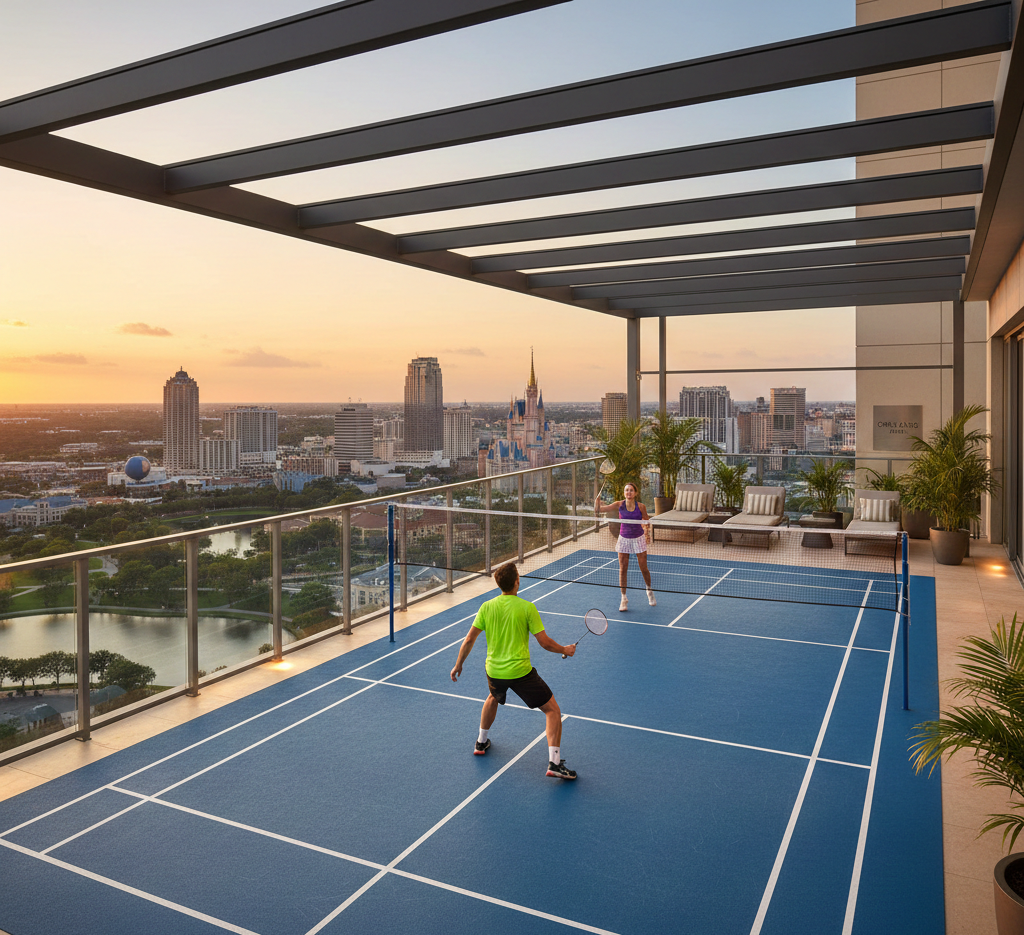
Creating a badminton court on the 10th floor of a high-rise building or luxury residential suite is an ambitious yet rewarding architectural achievement. Unlike ground-level sports facilities, high-floor badminton courts demand advanced engineering, meticulous planning, and innovative materials to balance safety, performance, and aesthetic appeal. When executed correctly, such a facility becomes a defining feature of premium developments, offering residents or guests an exclusive, world-class sports experience elevated—both literally and figuratively.
High-rise badminton courts transform urban living by integrating fitness, recreation, and luxury within the vertical landscape of modern architecture. This comprehensive guide explores the essential design considerations, structural requirements, flooring technologies, ceiling height standards, safety measures, and maintenance strategies required to successfully build a professional badminton court on the 10th floor.
1. The Value of a High-Floor Badminton Court
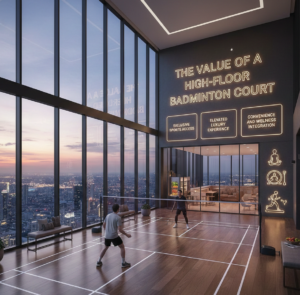
A badminton court located on an upper floor delivers far more than recreational utility. It serves as a lifestyle amenity that enhances property value and user experience.
Exclusive Sports Access
High-floor courts provide privacy and controlled access, eliminating overcrowding and offering a more refined playing environment for residents, guests, or corporate members.
Elevated Luxury Appeal
Incorporating a sports facility at height reinforces the building’s premium identity. It reflects thoughtful design and a commitment to modern, wellness-focused living.
Scenic Playing Experience
Panoramic cityscapes or skyline views introduce a unique ambiance that ground-level courts cannot offer. This visual advantage enhances mental relaxation and overall enjoyment.
Convenience and Wellness Integration
Residents can engage in regular physical activity without traveling to external sports complexes, encouraging healthier lifestyles within the building itself.
Despite these benefits, the complexity of high-floor construction makes expert planning essential to ensure safety, performance, and longevity.
2. Structural Engineering Considerations
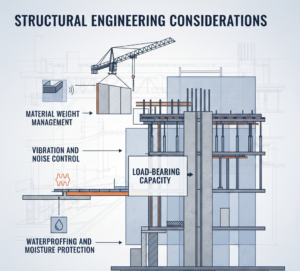
Structural integrity is the most critical aspect of designing a badminton court on the 10th floor. Unlike traditional courts, high-rise installations must account for dynamic loads and vibration control.
Load-Bearing Capacity
The building slab must support:
-
Flooring system weight
-
Player movement and impact
-
Sports equipment and lighting systems
Reinforced concrete slabs combined with steel support frameworks are typically engineered to handle these dynamic loads safely.
Vibration and Noise Control
Jumping, lunging, and footwork generate vibrations that can transmit to lower floors. Advanced solutions include:
-
Anti-vibration rubber pads
-
Floating floor systems
-
Structural isolation layers
These measures significantly reduce sound transmission and structural stress.
Material Weight Management
Flooring material selection directly affects structural load. Lightweight synthetic surfaces such as PU or PVC are often preferred, while engineered wood is chosen over solid timber to reduce weight.
Waterproofing and Moisture Protection
High-rise courts require robust waterproof membranes to protect the slab from moisture caused by cleaning, humidity, or condensation. Proper moisture control safeguards both the court surface and the building structure.
Collaboration between architects, structural engineers, and sports flooring specialists is essential for safe execution.
3. Flooring Solutions for 10th-Floor Badminton Courts
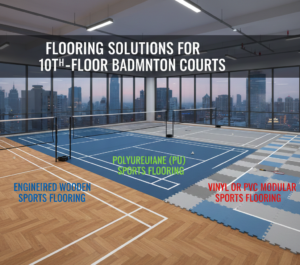
The flooring system must combine performance, shock absorption, durability, and minimal structural load.
Engineered Wooden Sports Flooring
-
Provides excellent shock absorption and natural playing feel
-
Lighter than traditional solid wood
-
Offers a premium, professional aesthetic
-
Requires periodic polishing and protective coatings
Polyurethane (PU) Sports Flooring
-
Seamless, lightweight, and highly durable
-
Excellent slip resistance and elasticity
-
Ideal for high-rise and rooftop installations
-
Easy to clean and maintain
Vinyl or PVC Modular Sports Flooring
-
Lightweight and cost-effective
-
Interlocking tile systems allow easy replacement
-
Resistant to moisture, scratches, and heavy use
-
Low maintenance with consistent traction
Each flooring option must be installed over an anti-vibration underlay to ensure optimal performance and safety.
4. Ceiling Height and Vertical Clearance
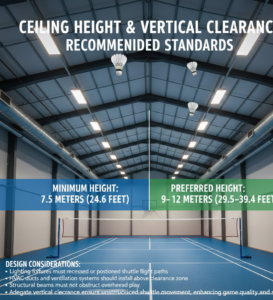
Ceiling height is a non-negotiable factor in badminton court design, especially on upper floors.
Recommended Standards
-
Minimum height: 7.5 meters (24.6 feet)
-
Preferred height: 9–12 meters (29.5–39.4 feet) for advanced or professional play
Design Considerations
-
Lighting fixtures must be recessed or positioned outside shuttle flight paths
-
HVAC ducts and ventilation systems should be installed above the clearance zone
-
Structural beams must not obstruct overhead play
Adequate vertical clearance ensures unrestricted shuttle movement, enhancing game quality and safety.
5. Court Layout and Dimensions
Even in high-rise environments, international badminton standards must be followed.
-
Court length: 13.4 meters
-
Court width: 6.1 meters (doubles), 5.18 meters (singles)
-
Net height: 1.55 meters at posts, 1.524 meters at center
-
Clear space: Minimum 2 meters around the court
Accurate layout planning ensures professional playability while accommodating safety buffers within limited floor space.
6. Safety Measures for High-Floor Courts
Safety protocols are amplified in high-rise sports facilities.
Edge and Perimeter Protection
-
Reinforced walls or safety barriers near glass façades
-
Impact-resistant panels where necessary
Slip and Fall Prevention
-
High-traction flooring surfaces
-
Proper cleaning routines to prevent dust or moisture buildup
Emergency Planning
-
Clearly marked exits and evacuation routes
-
Fire detection and suppression systems
-
Emergency lighting and signage
Structural Monitoring
Regular inspections detect early signs of material fatigue or vibration-related issues, ensuring long-term safety.
7. Lighting and Ventilation Design
Lighting Solutions
-
Uniform LED panel or floodlighting
-
Glare-free illumination positioned outside player sightlines
-
Energy-efficient systems with adjustable intensity
Ventilation and Climate Control
-
High-rise locations may experience pressure variations or airflow differences
-
Controlled HVAC systems maintain temperature, humidity, and air quality
-
Proper airflow prevents condensation and surface damage
Balanced lighting and ventilation enhance comfort and preserve flooring performance.
8. Installation Process Overview
Professional installation ensures precision and compliance:
-
Structural assessment and load verification
-
Subfloor leveling and anti-vibration underlay installation
-
Flooring system installation (PU, engineered wood, or PVC)
-
Court line marking with durable, anti-slip paint
-
Net and post system setup to regulation standards
-
Lighting, ventilation, and accessory installation
Each phase is executed under strict quality control.
9. Maintenance Strategy for High-Floor Courts
Regular maintenance preserves performance and safety:
-
Daily dust removal and surface cleaning
-
Periodic inspections for surface wear or joint separation
-
Recoating or polishing as required by flooring type
-
Scheduled structural assessments by engineers
Preventive maintenance minimizes long-term costs and extends service life.
10. Benefits of a 10th-Floor Badminton Court
-
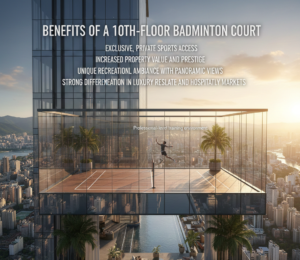
Exclusive, private sports access
-
Increased property value and prestige
-
Professional-level training environment
-
Unique recreational ambiance with panoramic views
-
Strong differentiation in luxury real estate and hospitality markets
11. Conclusion
Designing a badminton court on the 10th floor is a sophisticated blend of architectural vision, structural engineering, and sports facility expertise. Success depends on precise load calculations, vibration control, lightweight flooring systems, adequate ceiling clearance, and uncompromising safety standards.
When thoughtfully designed and professionally executed, a high-floor badminton court becomes more than a sports facility—it transforms into a lifestyle statement and a symbol of innovation. Such a court delivers unmatched recreational value while reinforcing the building’s identity as a modern, premium destination for wellness and active living.
A well-designed 10th-floor badminton court stands as proof that luxury, performance, and engineering excellence can coexist seamlessly in the vertical world of contemporary architecture.