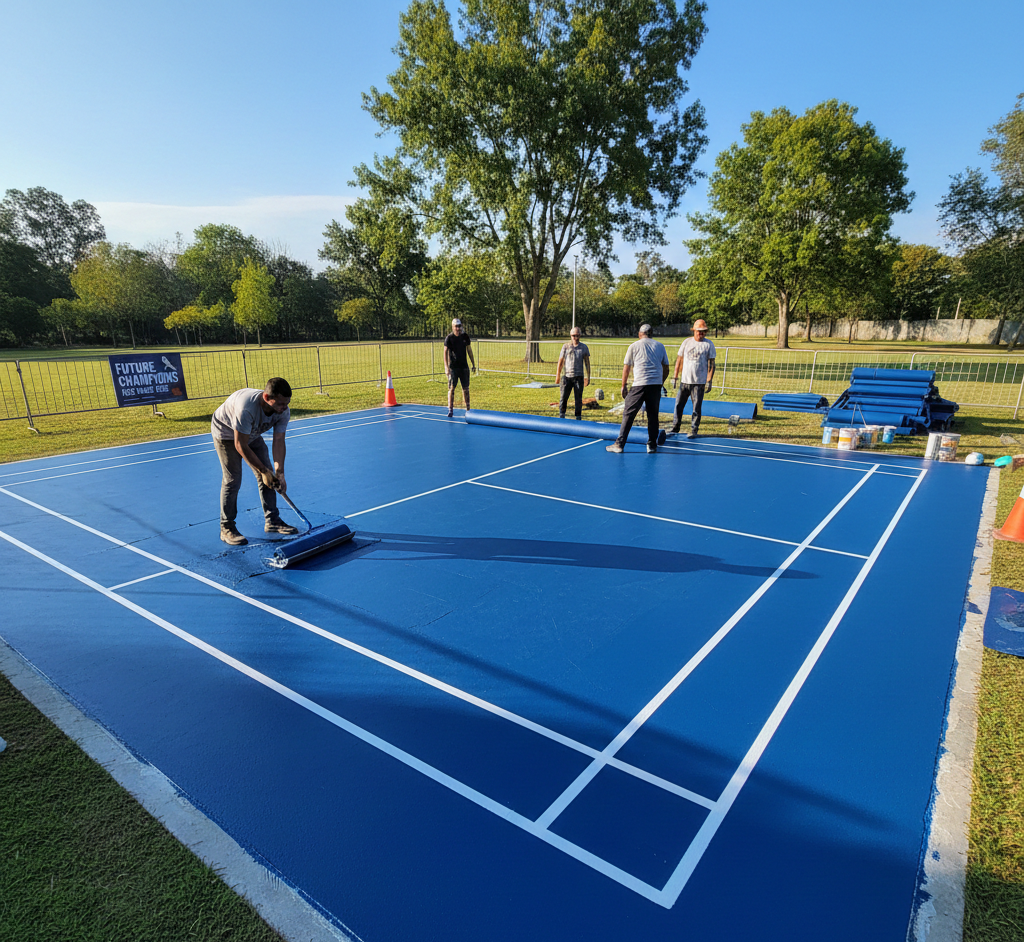
Outdoor badminton has steadily gained popularity across schools, residential communities, parks, academies, and recreational facilities. Its simplicity, low equipment requirement, and social appeal make it an ideal sport for open environments. However, the success of any outdoor badminton facility depends largely on one critical factor—the court surface.
Installing an outdoor badminton court surface requires careful planning, material selection, and professional execution to ensure player safety, consistent performance, and long-term durability against weather exposure. This detailed guide explains everything you need to know about outdoor badminton court surface installation, including surface options, base preparation, installation steps, maintenance, and safety considerations.
Why the Right Outdoor Badminton Court Surface Matters
Unlike indoor courts, outdoor badminton courts are constantly exposed to sunlight, rain, wind, dust, and temperature changes. These environmental factors can quickly degrade poorly designed surfaces, leading to safety hazards and high maintenance costs.
A professionally installed outdoor badminton court surface provides:
Improved Player Safety
Proper grip and shock absorption help reduce slips, falls, and stress on joints during lunges, jumps, and quick movements.
Consistent Playing Experience
A level and uniform surface allows smooth footwork and predictable shuttle behavior, improving overall gameplay.
Weather Resistance
Outdoor-specific materials resist UV damage, moisture penetration, and surface wear caused by environmental exposure.
Reduced Maintenance Costs
Durable surfaces minimize cracking, peeling, and frequent repairs, lowering long-term ownership costs.
Standard Dimensions for an Outdoor Badminton Court
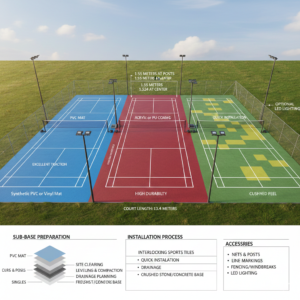
Outdoor badminton courts follow the same dimensions as indoor courts to meet Badminton World Federation (BWF) standards.
-
Court Length: 13.4 meters
-
Court Width:
-
Doubles: 6.1 meters
-
Singles: 5.18 meters
-
-
Net Height:
-
1.55 meters at the posts
-
1.524 meters at the center
-
-
Clearance Area:
-
At least 2 meters of free space around all sides of the court
-
Adequate clearance ensures safe movement and reduces injury risks during fast rallies and overhead shots.
Types of Outdoor Badminton Court Surfaces
Choosing the correct surface is the most important decision when installing an outdoor badminton court. Each surface type offers unique advantages depending on usage, budget, and environmental conditions.
Synthetic PVC or Vinyl Mats
PVC badminton mats are one of the most popular options for outdoor courts.
Key Features
-
Excellent traction and anti-slip properties
-
Resistant to moisture and sunlight
-
Comfortable underfoot with cushioned layers
-
Easy to clean and maintain
Best Suited For
-
Schools and colleges
-
Training academies
-
Recreational outdoor courts
PVC mats are installed over a firm, level base and offer a professional playing experience with minimal maintenance.
Acrylic or PU-Coated Concrete Surfaces
Acrylic or polyurethane coatings are applied over a concrete base to create a seamless outdoor sports surface.
Key Features
-
High durability and weather resistance
-
Customizable colors and textures
-
Seamless finish with consistent grip
-
Suitable for high-traffic usage
Best Suited For
-
Community sports parks
-
Professional outdoor badminton courts
-
Sports complexes
This surface type offers long service life but requires precise base preparation and periodic re-coating.
Interlocking Sports Tiles
Interlocking tiles are modular flooring systems made from synthetic materials such as polypropylene.
Key Features
-
Quick and easy installation
-
Replaceable individual tiles
-
Good drainage properties
-
Suitable for multipurpose courts
Best Suited For
-
Schools and clubs
-
Temporary or semi-permanent courts
-
Facilities with limited maintenance resources
Tiles are installed over concrete or compacted gravel bases and provide good traction for recreational play.
Artificial Grass with Shock Pad
Artificial turf with an underlayer provides a softer and more aesthetic option.
Key Features
-
Cushioned feel reduces joint stress
-
Natural appearance
-
Comfortable for casual play
Best Suited For
-
Parks and resorts
-
Recreational facilities
-
Leisure-focused installations
While visually appealing, artificial grass is more suitable for casual badminton rather than competitive play.
Sub-Base Preparation: The Foundation of a Durable Court
A strong and level sub-base is essential for the longevity and safety of an outdoor badminton court.
Key Sub-Base Preparation Steps
Site Clearing and Ground Preparation
Remove vegetation, debris, and loose soil from the area.
Leveling and Compaction
The ground must be leveled accurately to avoid uneven bounce and tripping hazards.
Drainage Planning
Proper slope and drainage channels prevent water accumulation and surface damage.
Base Layer Construction
A compacted layer of crushed stone or gravel is commonly used, followed by a concrete or asphalt layer if required.
A well-prepared sub-base ensures the surface performs consistently under heavy outdoor use.
Installation Process for Outdoor Badminton Court Surfaces
The installation process depends on the selected surface type but follows a structured approach.
PVC or Vinyl Surface Installation
-
Lay the mat on a clean, level base
-
Use weather-resistant adhesives
-
Ensure tight seams and smooth edges
-
Allow curing time before play
Acrylic or PU-Coated Concrete Installation
-
Repair and clean the concrete base
-
Apply primer for bonding
-
Spread coating in multiple layers
-
Finish with an anti-slip topcoat
Interlocking Tile Installation
-
Prepare a flat base
-
Lock tiles together as per layout
-
Secure edges with boundary strips
Artificial Grass Installation
-
Install shock-absorbent underlay
-
Roll and trim turf accurately
-
Secure seams and add infill material
Professional installation ensures durability, safety, and optimal playing performance.
Accessories for a Complete Outdoor Badminton Court
A professional outdoor badminton court includes essential accessories:
-
Weather-resistant net posts and nets
-
Clear boundary line markings
-
Perimeter fencing or windbreaks
-
Optional LED lighting for evening play
These elements enhance safety, usability, and overall court quality.
Maintenance of Outdoor Badminton Court Surfaces
Routine maintenance extends the life of outdoor badminton courts.
Recommended Practices
-
Regular sweeping and cleaning
-
Periodic inspection for damage
-
Re-coating acrylic surfaces when required
-
Checking drainage systems
-
Ensuring surface grip remains intact
Proper care keeps the court safe and visually appealing for years.
Safety Considerations for Outdoor Badminton Courts
Outdoor environments pose additional safety challenges.
-
Ensure slip-resistant surfaces
-
Provide adequate shock absorption
-
Protect edges and transitions
-
Use weatherproof materials
-
Maintain clear surrounding areas
Addressing these factors minimizes injury risks and improves player confidence.
Benefits of Installing a Professional Outdoor Badminton Court
A well-installed outdoor badminton court offers:
-
Increased access to sports and recreation
-
Opportunities for training and tournaments
-
Long-term cost savings through durability
-
Enhanced community engagement
-
Improved sports infrastructure value
Conclusion
Installing an outdoor badminton court surface is a strategic investment that requires thoughtful planning, quality materials, and expert execution. From selecting the right surface type to preparing a stable sub-base and ensuring proper maintenance, every step plays a vital role in the court’s performance and longevity.
By following professional standards and choosing weather-resistant, player-friendly surfaces, outdoor badminton courts can provide a safe, enjoyable, and high-performance environment for players of all ages. Whether for schools, parks, academies, or residential communities, a well-designed outdoor badminton court leaves a lasting positive impact on sports development and recreational culture.
Frequently Asked Questions (FAQ) – Installing an Outdoor Badminton Court Surface
1. What materials are used for outdoor badminton court surfaces?
Outdoor badminton courts are commonly made from:
-
Synthetic mats (PVC or PU interlocking mats) – durable and weather-resistant
-
Acrylic sports flooring – provides good grip and ball control
-
Artificial grass or turf – softer and ideal for multipurpose use
-
Concrete or asphalt with surface coating – long-lasting but harder on joints
2. What is the standard size of a badminton court?
-
Singles court: 13.4 m × 5.18 m
-
Doubles court: 13.4 m × 6.1 m
-
Recommended surrounding space: at least 2 m on all sides for safety and free movement
3. How do I prepare the ground for an outdoor badminton court?
-
Level and compact the ground using sand, stone, or concrete sub-base
-
Ensure proper drainage to prevent waterlogging
-
Apply a moisture-resistant primer or base layer before installing mats or synthetic surfaces
4. Can outdoor badminton courts be installed on concrete or asphalt?
Yes, most synthetic or interlocking mats can be installed on concrete or asphalt surfaces, provided the base is clean, level, and free from cracks.
5. What are the benefits of installing a synthetic badminton court outdoors?
-
All-weather durability
-
Shock absorption for reduced joint stress
-
Slip-resistant surface for safety
-
Easy maintenance and cleaning
-
Customizable colors and line markings
6. How long does it take to install an outdoor badminton court surface?
-
Basic PVC or mat installation: 3–5 days
-
PU or acrylic surfaces: 7–10 days
-
Installation time depends on surface type, sub-base preparation, and court size
7. How much does it cost to install an outdoor badminton court in India?
Costs vary depending on material and size:
-
PVC / interlocking mats: ₹500–₹1,200 per sq. meter
-
PU or acrylic courts: ₹1,200–₹2,500 per sq. meter
-
Artificial turf / grass courts: ₹800–₹2,000 per sq. meter
8. How do I maintain an outdoor badminton court?
-
Regular cleaning to remove dust, leaves, and debris
-
Check for surface damage or unevenness periodically
-
Repaint line markings when they fade
-
Protect from prolonged water exposure and UV damage
9. Can outdoor courts be used in rainy or humid conditions?
Synthetic outdoor badminton surfaces are water-resistant, but it’s best to avoid heavy rainfall during play. Proper drainage and UV-resistant surfaces ensure longer life and better performance.
10. Who can install outdoor badminton court surfaces?
Professional sports flooring experts or certified contractors install outdoor badminton courts to ensure correct leveling, drainage, safety, and line markings.
11. How long does an outdoor badminton court last?
With proper installation and maintenance:
-
Synthetic mats / PVC flooring: 8–10 years
-
PU or acrylic surfaces: 10–12 years
-
Artificial turf / grass: 6–8 years
12. Can outdoor badminton courts be used for tournaments?
Yes, professionally installed outdoor courts with synthetic or PU surfaces can meet national or regional tournament standards, depending on size, surface type, and line markings.