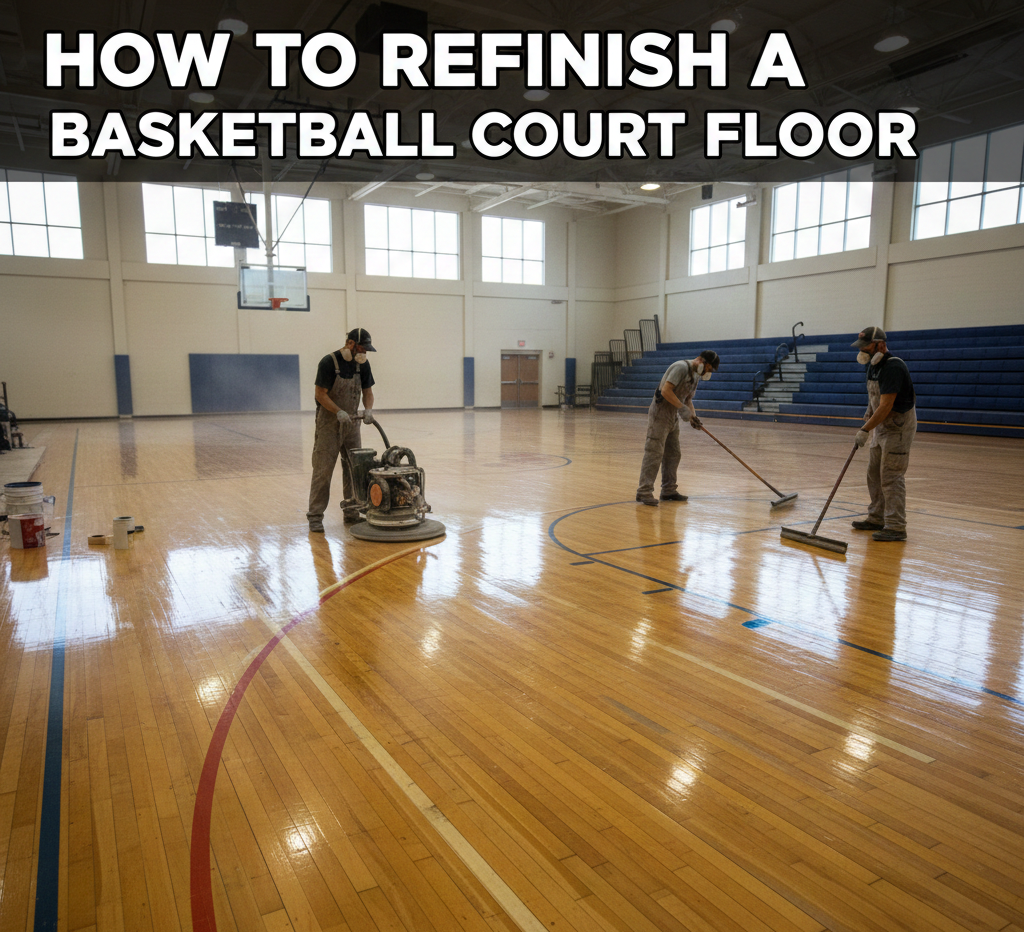
A basketball court floor is one of the most heavily used sports surfaces in any facility. Fast movements, sliding shoes, ball impact, sweat, dust, and continuous foot traffic gradually wear down the flooring—especially wooden and synthetic indoor courts. Over time, the surface loses shine, gets scratched, becomes slippery, and may even develop dead spots or uneven bounce.
This is where refinishing plays a vital role. Refinishing restores the original performance quality of the court, improves player safety, renews traction, and extends the lifespan of the flooring. Whether the court is inside a school gym, sports complex, or professional arena, refinishing is a critical maintenance process.
In this complete guide, you will learn how to refinish a basketball court floor, step-by-step, along with materials used, precautions, pro tips, and when refinishing should be done.
What Does “Refinishing a Basketball Court Floor” Mean?
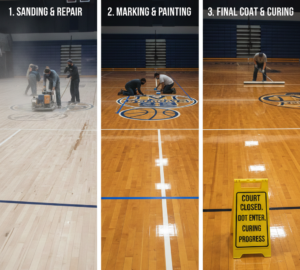
Refinishing refers to the process of sanding, repairing, recoating, and sealing the floor to restore its smoothness, shine, and performance characteristics.
Refinishing typically includes:
-
Deep cleaning
-
Scratching away old finish
-
Sanding to remove imperfections
-
Applying new coatings
-
Repainting game lines
-
Sealing the surface for protection
When Should a Basketball Court Be Refinished?
-
Dull, faded, or slippery surface
-
Scratches, scuff marks, or stains
-
Uneven ball bounce
-
Worn out game lines
-
Yellowing or discoloration
-
Reduced traction
-
Visible damage on the top finish
Recommended frequency:
-
Recoating: Every 12–18 months
-
Sanding & full refinishing: Every 7–10 years
Outdoor courts require different resurfacing techniques depending on the material.
Tools & Materials Needed for Refinishing a Basketball Floor
For Hardwood Courts
-
Drum sanding machines
-
Edger and orbital sanders
-
Vacuum & dust control system
-
Wood filler & repair materials
-
Polyurethane or water-based sports coatings
-
Line marking paints
-
Scrapers and buffing pads
-
Moisture meters
-
Protective sealants
For Synthetic Floors (PU / PVC)
-
Buffing machine
-
Cleaning chemicals
-
PU recoat or vinyl polish
-
Microfiber cloths
-
Anti-skid coatings
-
Pressure washing machine
-
Acrylic resurfacer
-
Crack fillers
-
Color coats
-
Weatherproof line paint
How to Refinish a Basketball Court Floor – Step-by-Step Process
1. Inspection & Surface Assessment
The first step is a detailed evaluation of the existing flooring to identify:
-
Surface condition
-
Deep scratches & dents
-
Water damage or moisture issues
-
Loose or damaged floorboards (in hardwood)
-
Worn game lines
-
Areas with inconsistent bounce
2. Deep Cleaning & Debris Removal
-
Sweep and vacuum the entire court
-
Remove dust, dirt, gum, and stains
-
Clean sweat marks and scuffs
This ensures sanding tools work efficiently.
Sanding removes:
-
Old coatings
-
Scratches
-
Stains
-
Surface imperfections
-
Uneven patches
a) Initial coarse sanding
A heavy-grit sanding pass strips off old finish and levels the floor.
b) Medium sanding
This smooths out rough cuts and prepares the surface for final polishing.
c) Fine sanding
Creates a perfectly smooth and even surface.
d) Edging
Edges and corners are sanded using edge sanders to match the center area.
e) Vacuuming
The entire area is vacuumed to remove fine dust particles.
Result:
A fresh, clean wood surface ready for refinishing.
4. Repairing the Surface
Once sanding is complete:
-
Fill gaps, cracks, or nail holes
-
Replace damaged planks
-
Fix uneven joints
-
Patch small dents with wood filler
This step ensures the floor becomes structurally sound.
5. Screening & Buffing
The floor is lightly screened using a buffer machine to:
-
Remove micro-scratches
-
Ensure proper bonding of new coatings
-
Improve surface smoothness
Buffing prepares the floor for its new finish.
6. Applying Sealers & Base Coats
A sealer coat is applied to:
-
Lock the wood surface
-
Enhance natural color
-
Improve coating adhesion
-
Protect against moisture
Sealers dry quickly and form the base for the top finish.
7. Painting Game Lines
Once the sealer is dry:
-
Court lines (free throw, three-point arc, boundaries) are marked
-
High-precision stencils or measuring tools are used
-
Sports-grade, wear-resistant paint is applied
-
Team logos or graphics may be added
8. Applying the Top Coats (Polyurethane or Water-Based Finish)
The final finish determines the court’s:
-
Shine
-
Grip
-
Durability
-
Ball bounce consistency
Types of finishes:
-
Oil-based polyurethane
-
Water-based polyurethane
-
Hybrid finishes for sports flooring
How it’s applied:
-
Usually 2–4 layers
-
Each layer dries for several hours
-
Floor is lightly buffed between coats
-
Final coat seals the entire system
The top coat provides long-term protection against foot traffic, sweat, moisture, and impact.
9. Final Curing & Inspection
Curing time:
-
Light foot traffic: 24–48 hours
-
Full sports use: 5–7 days
A final inspection ensures:
-
Consistent gloss
-
Smooth finish
-
Accurate line markings
-
Perfect traction
-
No dust contamination
Special Note: Refinishing Synthetic Basketball Floors
PU Floors
Refinishing involves:
-
Cleaning
-
Light sanding
-
Applying new PU coatings
-
Repainting lines
PVC Floors
Refinishing may include:
-
Deep cleaning
-
Buffing
-
Applying a new polish layer
Acrylic Outdoor Courts
Refinishing (or resurfacing) involves:
-
Pressure washing
-
Crack filling
-
Resurfacer coat
-
New color layers
-
Line marking
Modular PP Tiles
-
Cleaning
-
Replacement of broken tiles
How Often Should Refinishing Be Done?
| Court Type | Refinish Cycle | Why |
|---|---|---|
| Hardwood | 7–10 years | Sanding + full refinish |
| Hardwood Recoat | Every 12–18 months | Top coat only |
| PU Synthetic | Every 3–5 years | Recoat improves grip |
| PVC Vinyl | Every 1–2 years | Buff and polish |
| Acrylic Outdoor | Every 3–4 years | Weather wear and tear |
| PP Tiles | As needed | Replace damaged tiles |
Benefits of Refinishing a Basketball Court
-
Restores shine and professional appearance
-
Improves traction and player safety
-
Ensures consistent ball bounce
-
Removes scratches and wear marks
-
Prevents slipperiness and injuries
-
Extends floor lifespan
-
Enhances aesthetics and branding
A well-refinished court performs like new and elevates the entire sports experience.
Conclusion: Refinishing Keeps Your Basketball Court at Peak Performance
Refinishing a basketball court floor is not just cosmetic—it is an essential maintenance process that preserves performance, safety, and durability.
A professionally refinished floor ensures:
-
Better gameplay
-
Improved athlete comfort
-
Longer flooring life
-
Reduced long-term repair costs
Regular refinishing is the key to maintaining a world-class basketball environment.