Introduction
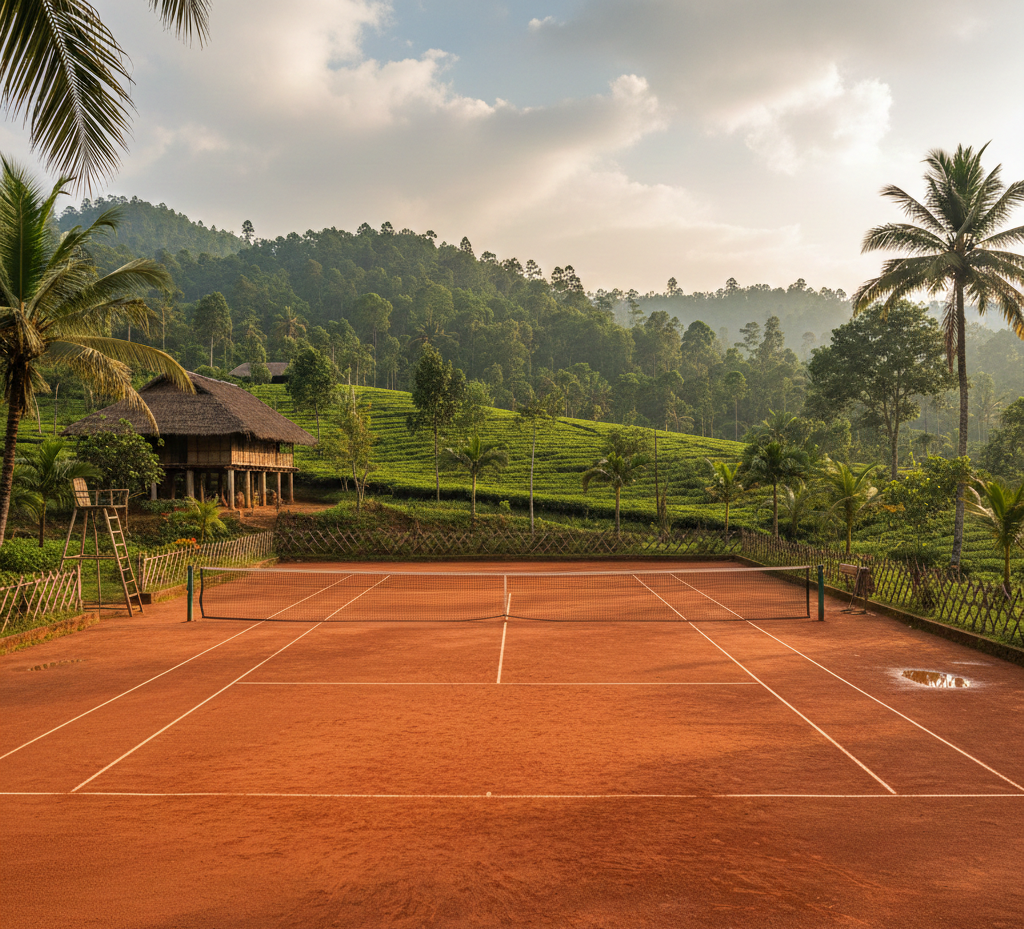
Assam, known for its lush green landscapes, fertile soil, and heavy monsoon patterns, is steadily developing its sports infrastructure—especially in cities like Guwahati, Dibrugarh, Silchar, Jorhat, Tezpur, Tinsukia, and Nagaon.
Why Clay Courts Work Well in Assam
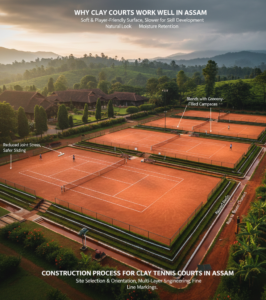
1. Soft and Player-Friendly Surface
Clay naturally absorbs pressure and impact, offering:
-
Reduced joint stress
-
Safer sliding movement
-
Longer training sessions
-
Less risk of knee and ankle injuries
This is vital for junior training programs and academies in Assam.
2. Slower Pace for Skill Development
Clay’s slower ball speed helps players strengthen:
-
Footwork and movement patterns
-
Topspin techniques
-
Point construction abilities
-
Defensive and counter-attack play
3. Natural Look Suits Assam’s Environment
Clay courts blend beautifully with:
-
Greenery-filled campuses
-
Tea estate resorts
-
Hill-view training centers
-
Urban sports complexes
4. Moisture Retention Helps Surface Lifespan
Assam’s humidity helps clay surfaces remain moist longer, reducing surface cracking.
Challenges of Clay Courts in Assam
1. Heavy Monsoon Rainfall
Assam receives some of the highest rainfall in India:
-
Guwahati, Silchar, and Dibrugarh get heavy showers
-
Water stagnation becomes a risk
-
Clay can soften and lose consistency
Drainage engineering is extremely important here.
2. Flood-Prone Zones
Some districts experience seasonal flooding:
-
Courts must be built on raised beds
-
Perimeter channels required
-
Extra foundation stabilization needed
3. High Humidity
Moisture exposure can cause:
-
Slow drying after rain
-
Growth of moss on edges
-
Regular brushing required
4. Clay Availability
Murram-rich clay may need to be sourced from outside the immediate zone, depending on location.
Construction Process for Clay Tennis Courts in Assam
Constructing a durable clay court in Assam requires a design that balances rain tolerance with clay consistency.
1. Site Selection & Orientation
Choose an elevated location with:
-
Good sunlight exposure
-
Protection from waterlogging
-
Slope for drainage
Court orientation: North–South to reduce player glare.
2. Multi-Layer Surface Engineering
A standard professional clay court includes four key layers:
Layer 1 – Sub-Base (150–200 mm)
-
Compacted aggregates or stones
-
Creates a firm foundation
-
Prevents soil shifting (important in flood-prone areas)
Layer 2 – Stone Dust / Gravel Layer (50–80 mm)
-
Helps drainage
-
Assists leveling
-
Supports upper layers
-
Provides cushioning
-
Retains moisture for stability
Mixture of:
-
Pure clay
-
Crushed brick dust
-
Fine red soil
Ensures:
-
Consistent bounce
-
Smooth sliding
-
Balanced speed
Line Markings
PVC or canvas tape is fixed with secure anchoring—ideal for Assam’s high rainfall.
Drainage System – Most Critical for Assam
Essential Drainage Features
-
Deep side drains
-
French drains with perforated pipes
-
Geo-synthetic liners for water filtration
-
Slope of 0.8–1.2%
-
Outlets directing water away from the court
Flood Protection Add-ons
In vulnerable zones:
-
Court elevation (300–600 mm)
-
Boundary channels
-
Perimeter embankments
Maintenance Requirements in Assam
Daily Maintenance
-
Light watering in dry months
-
Drag mat smoothing
-
Brushing to remove dust or leaves
Weekly Maintenance
-
Rolling the court for firmness
-
Checking moisture consistency
-
Cleaning line tapes
Monsoon Maintenance
-
Keep drains clear
-
Remove standing water immediately
-
Post-rain rolling to restore firmness
Seasonal Maintenance
-
Top-up clay every 1–2 months
-
Repair spots caused by heavy rain or usage
-
Anti-moss solutions near shaded boundaries
Cost of Clay Tennis Court in Assam
Construction Cost
₹10 lakh – ₹32 lakh, depending on:
-
Type of clay used
-
Advanced drainage requirements
-
Foundation elevation
-
Irrigation system
-
Fencing & lighting
Maintenance Cost
-
Fresh clay application
-
Rolling equipment
-
Labor charges
-
Drainage cleaning
Best Locations for Clay Tennis Courts in Assam
Clay courts perform well in:
-
Guwahati
-
Jorhat
-
Silchar
-
Dibrugarh
-
Tezpur
-
Tinsukia
-
Nagaon
-
Bongaigaon
With proper drainage, they can be successfully built even in heavy-rain districts and rural academies.
Advantages & Limitations Summary
| Advantages | Limitations |
|---|---|
| Great for training & safe for joints | Highly dependent on drainage due to rain |
| Natural look enhances campus ambience | Needs frequent rolling in wet months |
| Moisture retention improves playability | Flood-prone areas need extra engineering |
| Encourages longer rallies & endurance | Slightly higher maintenance costs |
Conclusion
Clay tennis court flooring in Assam is an excellent choice for academies, schools, sports complexes, resorts, and private estates.