Introduction
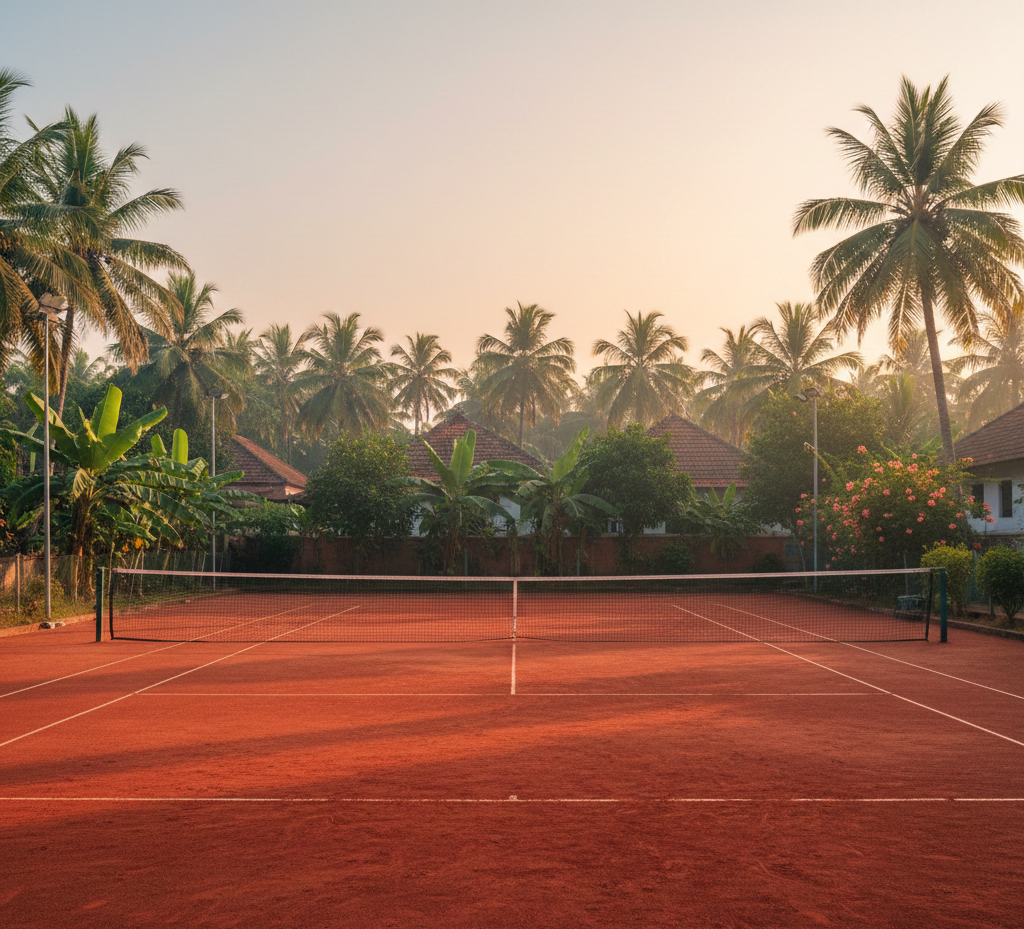
Kerala, known for its lush greenery, coastal belt, and high humidity, has a growing demand for quality sports infrastructure. Tennis academies, schools, sports complexes, clubs, and resorts across Kochi, Thiruvananthapuram, Kozhikode, Thrissur, Kannur, and Kottayam are increasingly exploring clay tennis courts due to their comfort, training benefits, and natural aesthetic.
Clay courts offer slower play, safer footwork, and excellent control, making them ideal for skill development in a climate like Kerala where players train throughout the year.
Why Clay Courts Work Well in Kerala
1. Gentle and Player-Friendly Surface
Clay is a naturally cushioned surface that:
-
Reduces joint stress
-
Prevents impact injuries
-
Supports long training sessions
Ideal for juniors, adults, and professional trainees.
2. Excellent for Skill Development
Because clay slows down the game, players improve in:
-
Topspin
-
Footwork
-
Tactical play
-
Endurance
-
Sliding technique
Perfect for Kerala’s active tennis academies.
3. Environmentally Compatible
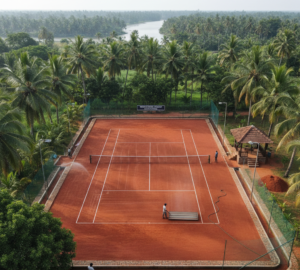
Clay courts blend beautifully with Kerala’s landscape:
-
Eco-friendly materials
-
Natural look
-
Suitable for resorts and premium properties
4. Good Moisture Retention
Kerala’s humid climate helps clay hold moisture, reducing cracking compared to drier states.
Challenges of Clay Courts in Kerala
1. Heavy Monsoon Rains
Kerala receives some of the highest rainfall in India:
-
Surface can soften
-
Water stagnation possible without proper drainage
-
Requires rolling after heavy rains
2. High Humidity
Humidity slows the drying process:
-
Longer time to prepare courts after rain
-
Extra care needed to avoid fungal growth on edges
3. Coastal Winds in Beachside Areas
Regions like Kochi, Alappuzha, and Kozhikode may experience salt-laden winds:
-
Windbreak nets recommended
-
More frequent surface sweeping needed
4. Clay Availability
Murram and red clay may need to be sourced from nearby states or central Kerala mines, slightly affecting cost.
Construction Guidelines for Clay Tennis Courts in Kerala
1. Site Planning
Choose a site with:
-
Proper sunlight exposure
-
Elevated ground to avoid waterlogging
-
Space for drainage channels
Court orientation: North–South to minimize sun glare.
2. Multi-Layer Base Construction
A durable clay court in Kerala requires:
-
Compacted stone base
-
Provides stability and prevents sinking
-
-
Stone dust / fine gravel layer
-
Helps leveling and drainage
-
-
Murram or clay binder layer
-
Improves surface grip
-
-
Clay + crushed brick top layer
-
Ensures consistent bounce
-
3. Drainage System (Critical in Kerala)
Because monsoon is intense:
-
Deep side drains
-
Center-to-side slope (0.8–1%)
-
Perforated pipe French drains in high-rain districts
-
Rain channels to divert excess water
4. Line Markings
Clay courts use:
-
PVC line tapes
-
Canvas/Fabric lines
-
Anchored securely
Paint is not recommended because of moisture-driven wear.
5. Irrigation System
Even with humidity, the court needs watering:
-
Manual hose
-
Rotating sprinklers
-
Automated irrigation (best for academies)
Maintenance Requirements in Kerala
Daily Tasks
-
Light watering
-
Drag-mat leveling
-
Removing organic debris (leaves, twigs) common in Kerala
Weekly Maintenance
-
Rolling the surface
-
Checking for soft spots after rainfall
-
Cleaning mold/mildew at edges if required
Monthly Maintenance
-
Adding fresh clay or crushed brick dust
-
Re-leveling depressions
-
Cleaning drainage channels
Seasonal Adjustments
-
Monsoon:
-
Keep drains clear
-
Cover court if possible
-
Roll after rain
-
-
Summer:
-
Moderate watering
-
Prevent drying cracks
-
-
Winter:
-
Standard grooming
-
Cost of Clay Tennis Court Construction in Kerala
Construction Cost
₹9 lakh – ₹30 lakh
Costs vary based on:
-
Soil/clay availability
-
Drainage complexity
-
Court foundation
-
Irrigation automation
-
Fencing & lighting installations
-
Terrain leveling (important in hilly districts)
Maintenance Cost
Moderate:
-
Clay replenishment
-
Rolling equipment
-
Labor charges
-
Water usage
Optional Upgrades
-
LED floodlights
-
High fencing with green windbreak nets
-
Synthetic rain covers
-
Player seating zones
-
Rebound practice walls
Best Locations for Clay Tennis Courts in Kerala
Clay courts perform well in:
Major Cities
-
Kochi
-
Thiruvananthapuram
-
Kozhikode
-
Thrissur
-
Kollam
-
Kannur
-
Alappuzha
Hill Regions
(Which may need more drainage planning)
-
Wayanad
-
Idukki
-
Munnar belt
These regions support clay court development with proper engineering.
Pros & Cons Overview
| Advantages | Limitations |
|---|---|
| Great for training & long rallies | Affected by heavy monsoons |
| Soft and joint-friendly | Needs constant rolling in rainy months |
| Natural and eco-friendly | Clay availability may vary |
| Good moisture retention | High humidity slows drying |
Conclusion
Clay tennis court flooring in Kerala is an excellent choice for academies, resorts, schools, private estates, and sports complexes. With the state’s lush climate and strong sports culture, clay courts provide a comfortable, professional-quality playing surface when built with proper drainage and regular maintenance.