Introduction
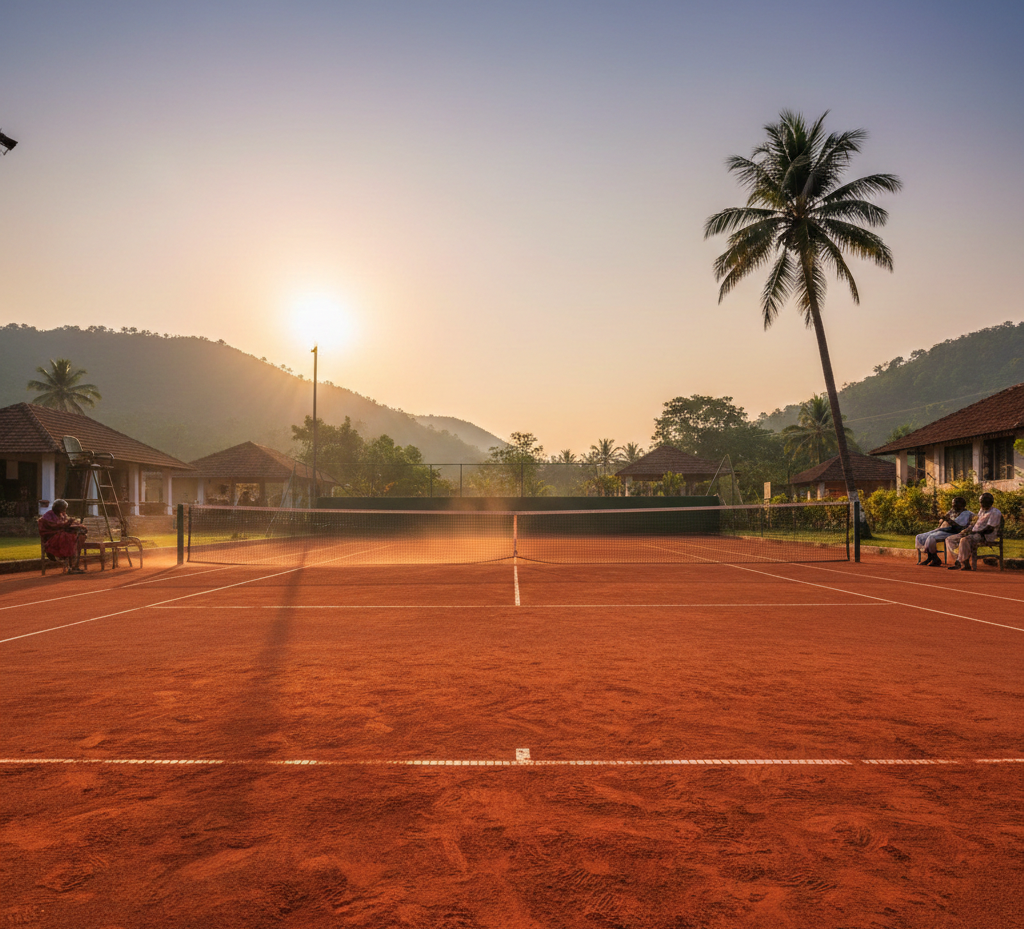
Seemandhra—comprising both Coastal Andhra and Rayalaseema—is one of India’s most diverse regions in terms of climate, soil type, and topography. With major cities like Vijayawada, Visakhapatnam, Guntur, Tirupati, Kurnool, Kadapa, Nellore, Rajahmundry, and Anantapur, the region has witnessed rapid growth in sports infrastructure over the last decade.
Clay tennis courts have become increasingly popular across Seemandhra for their comfortable playing characteristics, training advantages, and suitability to the region’s climatic conditions. They offer superior footwork development, spin training, and endurance building—making them ideal for tennis academies, schools, universities, sports complexes, and private properties.
Why Clay Courts Are Suitable for Seemandhra
1. Climate-Friendly Surface
Seemandhra experiences:
-
Warm summers
-
Moderate winters
-
Distinct monsoon seasons
-
Dry winds in Rayalaseema
-
Humidity along the coast
Clay courts perform well in these conditions because clay:
-
Retains moisture
-
Provides stable bounce
-
Handles heat better with proper watering
-
Is renewable and easy to repair
2. Excellent for Tennis Training
Clay courts naturally slow down the ball, promoting:
-
Longer rallies
-
Improved footwork and sliding control
-
Better topspin generation
-
Strong stamina development
This makes clay a preferred surface for year-round coaching.
3. Local Raw Material Availability
Seemandhra has easy access to:
-
Red soil (widely available in Rayalaseema)
-
Murram soil
-
Crushed brick
-
Stone dust
This reduces construction costs significantly.
4. Player Safety and Comfort
Clay is a soft, cushioned surface that reduces injury risks:
-
Lower impact on joints
-
Ideal for long training sessions
-
Suitable for juniors, senior players, and professionals
Challenges of Clay Courts in Seemandhra
1. High Heat in Rayalaseema
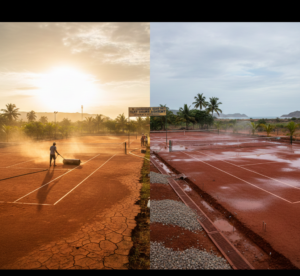
Districts like Anantapur, Kurnool, Kadapa, and Chittoor can get extremely hot:
-
Clay dries quickly
-
Requires regular watering
-
Needs rolling to prevent cracking
2. Monsoon in Coastal Areas
Coastal Andhra (Vishakhapatnam, Guntur, Nellore, Rajahmundry) receives seasonal rains:
-
Surface becomes soft
-
Drainage becomes crucial
-
Courts need rolling after rainfall
3. Humidity Variation
-
Coastal humidity slows drying
-
Rayalaseema dryness accelerates evaporation
Maintenance must be adjusted seasonally.
Construction Guidelines for Clay Courts in Seemandhra
1. Site Selection
Choose a location that:
-
Receives good sunlight
-
Has minimal water stagnation
-
Has easy water access for irrigation
Court orientation should ideally be North-South to reduce glare.
2. Layered Court Base Construction
A high-quality clay court consists of:
-
Compacted Stone Base (Foundation Layer)
-
Provides structural strength
-
-
Stone Dust / Fine Gravel Cushion Layer
-
Smoothens and stabilizes surface
-
-
Murram or Red Soil Binder Layer
-
Helps retain moisture and prevents shifting
-
-
Clay + Crushed Brick Top Layer
-
The final playing surface
-
This combination ensures:
-
Durability
-
Proper slide control
-
Predictable bounce
3. Drainage System (Essential for Both Sub-Regions)
-
Side drains on both lengths
-
0.8–1% slope for natural water runoff
-
French drains recommended for coastal districts
-
Rain channels for heavy monsoon zones
4. Line Markings
Clay courts use:
-
PVC tapes
-
Fabric lines
-
Anchored with nails or pins
(Not painted—paint cracks and wears out.)
5. Irrigation Setup
Due to heat and moisture variations:
-
Manual sprinkler
-
Movable hose system
-
Fully automated irrigation (ideal for academies)
Maintenance Requirements in Seemandhra
Daily Routine
-
Light watering
-
Drag mat leveling
-
Clearing loose debris or clay powder
Weekly Routine
-
Rolling the surface
-
Fixing soft or dry patches
-
Adjusting line tapes
Monthly Maintenance
-
Refilling the top layer with clay
-
Deep brushing
-
Surface leveling
Seasonal Notes
-
Rayalaseema Summer: Increase watering significantly
-
Coastal Monsoon: Keep drains clean and roll after rainfall
-
Winter: Normal grooming is enough
Cost of Clay Tennis Court Construction in Seemandhra
Construction Cost
₹8 lakh – ₹26 lakh
Price varies based on:
-
Court size (single/double court setup)
-
Layer quality
-
Soil type
-
Irrigation system
-
Perimeter fencing
-
Floodlights installation
Maintenance Cost
Moderate and includes:
-
Water
-
Clay topping material
-
Rolling equipment
-
Staff or labor charges
Optional Upgrades
-
LED floodlights
-
High fencing with windbreak nets
-
Player seating & rest area
-
Practice rebound wall
-
Rain-proof court cover
Best Locations in Seemandhra for Clay Courts
Clay tennis courts perform extremely well in:
Coastal Andhra
-
Visakhapatnam
-
Vijayawada
-
Guntur
-
Rajahmundry
-
Kakinada
-
Nellore
Rayalaseema
-
Tirupati
-
Kurnool
-
Kadapa (YSR)
-
Anantapur
-
Chittoor
These regions offer a climate that supports clay courts with relatively simple maintenance.
Pros & Cons of Clay Courts in Seemandhra
| Advantages | Limitations |
|---|---|
| Best for tennis learning & stamina | Needs regular watering |
| Soft and safe surface | Affected by monsoon rains |
| Affordable due to local materials | Skilled maintenance required |
| Longer rallies, better footwork | Can dry quickly in Rayalaseema |
Conclusion
tennis court flooring in Seemandhra (Andhra Pradesh) is a highly effective and economical choice for tennis academies, schools, private residences, and sports complexes. With the region’s diverse climate—from the dry heat of Rayalaseema to the humid coast—clay courts perform efficiently when constructed with proper drainage, high-quality layering, and consistent maintenance.