Introduction & Regional Context
Uttarakhand, with its diverse geography ranging from the Shivalik foothills to the high Himalayan ranges, offers unique opportunities—and challenges—for building sports infrastructure. The state’s pleasant summers, heavy monsoons, and cold winters influence how a tennis court should be designed and maintained.
Among all surface options, clay tennis courts offer a natural look, comfortable playability, and suitability for training. However, they demand thoughtful construction planning due to the region’s terrain and climatic variations.
Why Clay Courts Work Well in Uttarakhand
1. Player-Friendly Surface
Clay courts have a soft, impact-absorbing texture, making them ideal for players of all ages. They reduce stress on knees and ankles while encouraging slower, strategic play.
2. Natural Aesthetic Fit
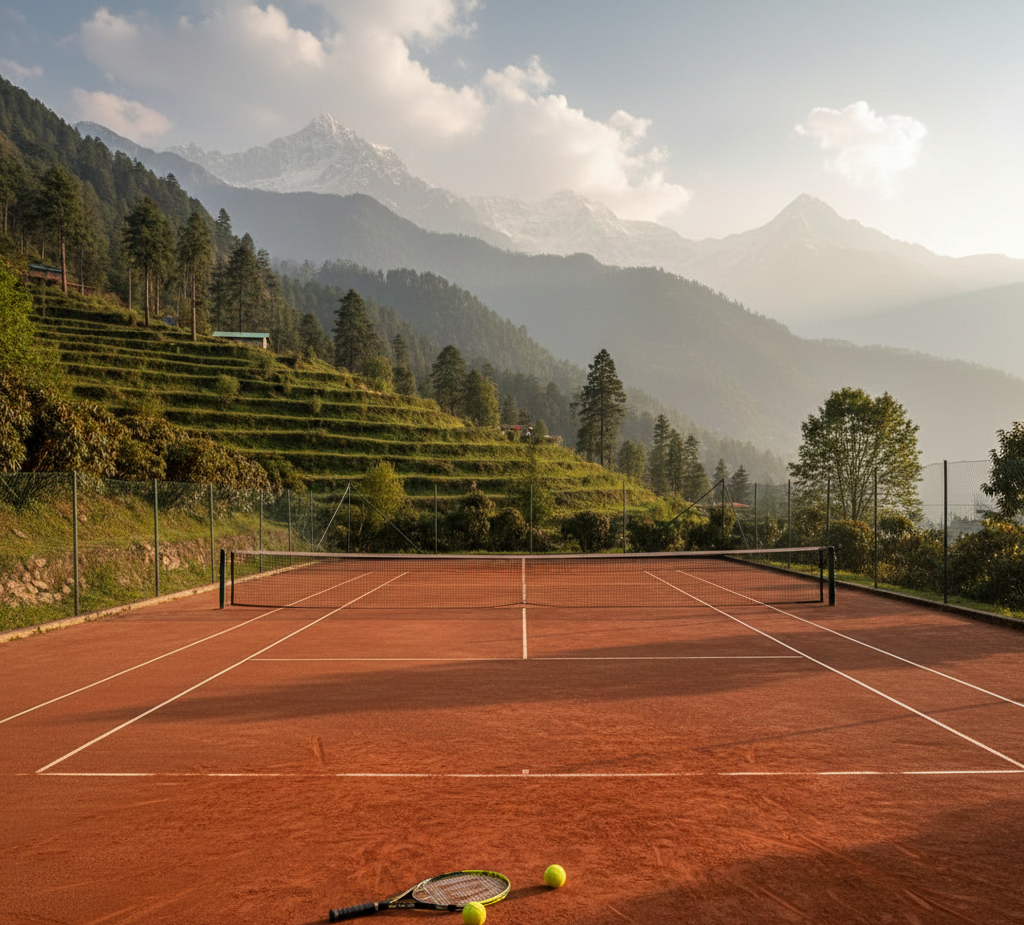
Clay’s earthy red or brown finish blends seamlessly with the green landscapes of Uttarakhand—be it in hill towns like Nainital, Almora, Mussoorie, or the plains of Dehradun.
3. Training Advantage
Clay slows the game, improving footwork, stamina, and consistency. This makes it an excellent choice for academies, schools, and sports complexes.
4. Moderate Initial Cost
Compared to synthetic courts, clay courts often cost less to construct initially, especially when local materials like crushed brick or stone dust are available.
Challenges of Building Clay Courts in Uttarakhand
1. Heavy Monsoon Rainfall
Uttarakhand receives substantial rainfall, especially in hill districts. Clay courts can get waterlogged without proper slope and drainage systems.
2. Uneven Terrain
Most hilly regions require significant land leveling and retaining structures before construction, which increases time and cost.
3. Moisture Sensitivity
Clay becomes muddy when overly wet and powdery when too dry. Maintaining consistent moisture is essential but difficult during seasonal extremes.
4. Winter Effects
In colder areas (like Ranikhet, Pauri, or higher altitudes), frost and low temperatures can harden or crack the clay surface.
Construction Guidelines for Clay Courts in Uttarakhand
1. Site Selection
-
Choose relatively flat land with good sunlight exposure.
-
Ensure accessibility for maintenance equipment.
-
Avoid areas prone to landslides or soil erosion.
2. Ground Preparation
-
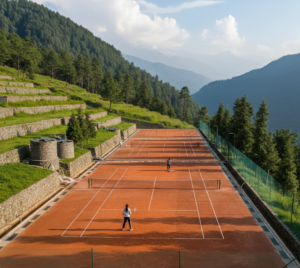
For hill regions, terrace leveling may be required.
-
Construct retaining walls to prevent soil movement.
-
Compact soil thoroughly before layering materials.
3. Drainage System
Due to the high rainfall, drainage is critical.
Include:
-
Sub-surface drainage pipes
-
Proper court slope (0.8%–1%)
-
Side drains to redirect runoff
4. Base Construction
A typical base consists of:
-
Compacted stone aggregates for stability
-
A binding layer of stone dust
-
The final clay layer made from crushed brick, murum, or shale
5. Surface Layer & Lines
-
Use high-quality clay/crushed brick to create a dense, smooth surface.
-
Install fabric or plastic lines fixed into the clay, not painted on top.
-
Frequent rolling ensures a firm and even playing field.
6. Irrigation Planning
Clay courts require regular watering. In Uttarakhand:
-
Install sprinklers or manual hose systems.
-
Consider rainwater harvesting tanks to offset water use.
-
In colder districts, pipelines should be frost-resistant.
7. Wind & Soil Protection
Especially in open hill locations:
-
Use fencing nets
-
Plant natural windbreaks
-
Install side barriers to prevent soil erosion and clay displacement
Maintenance Requirements
Daily
-
Water the court lightly
-
Sweep and level the surface
-
Drag-mat the playing area
-
Roll lightly if used frequently
Weekly
-
Deeper rolling for compactness
-
Repair lines and edges
Monthly
-
Inspect drainage
-
Add fresh clay where needed
Seasonally
-
Before monsoon: Clean drains and increase surface compaction
-
After monsoon: Re-level and repair surface
-
Before winter: Cover elements prone to frost damage
-
After winter: Restore moisture levels and re-roll the court
Cost Considerations
Costs vary based on terrain and accessibility, but a general idea for Uttarakhand includes:
-
Base construction: Higher in hill regions due to leveling
-
Clay materials: Moderate, depending on sourcing
-
Drainage system: Essential and slightly costlier due to terrain
-
Irrigation: Important for moisture control
-
Initial investment: Approx. ₹10 lakh to ₹30 lakh depending on site and specifications
-
Annual maintenance: Moderate to high because clay surfaces need consistent care
Sustainability & Local Adaptation
Rainwater Harvesting
Excellent solution in Uttarakhand to reduce dependency on external water sources.
Locally Available Materials
Using locally sourced crushed stones or bricks reduces transport cost and environmental impact.
Eco-Sensitive Construction
Given the hill ecology, special care must be taken to:
-
Avoid excessive land cutting
-
Use erosion-control measures
-
Preserve natural vegetation
Solar-Powered Lighting
Ideal for remote or hilly courts where electricity supply may be inconsistent.
Pros & Cons Summary
| Pros | Cons |
|---|---|
| Soft, joint-friendly playing surface | High maintenance requirements |
| Blends beautifully with Uttarakhand’s natural landscape | Sensitive to heavy rainfall and frost |
| Excellent for training and coaching | Requires consistent watering |
| Lower initial cost vs. synthetic courts | Terrain preparation can be expensive in hilly areas |
Conclusion
A clay tennis court in Uttarakhand can be an outstanding addition to sports academies, hotels, schools, or community grounds—offering a natural, visually appealing, and player-friendly surface. While the state’s weather and terrain present challenges, proper engineering, robust drainage, and disciplined maintenance can ensure a court that performs well throughout the year.
With sustainable planning and local resource use, clay courts can thrive in Uttarakhand’s unique environment, supporting both recreational play and professional training.