Running tracks are some of the most recognizable features of sports complexes, stadiums, schools, and fitness facilities. They are more than just simple pathways for jogging or sprinting; they are engineered surfaces designed to optimize performance, ensure safety, and maintain consistency for athletes at all levels. Whether used by professional track-and-field athletes, school students, or casual fitness enthusiasts, the design, construction, and maintenance of running tracks are critical to their functionality.
But how exactly do running tracks work? What makes them so effective for training, competition, and recreational use? In this guide, we explore the intricate design, construction layers, materials, physics, and maintenance of running tracks, explaining why they are the preferred surface for running worldwide.
What Is a Running Track?
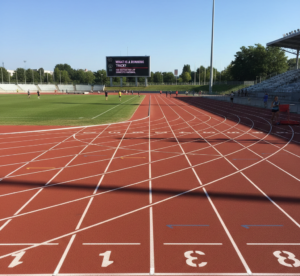
A running track is an oval-shaped circuit specifically designed for walking, jogging, and running. Standard outdoor tracks for competitive events measure 400 meters per lap, with multiple lanes to allow fair competition among athletes. The lanes are precisely marked so that runners covering different lanes traverse the same distance.
The staggered starting lines compensate for the difference in circumference between inner and outer lanes, ensuring every athlete runs the exact distance during races. Running tracks can be constructed indoors or outdoors, and the material choice varies based on performance needs, budget, and environmental factors. Modern tracks are commonly made from synthetic polyurethane (PU), EPDM rubber, asphalt, or acrylic coatings, each offering specific advantages in terms of shock absorption, energy return, and durability.
The Functional Design of Running Tracks
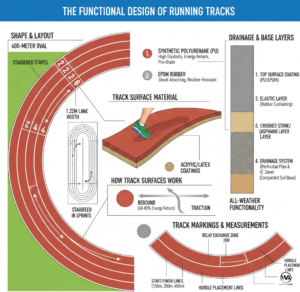
Running tracks are engineered to balance performance, safety, durability, and fairness. Every element—from the shape and layout to the surface material, lane markings, and underlying base layers—contributes to this goal.
1. Shape and Layout
A standard running track consists of two straight sections connected by two semicircular curves, forming an oval. This design ensures smooth transitions through curves while maintaining an efficient running rhythm. Properly engineered curves help distribute physical strain evenly across the runner’s body, reducing the risk of injuries such as joint strain or muscle fatigue.
Standard dimensions include:
-
Total lap length: 400 meters (measured 30 cm from the inside edge of lane 1).
-
Lane width: 1.22 meters (± 0.01 m).
-
Total lanes: Typically 6 to 8 lanes for standard tracks.
Smaller tracks, such as 200-meter or 300-meter indoor tracks, are used in gyms or compact facilities. The precise geometric design of these ovals ensures uniformity in distance and performance for athletes.
2. Lane System and Staggered Starts
Each running track is divided into parallel lanes separated by clearly painted white lines. Lane 1, closest to the inside edge, represents the shortest path along curves, while outer lanes have a slightly longer circumference. To maintain fairness, staggered starting lines are used in sprint events.
How staggered starts work:
-
The start line for each outer lane is positioned further ahead, based on its additional circumference.
-
When all runners complete a lap, each has run the same exact distance.
-
Calculations consider lane width and curve radius, ensuring equal distance coverage for every lane.
This system ensures fair competition, allowing runners in any lane to have an equal opportunity to succeed.
3. Track Surface Material
The surface material is the most crucial aspect of a running track, as it affects speed, comfort, traction, and injury prevention. Modern tracks utilize synthetic materials engineered for both elasticity and durability. The surface slightly compresses under the runner’s weight and then rebounds, providing energy return that improves running efficiency while reducing joint stress.
Common running track surfaces include:
Synthetic Polyurethane (PU) Track
-
Seamless and durable.
-
High elasticity for improved energy return.
-
Excellent traction and grip, ideal for professional athletics.
EPDM Rubber Track
-
Made from granulated rubber mixed with a binder.
-
Soft, flexible, and shock-absorbing.
-
Weather and UV-resistant, ideal for schools and community tracks.
Acrylic or Latex Coatings
-
Economical option for multi-purpose sports areas.
-
Provides a firm yet cushioned feel underfoot.
-
Durable and suitable for casual athletic use.
Cinder or Asphalt Tracks (Traditional Style)
-
Older style tracks, now largely replaced by synthetic materials.
-
Harder on joints and require frequent resurfacing.
4. How Track Surfaces Work
Running tracks function through a combination of shock absorption, energy return, and friction control. When a runner’s foot strikes the surface:
-
Compression: The track slightly compresses under impact, reducing the force transmitted to joints.
-
Rebound: The elastic surface rebounds, returning part of the energy to the runner, enhancing efficiency.
-
Traction: The surface’s texture prevents slipping while maintaining optimal grip for speed.
Professional-grade tracks typically have an energy return rate of 60–65%, giving athletes a “springy” sensation that enhances performance.
5. Drainage and Base Layers
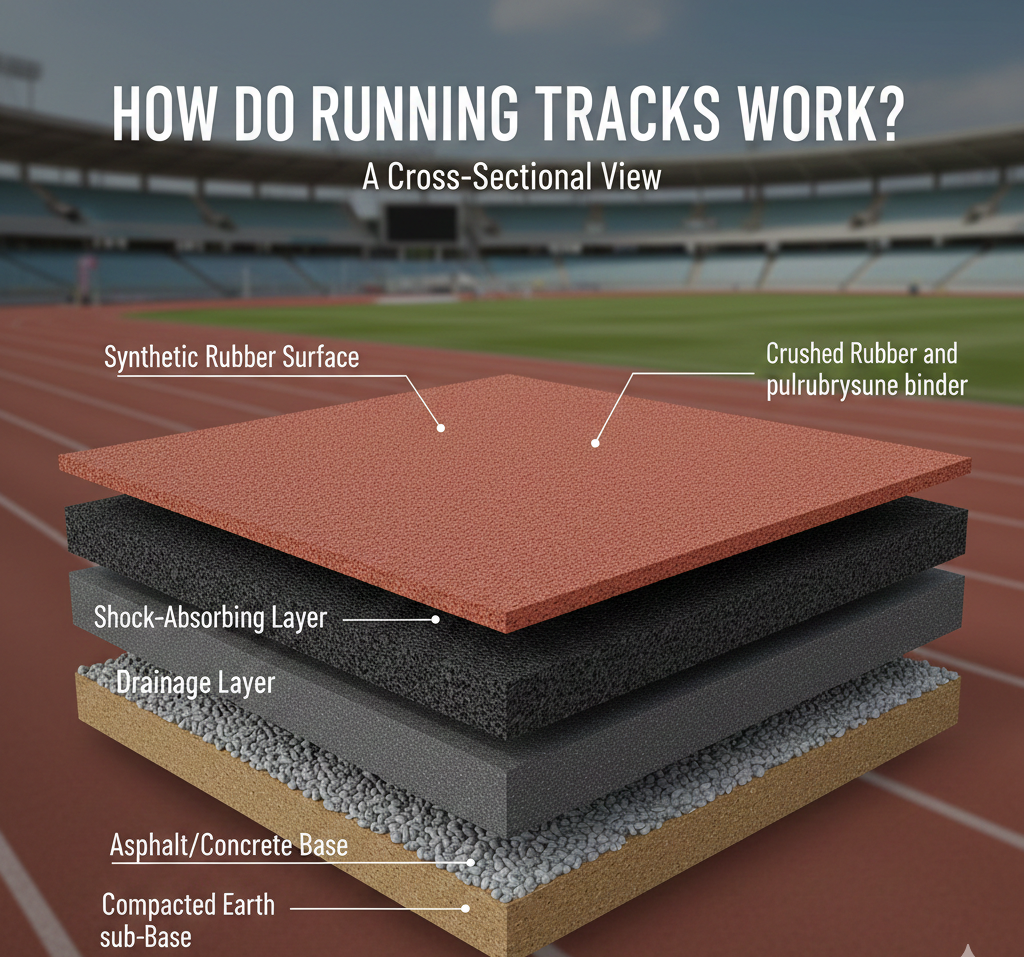
Beneath the visible surface, running tracks consist of multiple base layers that provide stability, durability, and all-weather functionality. A properly constructed substructure prevents water pooling, surface deformation, and premature wear.
Typical track layer structure:
-
Subgrade: Compacted soil base providing foundational stability.
-
Crushed stone or asphalt layer: Adds structural strength and distributes loads.
-
Drainage system: Channels rainwater away to prevent puddling.
-
Elastic layer: Rubber or synthetic cushioning for shock absorption.
-
Top surface coating: PU, EPDM, or acrylic layer that interacts directly with runners’ feet.
This multi-layer system ensures the track remains even, durable, and safe under all weather conditions.
6. Track Markings and Measurements
Accurate lane markings are essential for fairness in competitive running. All markings conform to World Athletics (formerly IAAF) standards, including:
-
Start and finish lines for distances like 100m, 200m, 400m, etc.
-
Relay exchange zones (20 meters in length).
-
Hurdle placement lines.
-
Staggered starting lines on curves.
Markings are painted with UV-resistant, non-slip paints, ensuring visibility and durability in all conditions.
7. The Science of Energy Return and Friction
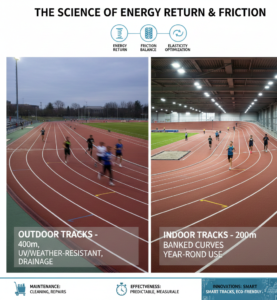
Modern running tracks are carefully engineered to optimize physics principles:
-
Energy return: The track compresses under footstrike and rebounds, returning energy to the runner.
-
Friction balance: Prevents slipping while allowing efficient forward propulsion.
-
Elasticity optimization: Soft enough to cushion joints but firm enough to prevent energy loss.
These factors combine to make running safer, more efficient, and more consistent, particularly for high-speed sprints and long-distance races.
8. Indoor vs. Outdoor Tracks
Outdoor Tracks:
-
Standard length: 400 meters.
-
Made with UV- and weather-resistant materials.
-
Equipped with drainage systems and thermal expansion joints.
Indoor Tracks:
-
Shorter, typically 200 meters, often banked on curves for stability.
-
Constructed for year-round use regardless of weather.
-
Materials similar to outdoor tracks but adapted for indoor conditions.
Both types of tracks rely on the same principles of layered construction, energy return, and precise markings.
9. Maintenance and Longevity
Running tracks are designed to last 8–15 years, depending on use and care. Regular maintenance ensures consistent performance:
-
Routine cleaning and debris removal.
-
Periodic repainting of lane markings.
-
Surface patching or recoating in worn areas.
-
Inspecting and maintaining drainage systems.
Proper maintenance preserves elasticity, traction, and durability, protecting athletes and maximizing the lifespan of the track.
10. Why Running Tracks Are So Effective
Running tracks are purpose-built for performance and safety. Key benefits include:
-
Even, predictable surface: Reduces injury risk and ensures stable footing.
-
Measurable distances: Enables accurate timing, performance tracking, and training evaluation.
-
Shock absorption: Cushions joints and muscles during high-impact activity.
-
All-weather use: Allows year-round training regardless of rain or snow.
-
Energy efficiency: The track’s rebound characteristics improve speed and reduce fatigue.
Compared to roads, trails, or other outdoor surfaces, running tracks provide an environment specifically optimized for human biomechanics and consistent performance.
11. Modern Innovations in Running Tracks
Technological advancements have further enhanced track design:
-
Eco-friendly materials: Tracks incorporating recycled rubber reduce environmental impact.
-
Smart tracks: Embedded sensors monitor stride, speed, and even heart rate.
-
LED and solar integration: Improves sustainability and stadium functionality.
-
Modular surfaces: Allow faster installation, easier repairs, and customization for multi-sport use.
These innovations transform running tracks from simple athletic surfaces into high-tech, sustainable sporting environments.
Conclusion
Running tracks are far more than simple loops of asphalt or rubber. They are engineered systems combining precise geometry, advanced materials, and biomechanical understanding to deliver a safe, fair, and high-performing running environment.
From the multi-layered base structure to the elastic, energy-returning surface, from staggered starts to UV-resistant markings, every aspect is carefully designed to maximize efficiency, comfort, and safety. Whether for professional competition, school athletics, or casual fitness, running tracks represent the pinnacle of thoughtful sports engineering.